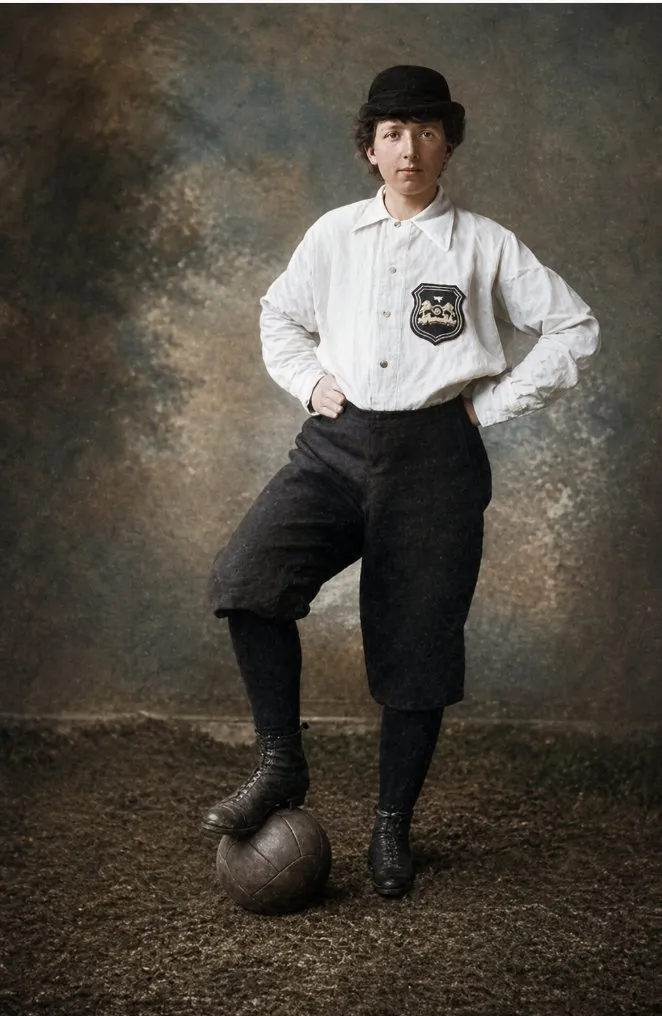
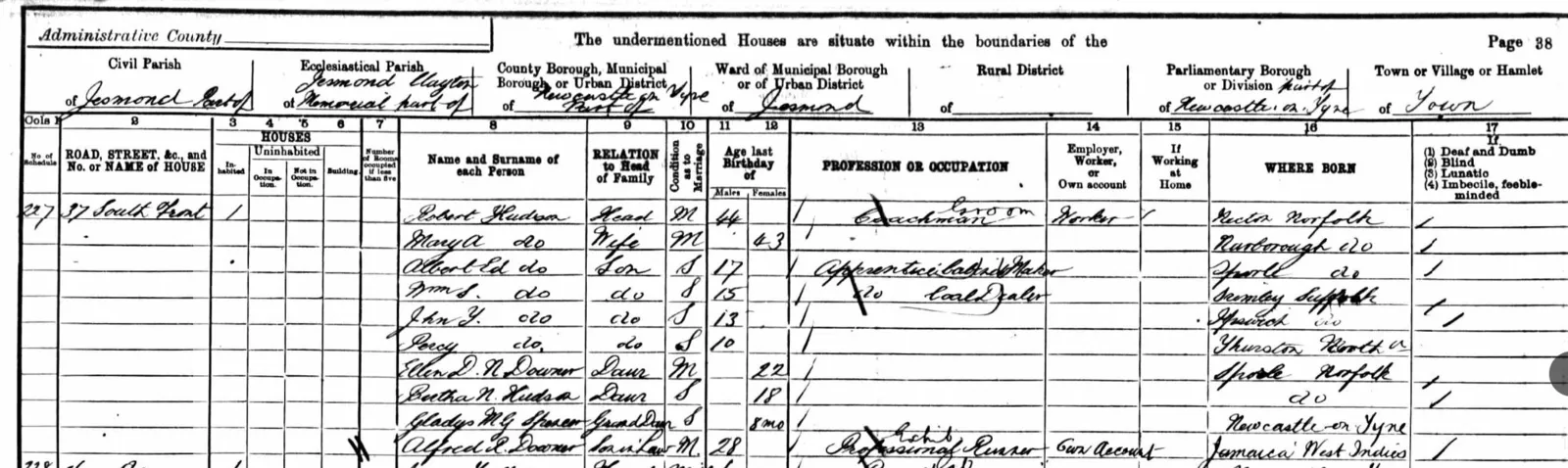
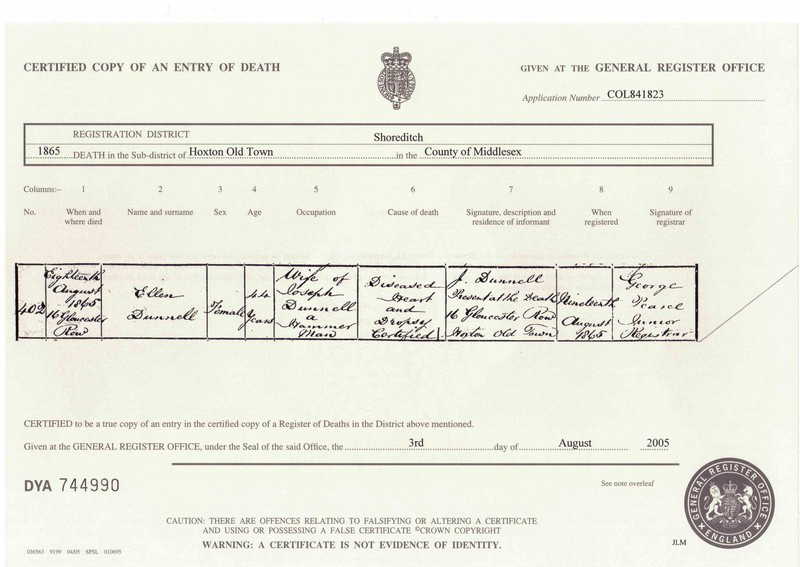
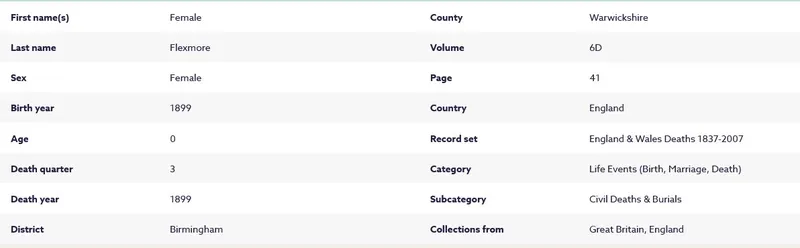
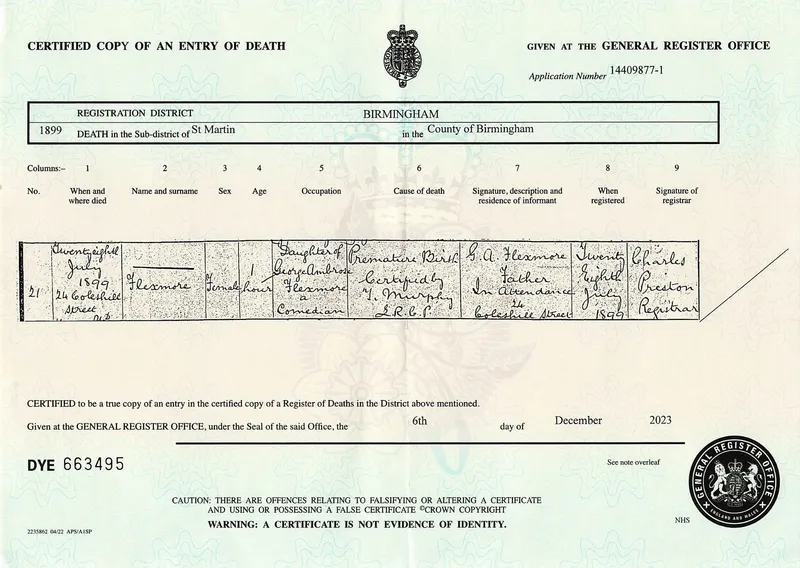
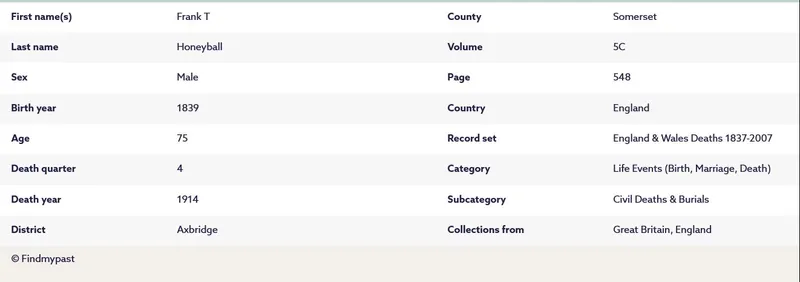
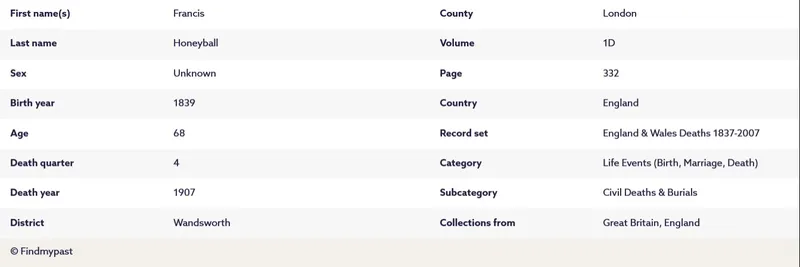
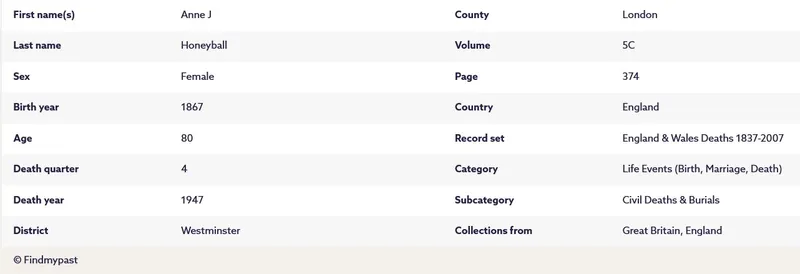
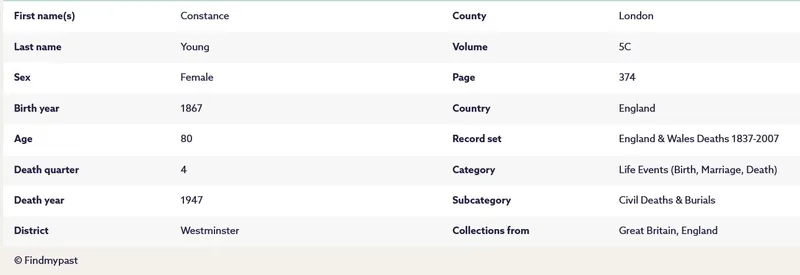
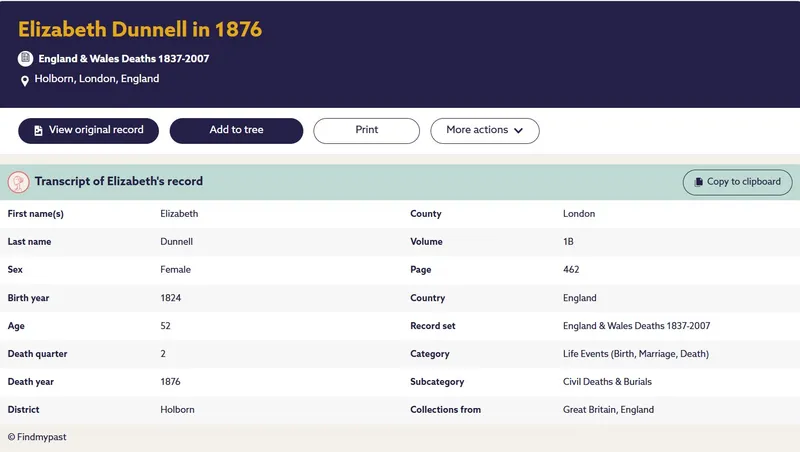
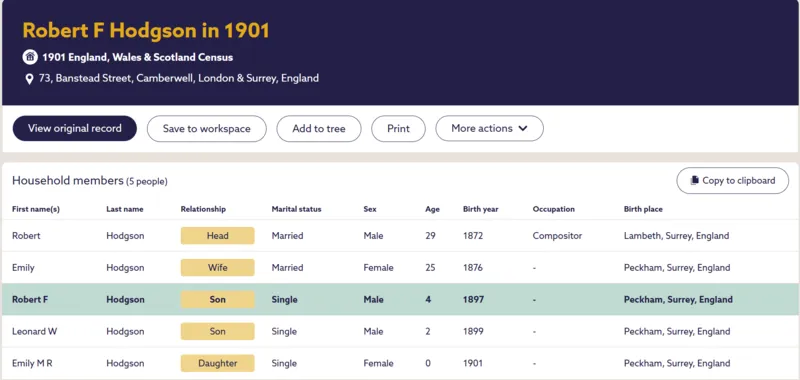
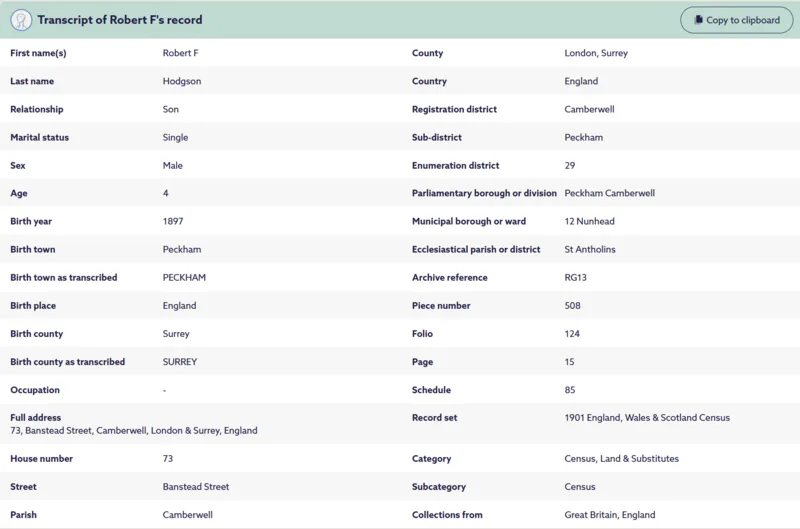
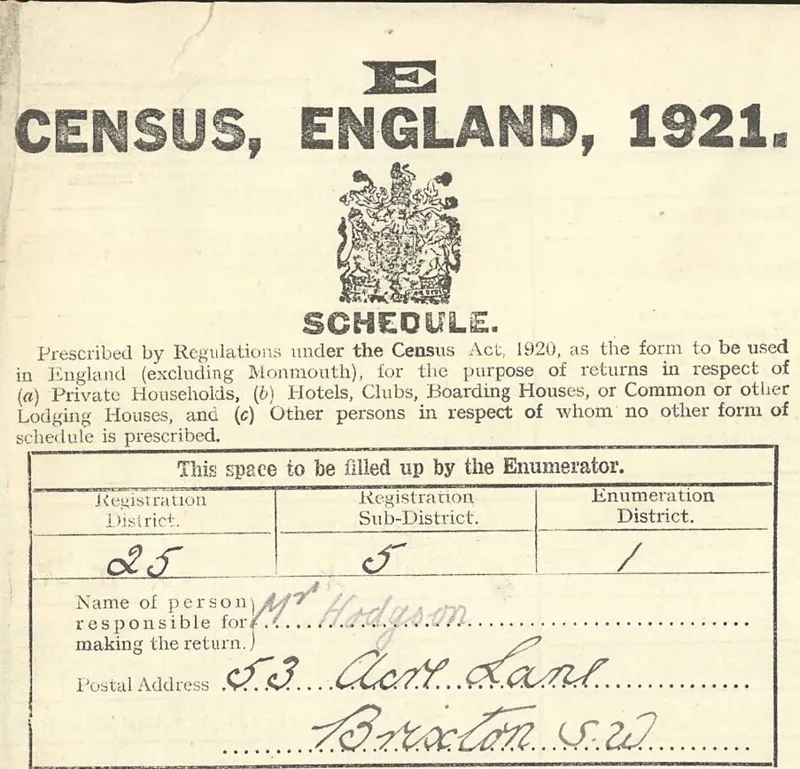
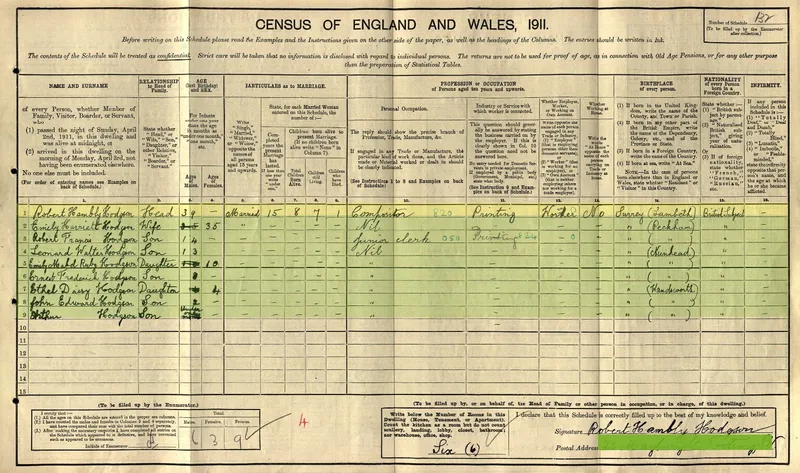
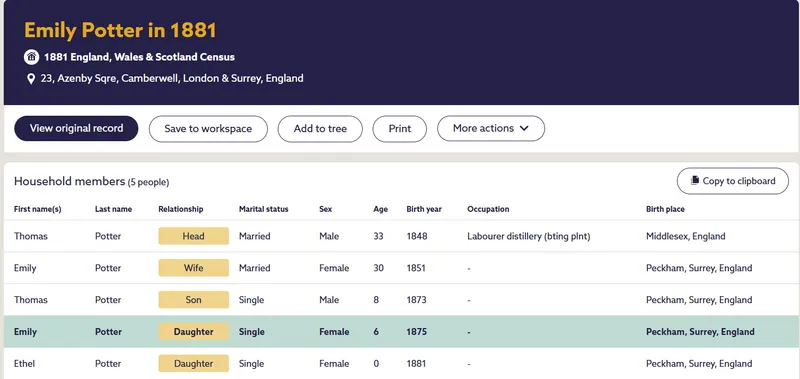
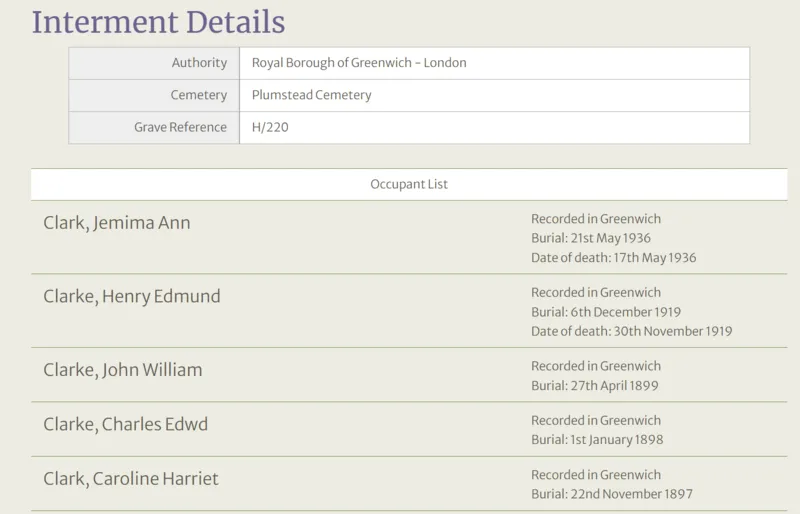
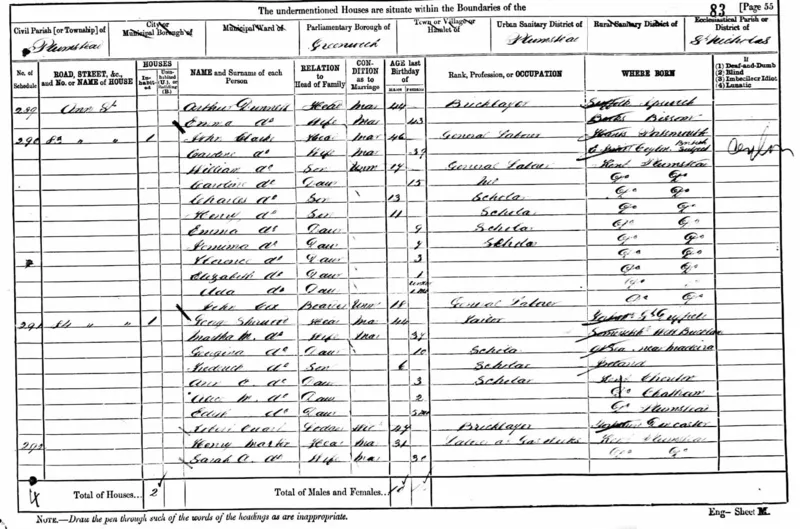
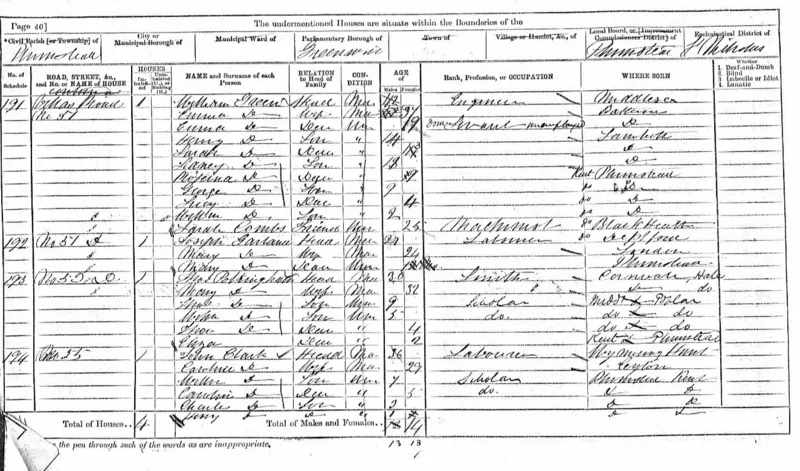
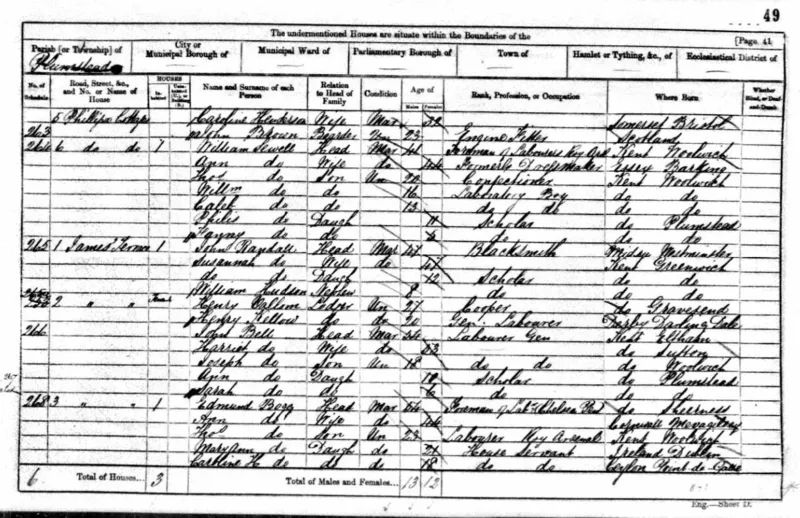
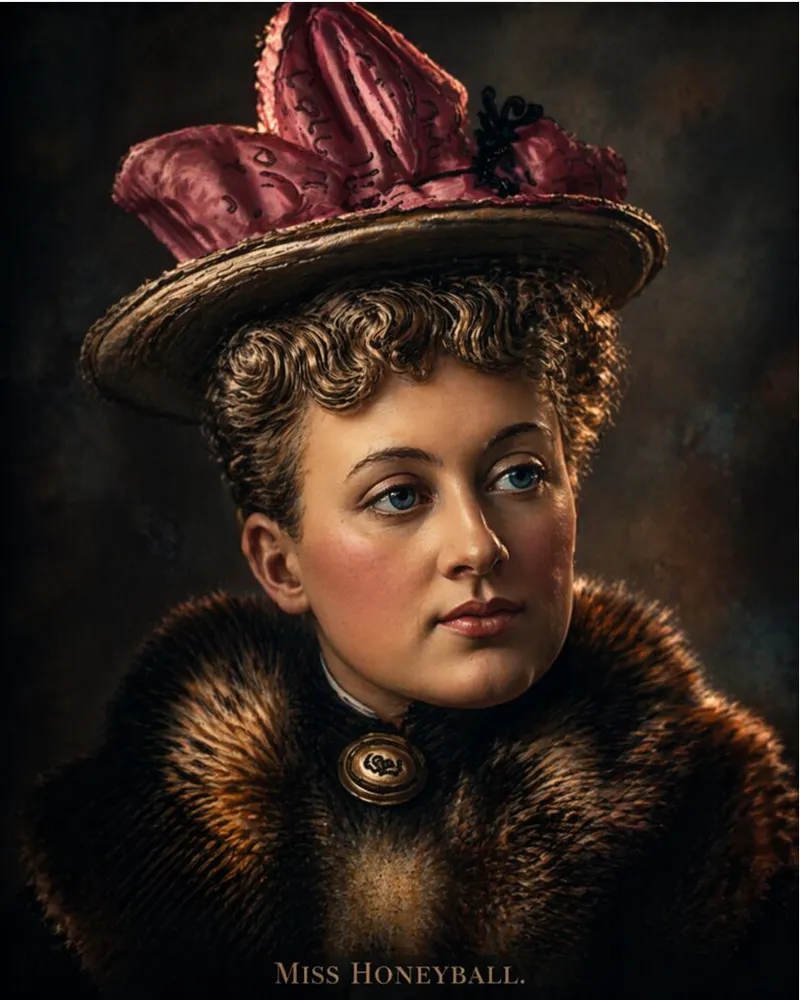
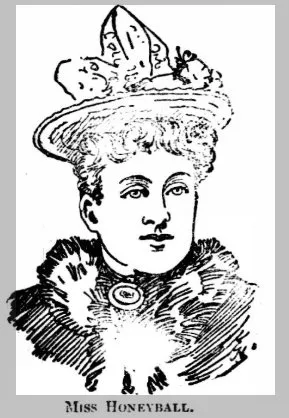
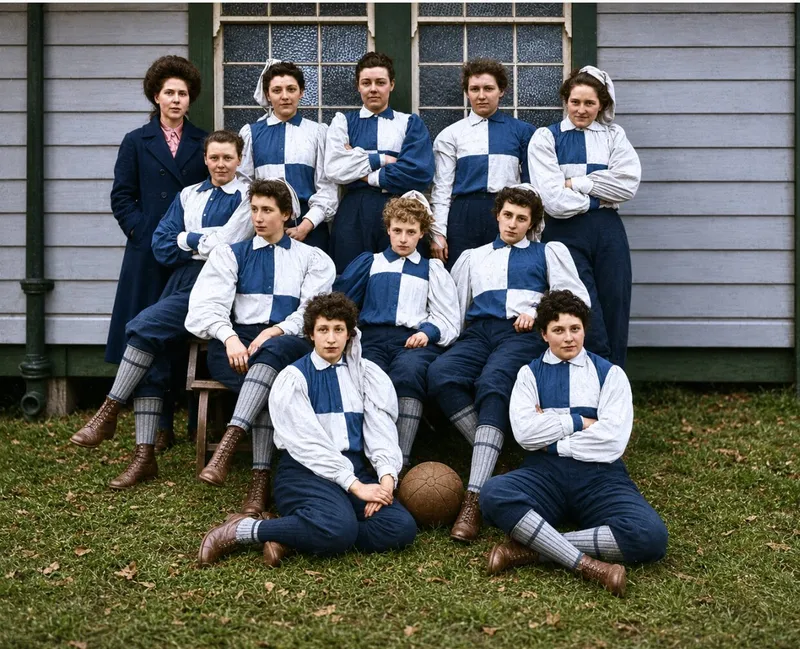
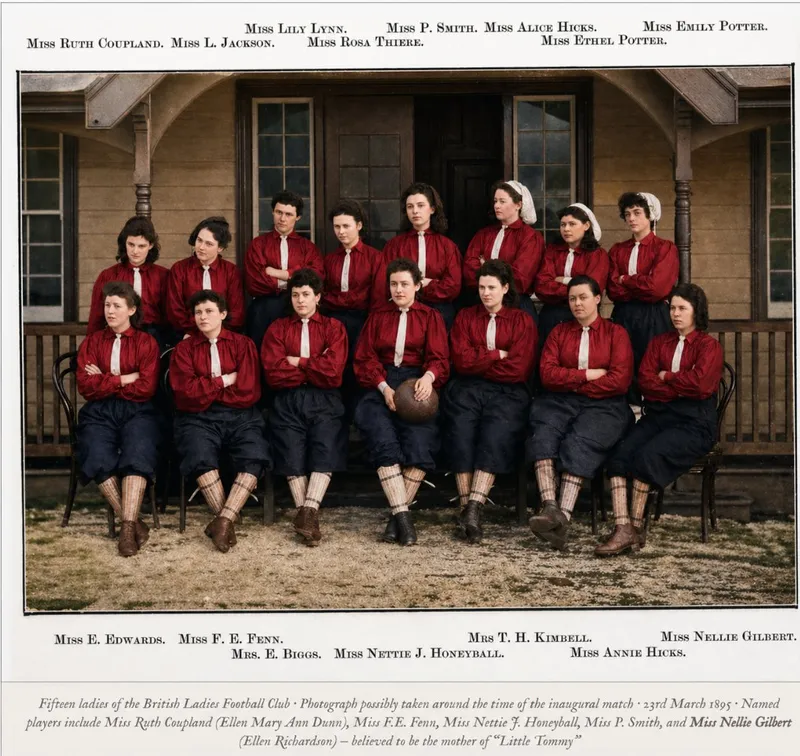
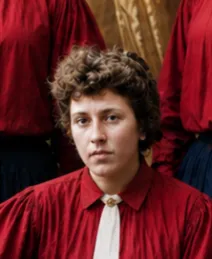
She founded the first organised women's football club in England, captained its inaugural match before ten thousand spectators, and gave the Victorian press one of the most defiant statements in the history of women's sport. Then she vanished - almost entirely - from the historical record. Whether Honeyball was the name she was born with, or one she used in public, is still under investigation. Her true identity remains one of the great unsolved mysteries of the women's game.
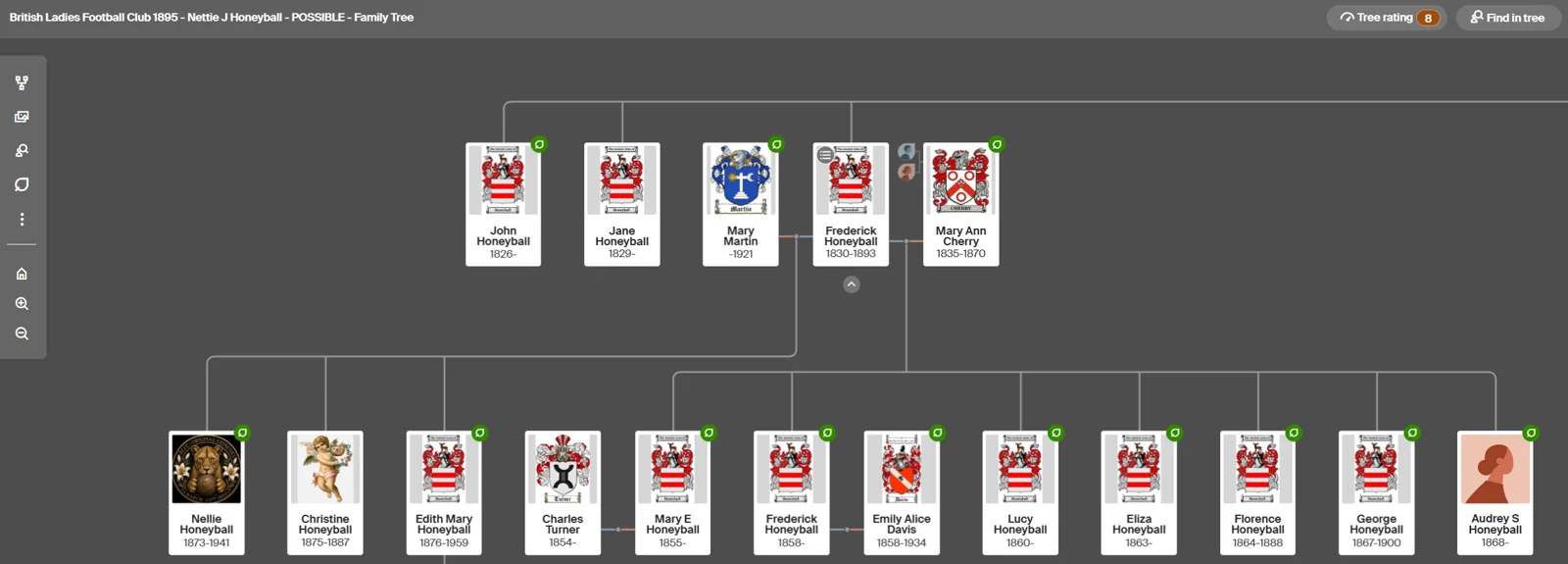
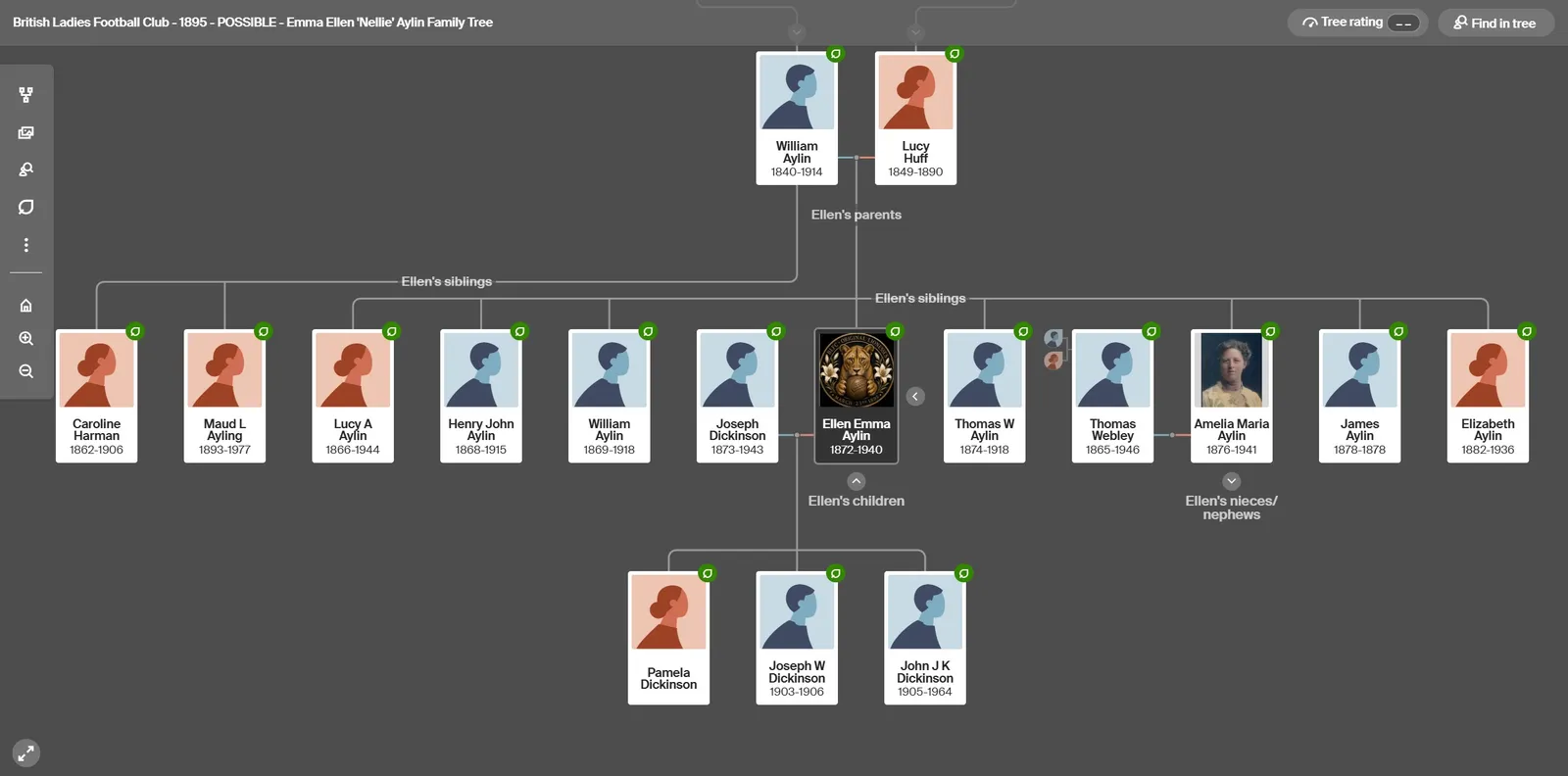
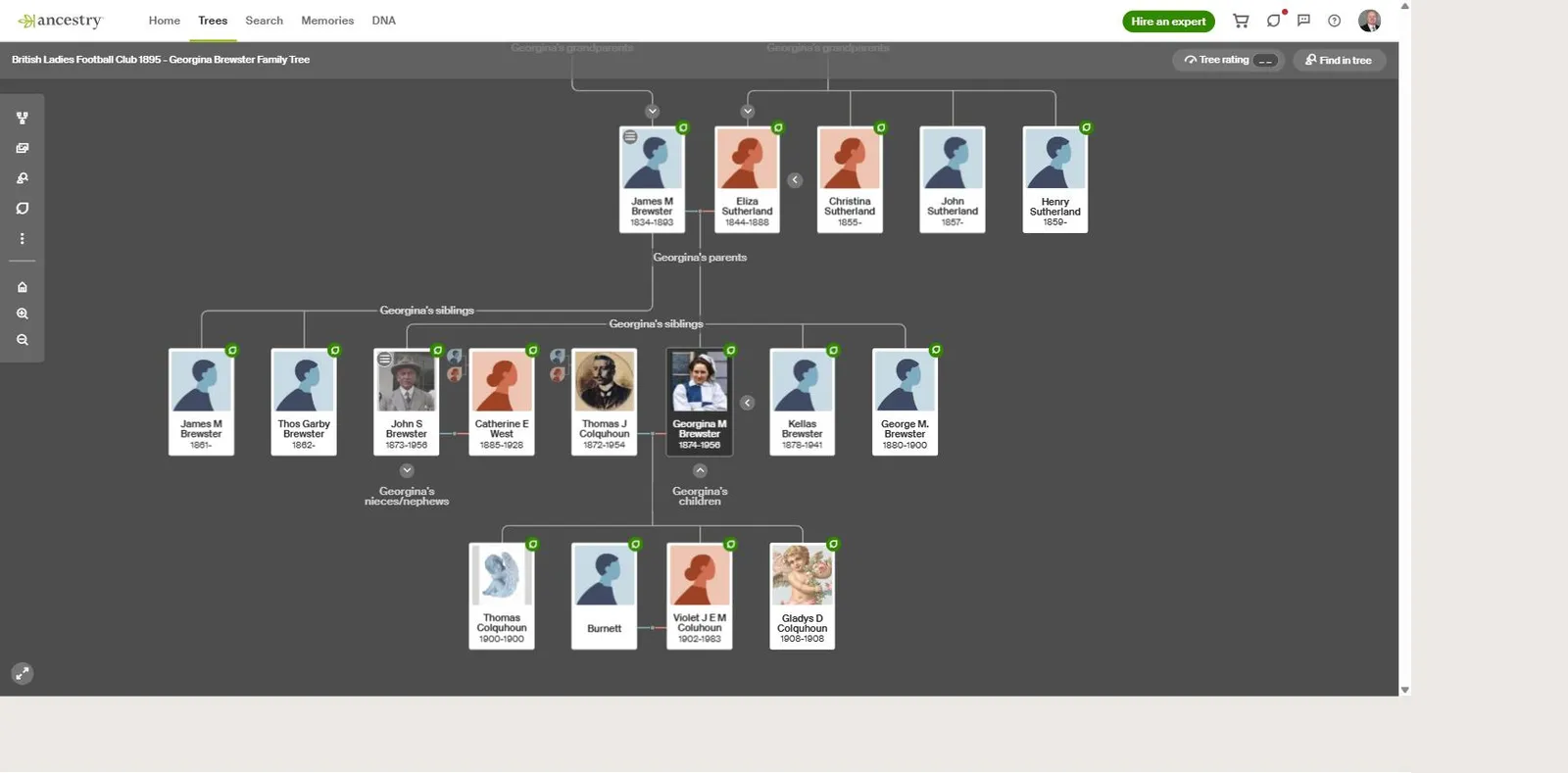
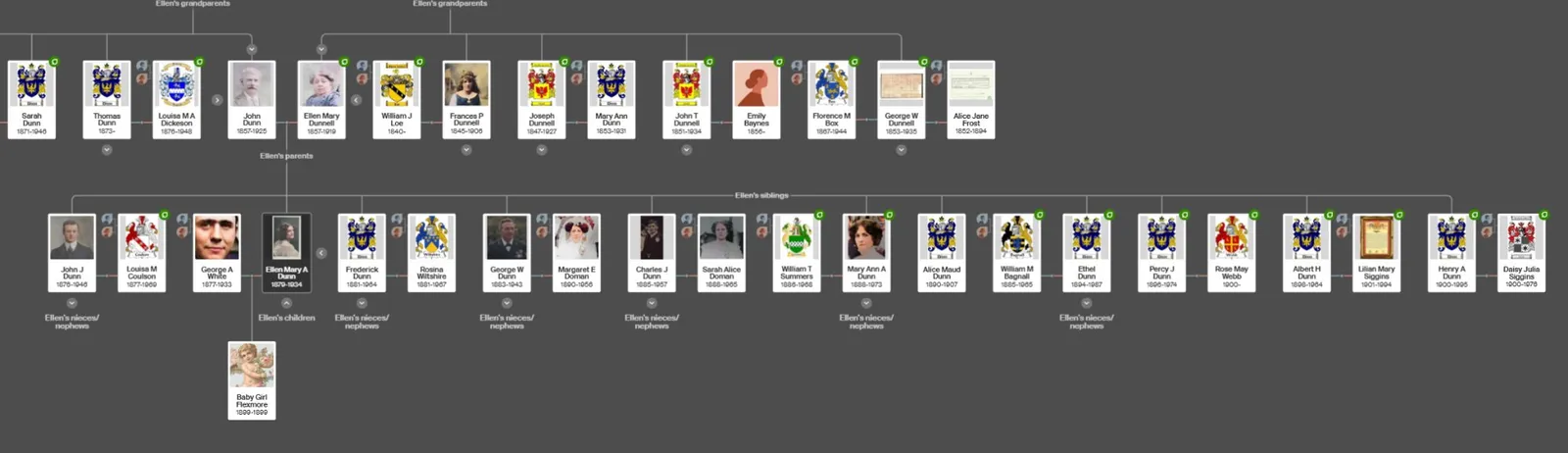
The family of Frederick Honeyball (1830–1893) · His first marriage to Mary Ann Cherry and their children, and his second marriage to Mary Martin and their daughters Nellie, Christine and Edith Mary · Ancestry.co.uk family tree · Note: the tree gives Eliza as 1863 and George as 1867, where the GRO birth index has 1862 and 1866; Audrey Sarah’s death in 1868 is not yet entered; and Mary E. (1855) and Lucy (1860) have not yet been checked against the index
WHAT WE KNOW - THE CONFIRMED FACTS
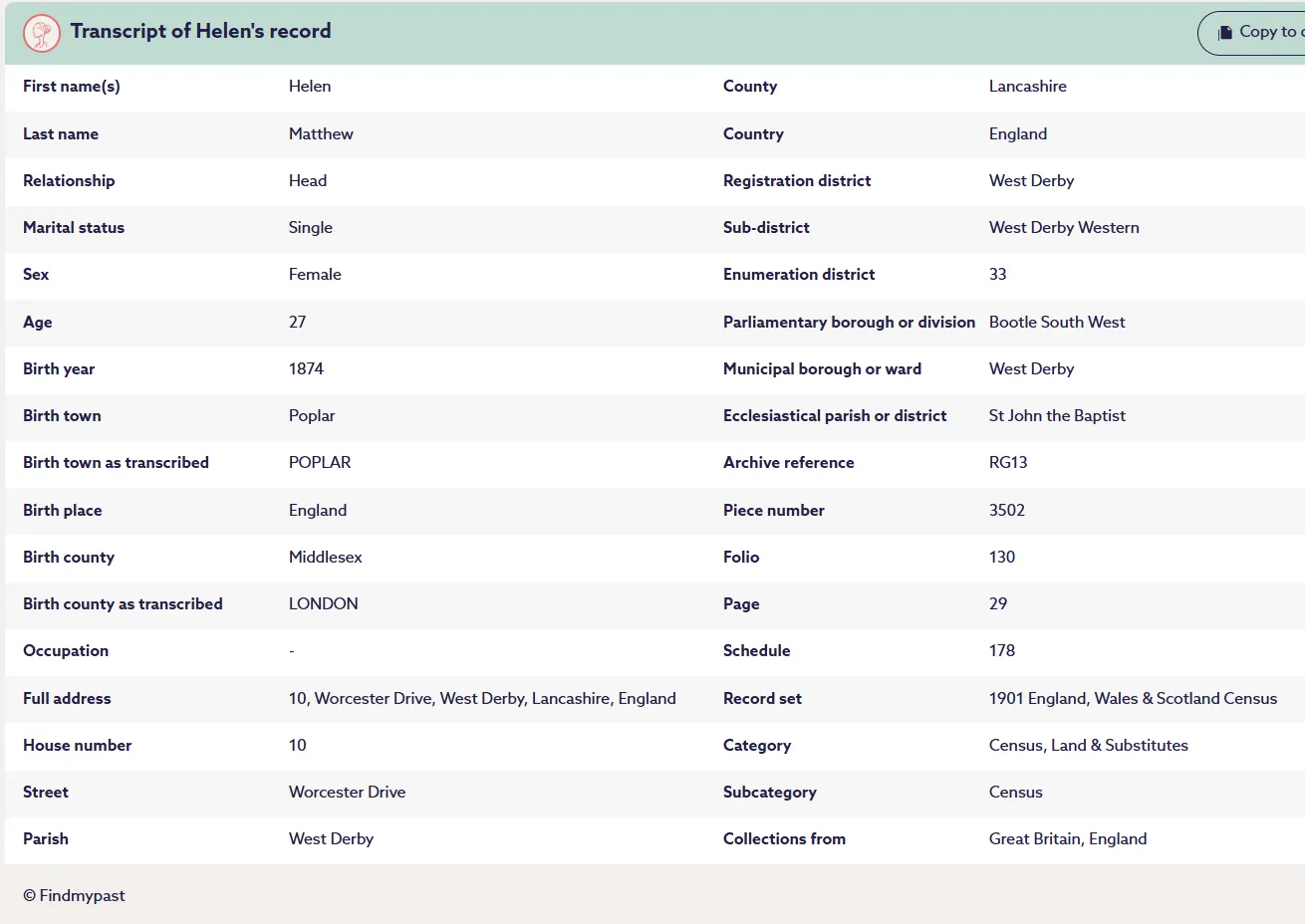
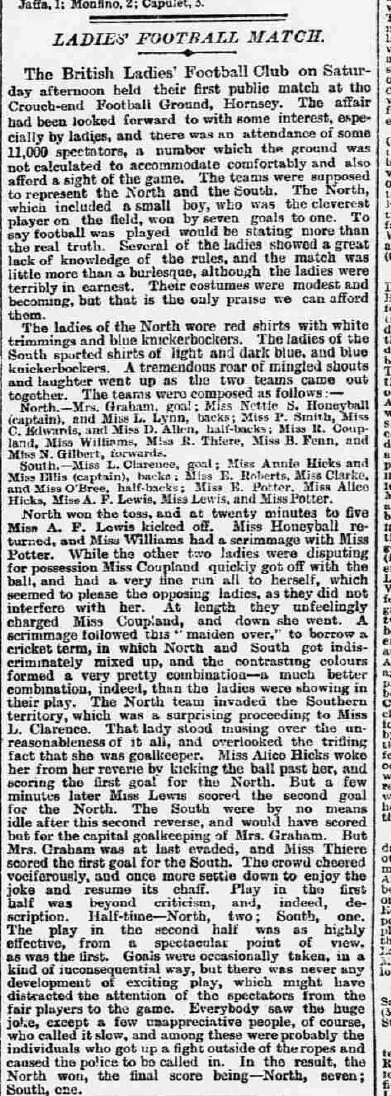
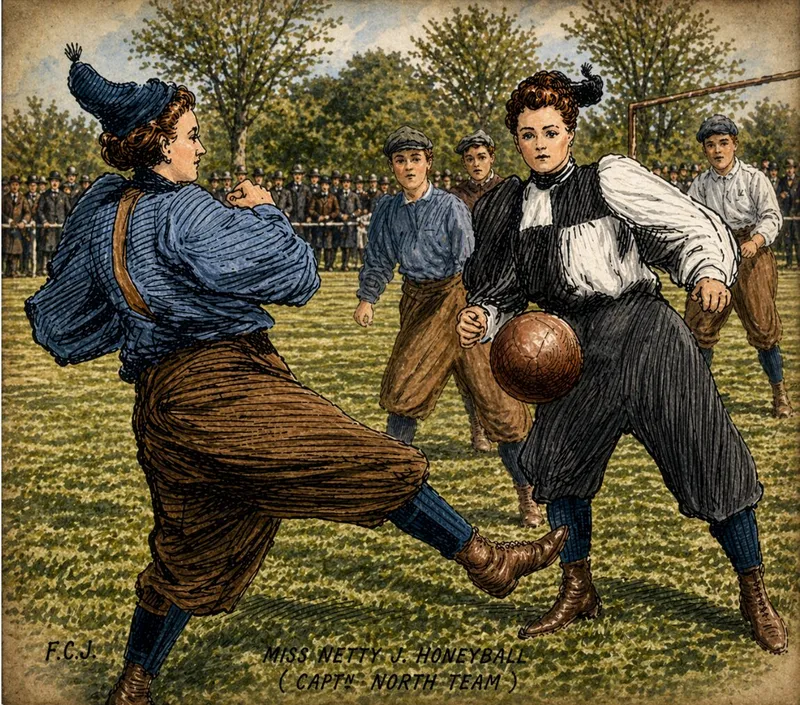
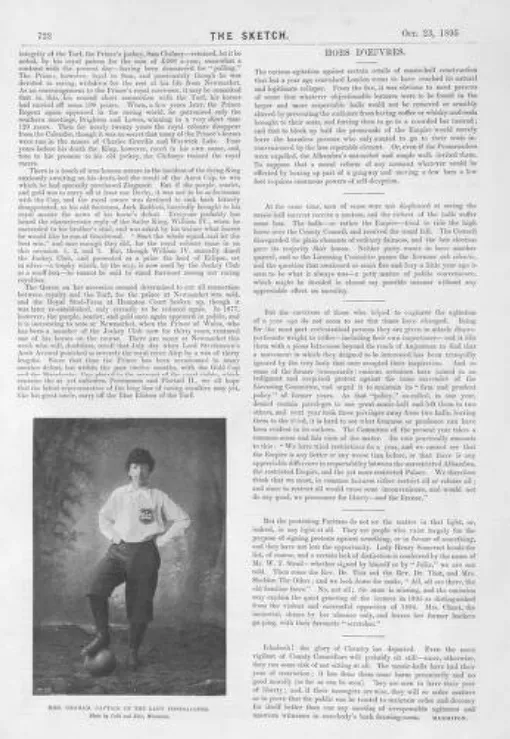
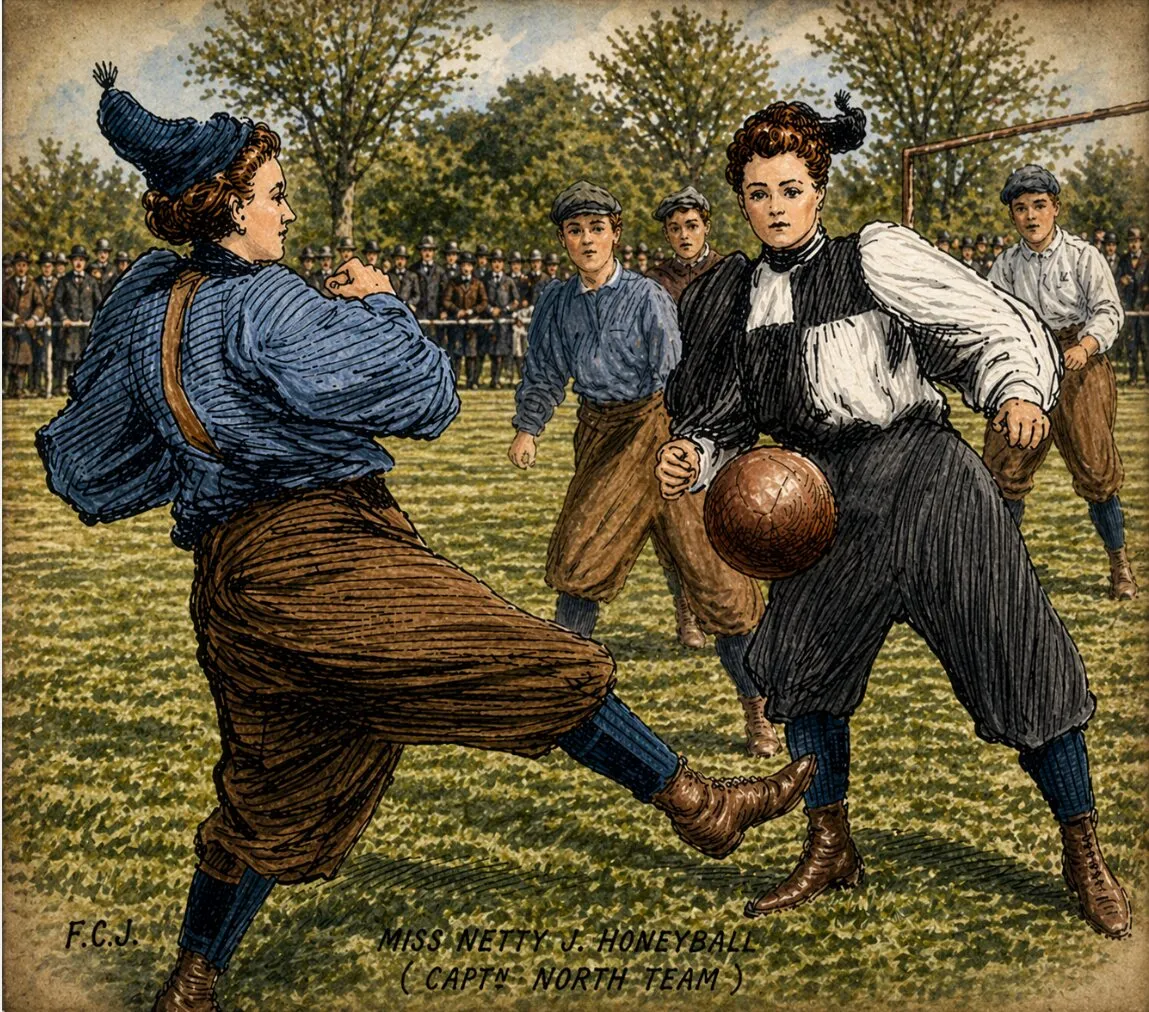
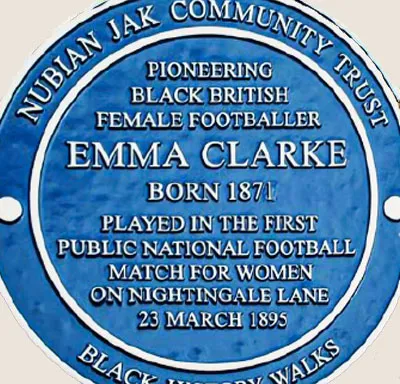
The confirmed facts about Nettie Honeyball are few but significant. She founded the British Ladies Football Club in late 1894, recruiting players through newspaper advertisements and organising the club's first match for 23rd March 1895. She captained the North London team in that inaugural match at Crouch End Athletic Ground, Nightingale Lane, Hornsey - a match that drew a crowd of some ten thousand spectators and was covered by newspapers across the country. She gave interviews to the press in which she articulated a clear feminist philosophy, insisting that women were capable of the same physical and public life as men. She operated from the address Ellesmere, 27 Weston Park, Crouch End, London. And then, after 1895, she disappears from the documentary record almost entirely.
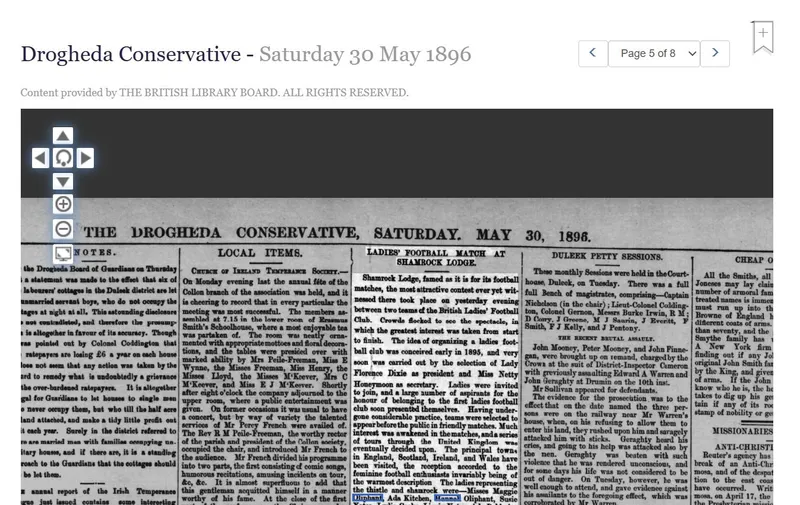
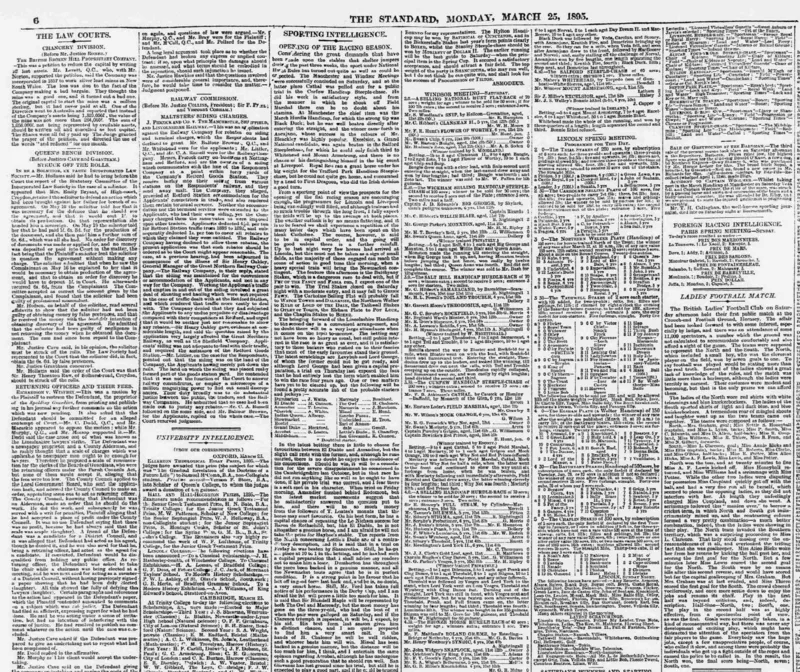
Almost - but not entirely. A newly-discovered primary source in The Sporting Life of Friday 19th April 1895 reveals that Nettie was still running the club's communications nearly a month after the inaugural match. A fixture had been arranged against the Royal Ordnance Football Club at the Royal Ordnance Grounds, Maze Hill, Woolwich - a military football club with a ground adjoining Maze Hill Station on the South-Eastern Railway. Several thousand spectators gathered for an evening kick-off announced for 6.30. The ladies did not appear. The reason, as reported by The Sporting Life, was a storm. And the evidence is a telegram - five words and a name, sent from Crouch End that afternoon:
"Storm raging here. Must scratch match."
- Honeyball · Crouch End, 6.15pm · 18th April 1895
The Royal Ordnance Football Club committee met the following morning and resolved that letters be written to the press expressing their deep regret. The Sporting Life reported that immediate measures had been taken to insure a match with the ladies at the earliest possible date. The telegram is the most direct primary-source quotation from Nettie Honeyball yet recovered - five words in her own voice, signed with her own name, despatched in haste from Crouch End on a stormy April evening. It also confirms that as late as 18th April 1895, she was still fully in command of the club's affairs.
Source: The Sporting Life, Friday 19th April 1895, p.4
What she left behind was her founding statement - one of the most extraordinary sentences written by any woman in Victorian England:
"I founded the British Ladies Football Club with the fixed resolve of proving to the world that women are not the 'ornamental and useless' creatures men have pictured. I must confess that I am one of those forward women who believe in the right of women to do all things that men do."
- Nettie Honeyball, 1895
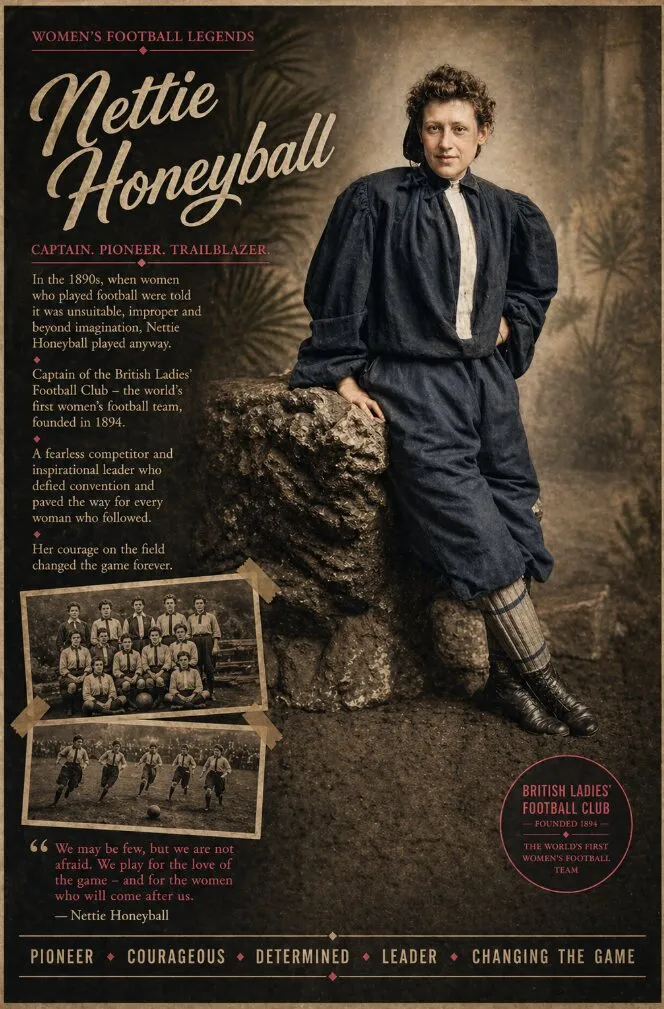
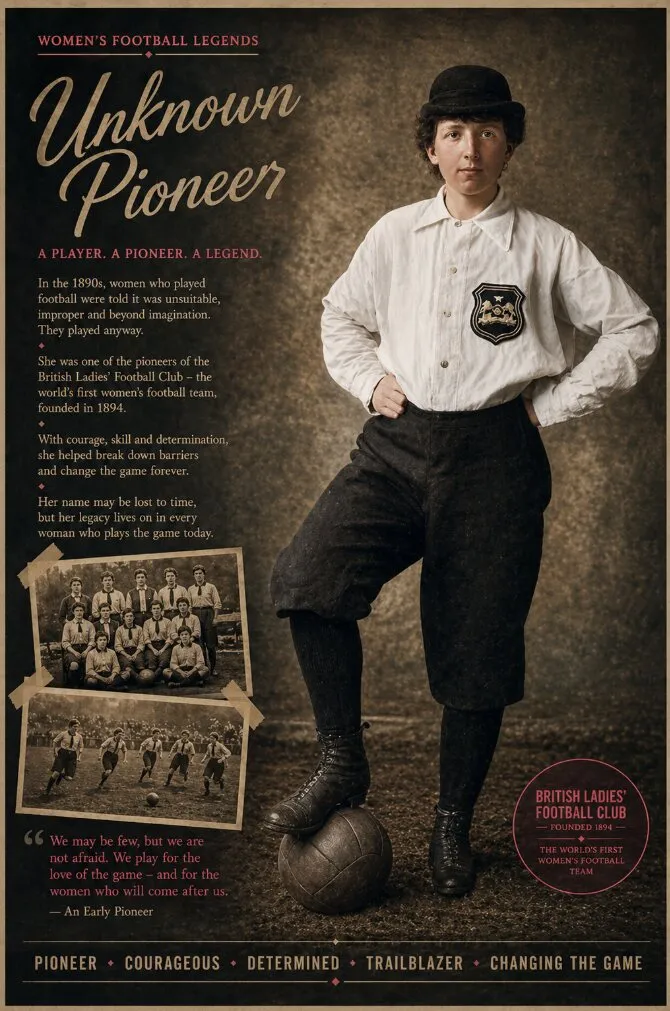
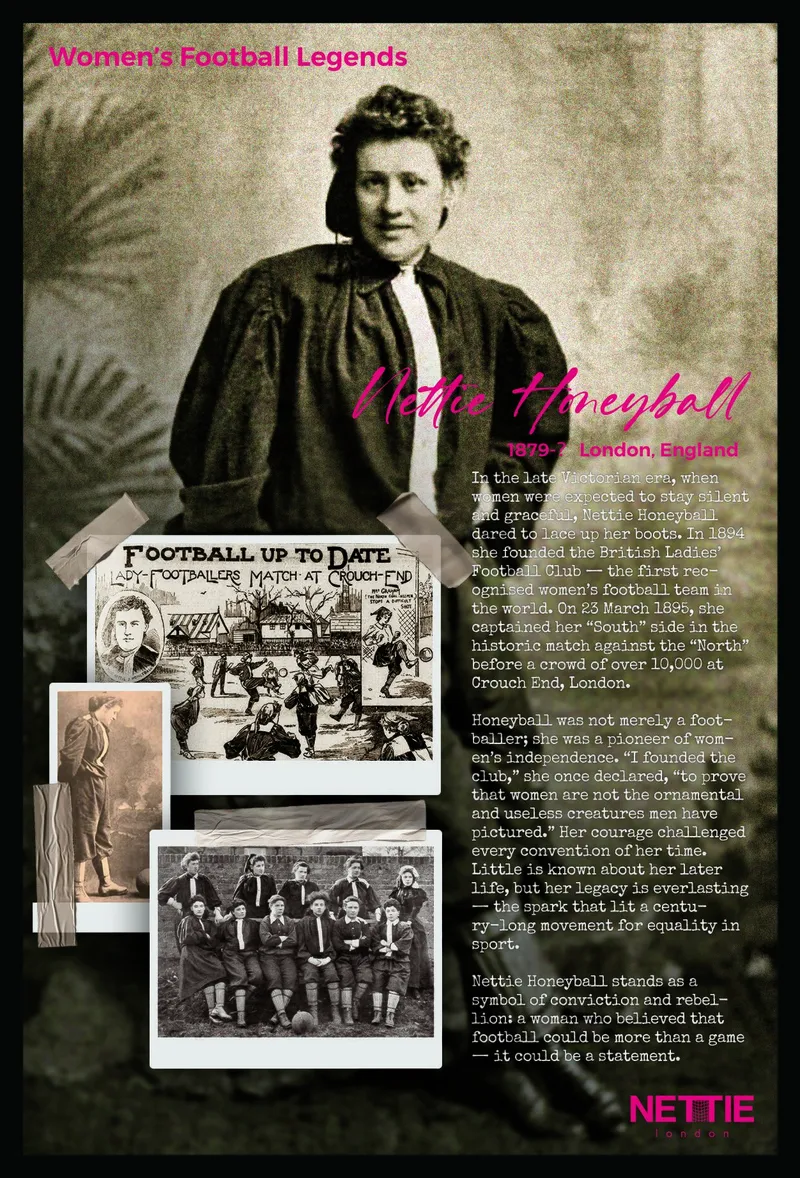
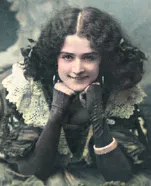
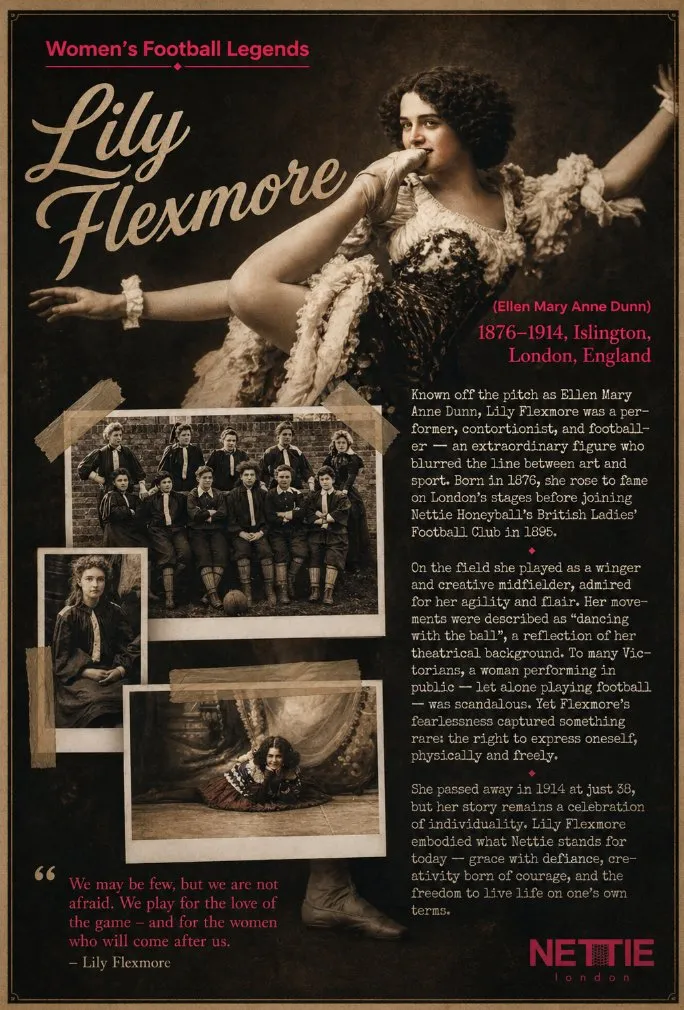
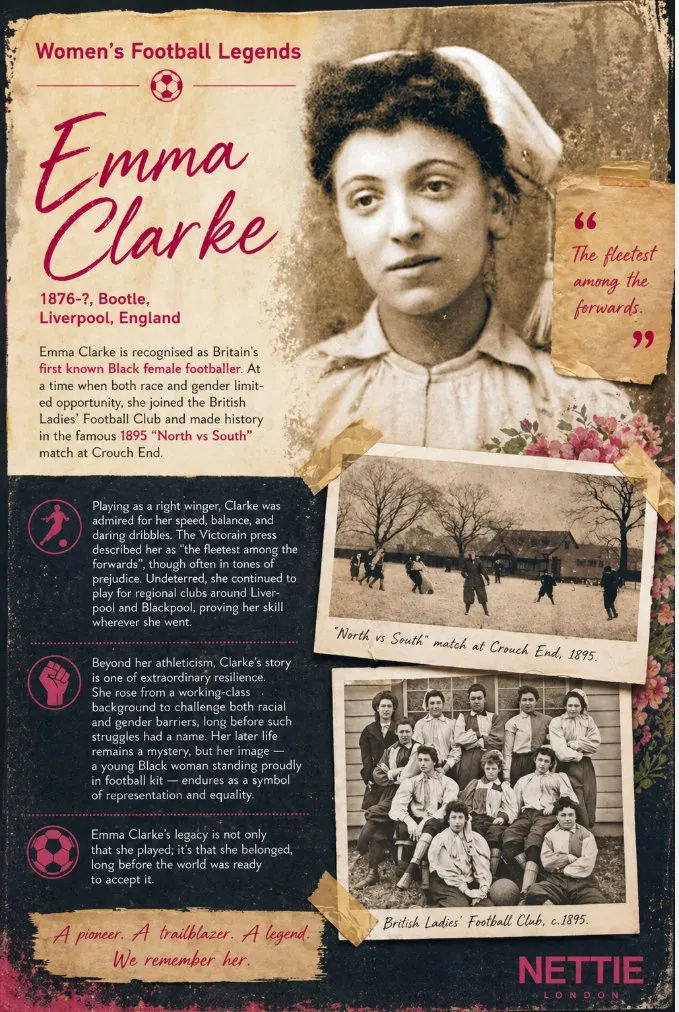
Women’s Football Legends · Nettie Honeyball · Captain · Pioneer · Trailblazer · “We may be few, but we are not afraid. We play for the love of the game - and for the women who will come after us.” · Nettie London postcard series · Honouring the founder and captain of the British Ladies Football Club, 1895 · Note: This postcard is due to be updated by Nettie London for accuracy.
WHY A PSEUDONYM?
✦ Primary Source ✦
In Her Own Words
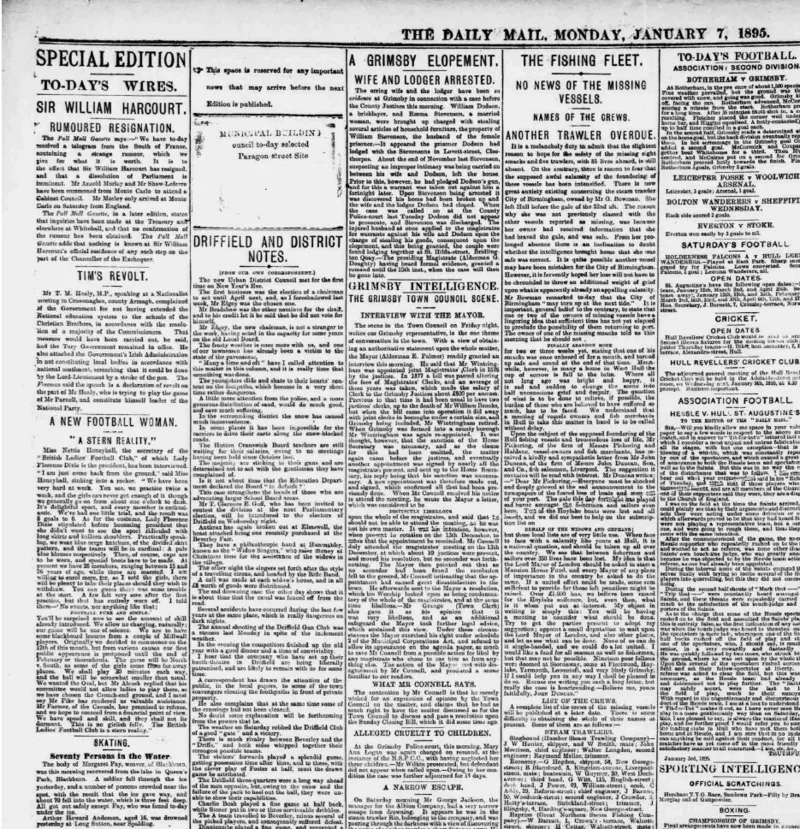
The Hull Daily Mail Interview · Monday, 7th January 1895
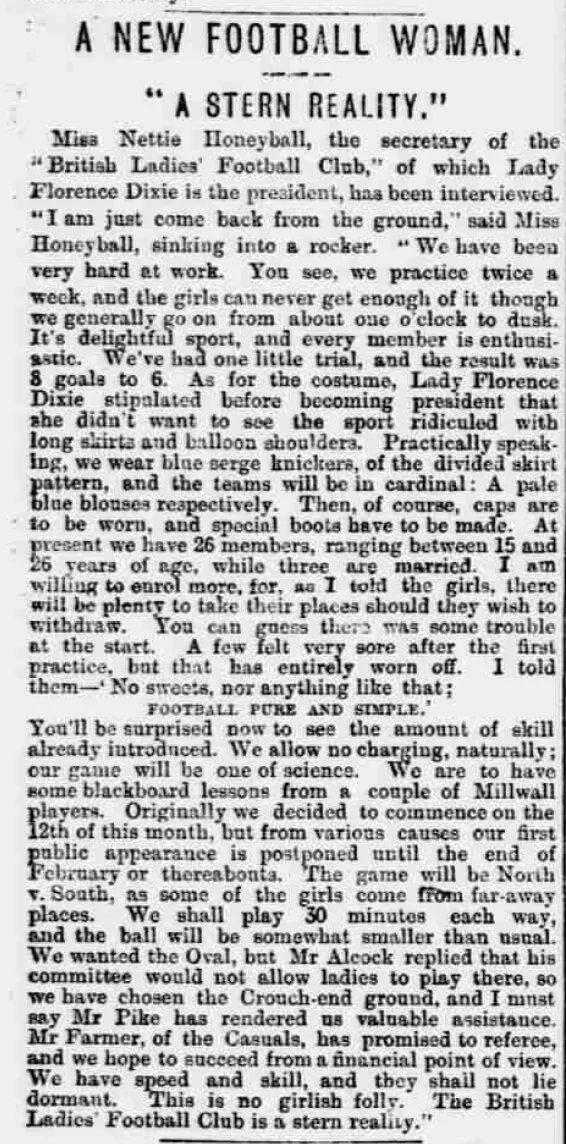
A little over ten weeks before the inaugural match on 23rd March 1895, a reporter from the Hull Daily Mail called on Miss Nettie Honeyball at her home. She had just returned from the training ground. The interview was published on Monday 7th January 1895 under the headline "A New Football Woman - A Stern Reality." It is the most detailed account of Nettie Honeyball in her own words that survives, and it tells us a great deal - about the club, the women, and the woman speaking. (This Daily Mail was the Hull paper, published from Whitefriargate, Kingston-upon-Hull - an entirely separate title from the London Daily Mail, which did not launch until May 1896.)
On Training
"I am just come back from the ground," she told the reporter, sinking into a rocker. The club practised twice a week, from about one o'clock to dusk. She described every member as enthusiastic. They had already held one internal trial - the result was eight goals to six. A sore few, she noted with evident amusement, had felt the effects of the first session: "I told them - No sweets, nor anything like that."
On the Uniform
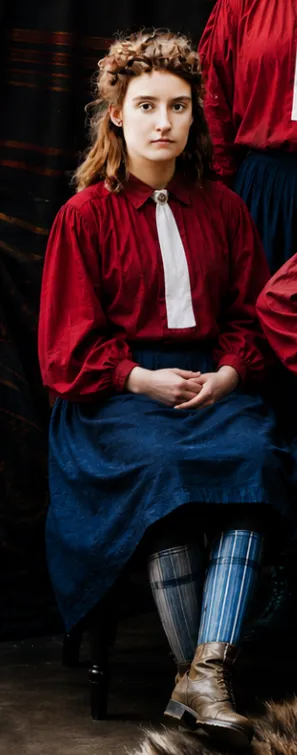
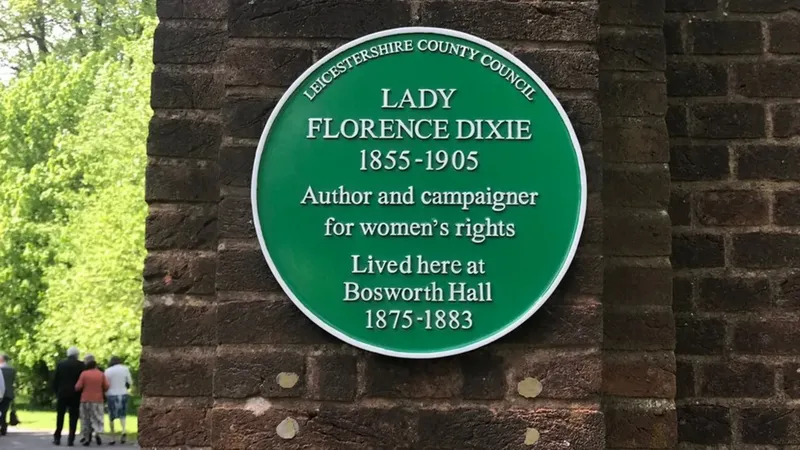
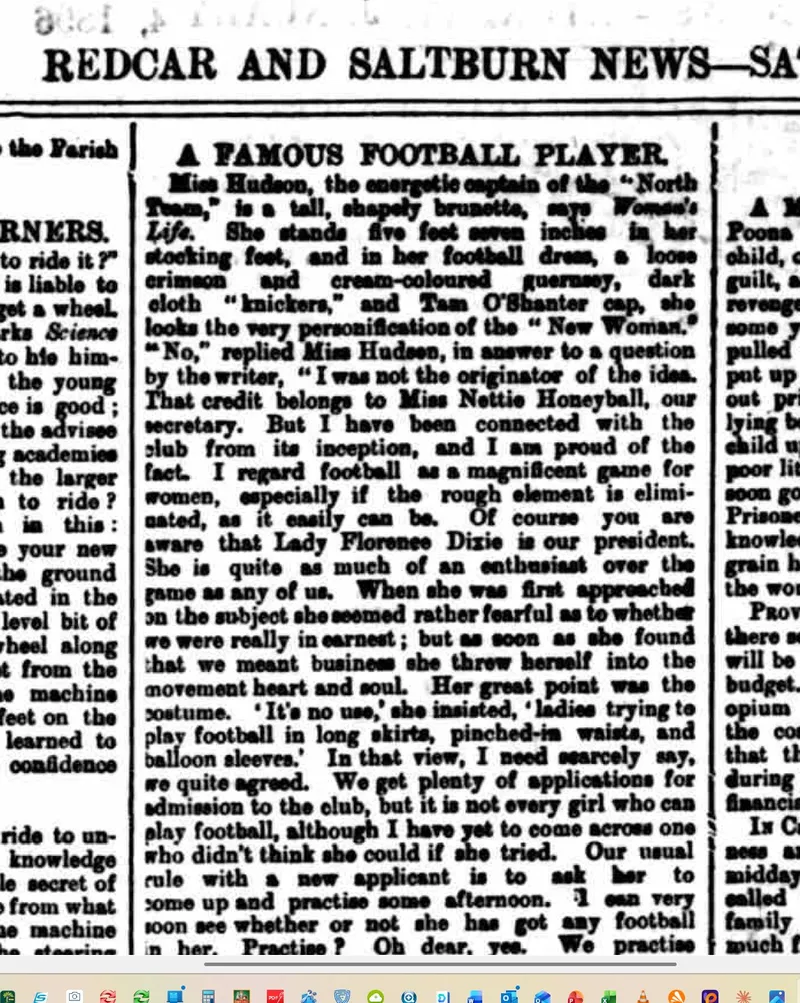
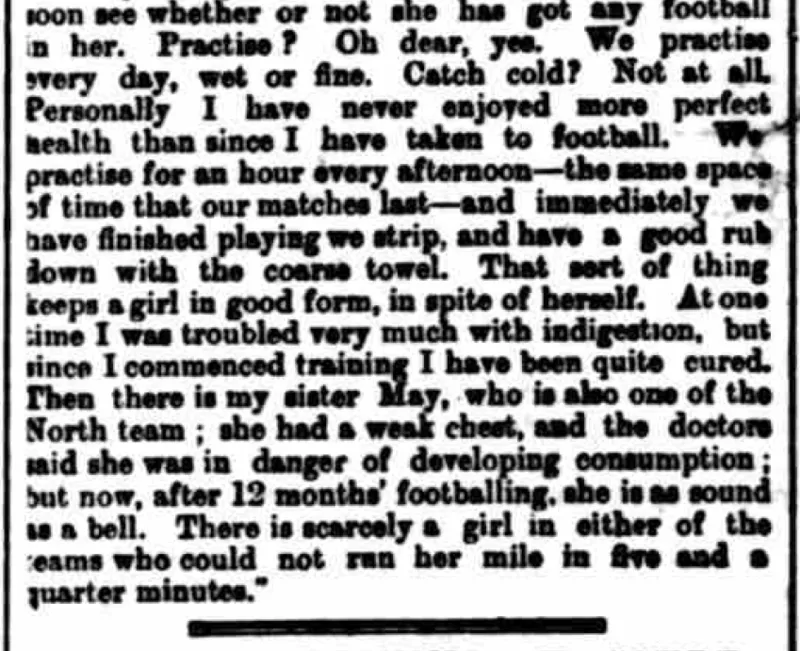
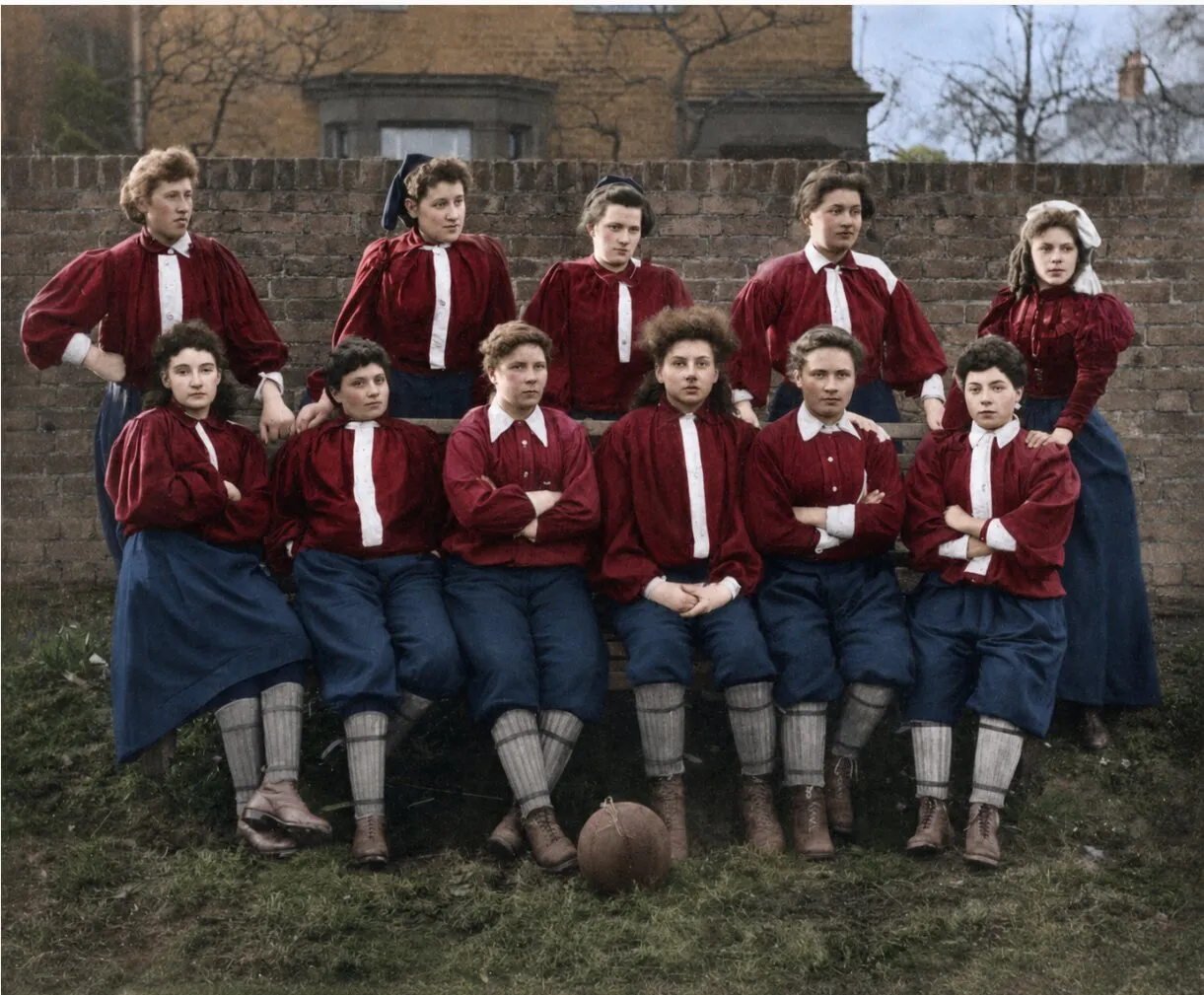
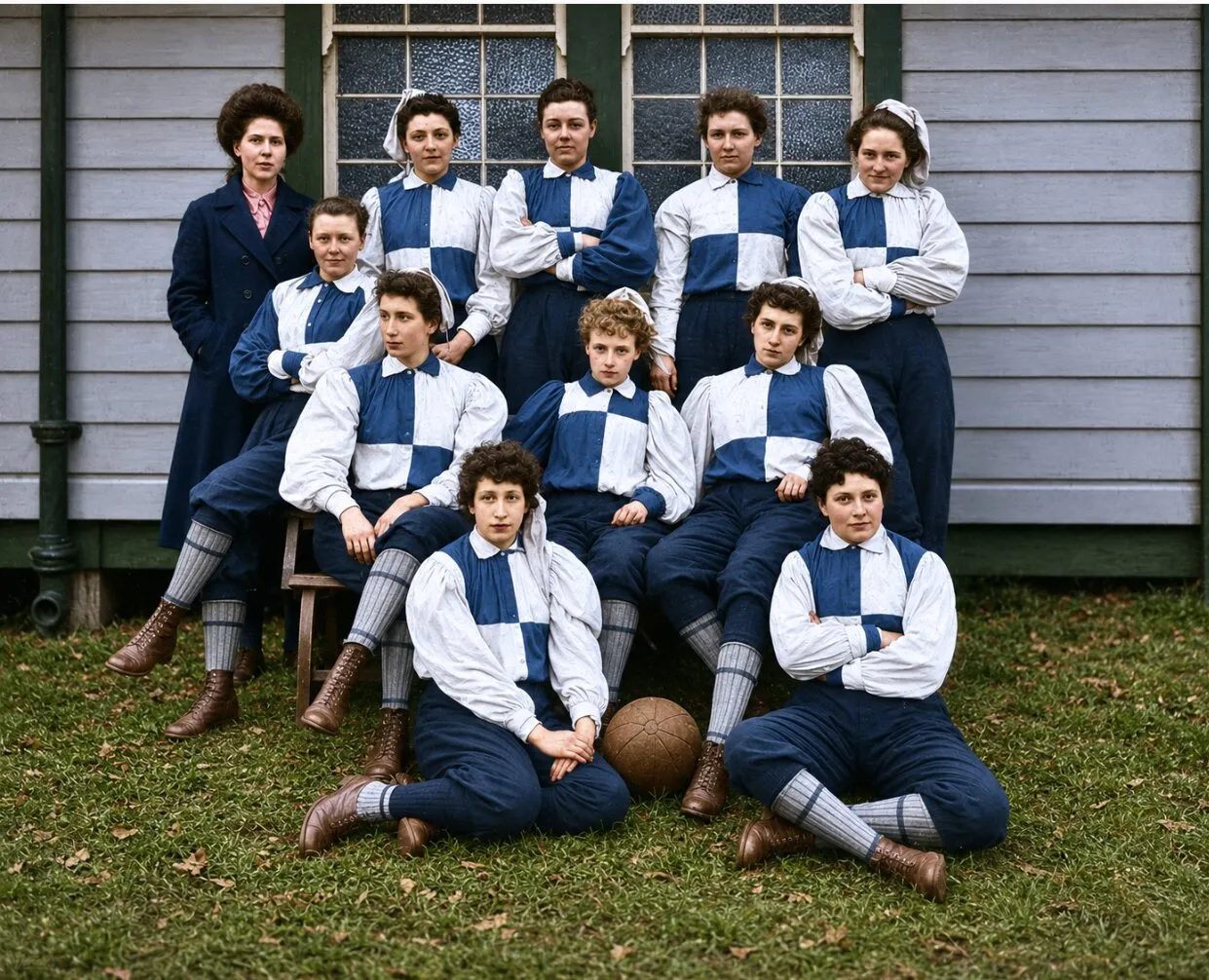
Lady Florence Dixie, she explained, had stipulated before becoming president that she did not want to see the sport ridiculed with long skirts and balloon shoulders. The solution was practical and bold: blue serge knickers of the divided skirt pattern. The teams would play in cardinal and pale blue blouses respectively. Caps were to be worn. Special boots had to be made.
On the Membership
At the time of this interview, the British Ladies Football Club had 26 members, ranging in age from 15 to 25 years. Nettie states that three of the team members were married. She was willing to enrol more: "There will be plenty to take their places should they wish to withdraw."
On the Football Itself
There would be no charging. The game, she insisted, would be one of science. They were to receive blackboard lessons from a couple of Millwall players. The match would be North London versus South London, as some of the girls came from far-away places, and each half would be 30 minutes. The ball would be somewhat smaller than usual.
On the Venue
They had originally planned to commence on 12th January but postponed to the end of February. The Oval had been their first choice, but Mr Alcock replied that his committee would not allow ladies to play there. So they chose the Crouch End ground. Mr Pike, she said, had rendered them valuable assistance. Mr Farmer of the Casuals had promised to referee.
"This is no girlish folly.
The British Ladies Football Club is a stern reality."
Nettie Honeyball · Hull Daily Mail, 7th January 1895
✦ Primary Source ✦
A Letter to the Editor
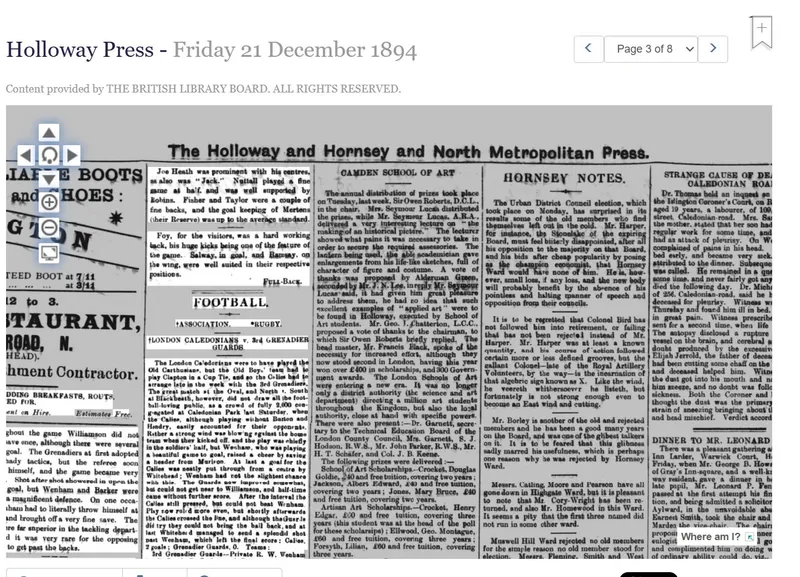
The Holloway Press · Friday 21st December 1894
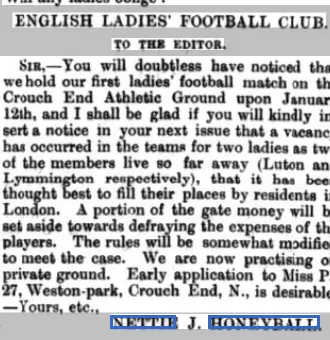
Three months before the inaugural match, Nettie Honeyball wrote directly to the editor of the Holloway Press - signing her full name. The letter, published on 21st December 1894, is one of the earliest surviving documents in her own hand, and it contains several details found nowhere else.
"Sir - You will doubtless have noticed that we hold our first ladies' football match on the Crouch End Athletic Ground upon January 12th, and I shall be glad if you will kindly insert a notice in your next issue that a vacancy has occurred in the teams for two ladies as two of the members live so far away (Luton and Lymmington respectively), that it has been thought best to fill their places by residents in London. A portion of the gate money will be set aside towards defraying the expenses of the players. The rules will be somewhat modified to meet the case. We are now practising on private ground. Early application to Miss P., 27, Weston-park, Crouch End, N., is desirable."
- NETTIE J. HONEYBALL
What This Letter Reveals
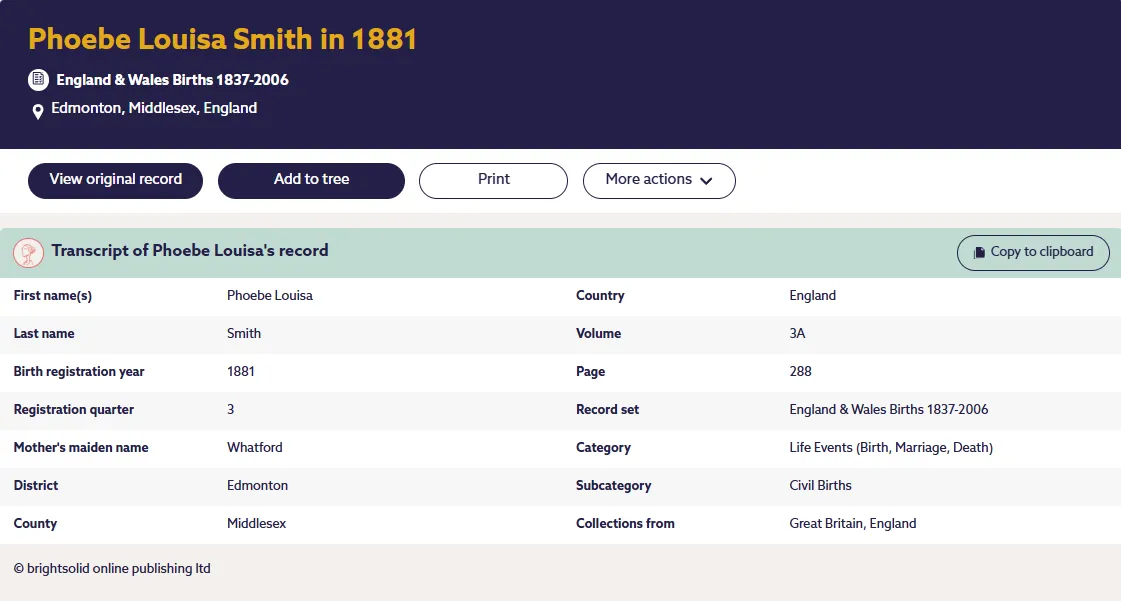
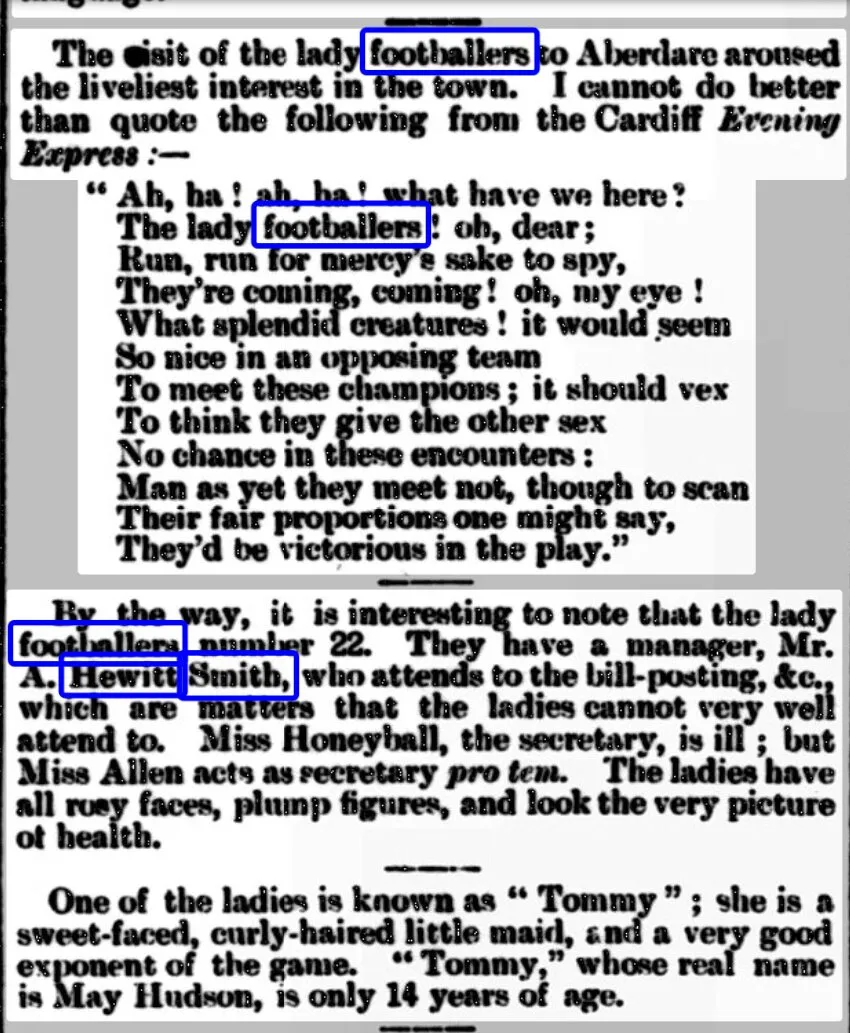
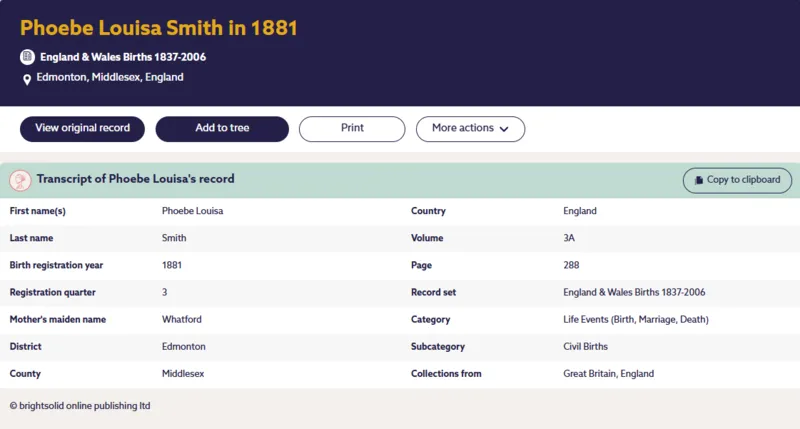
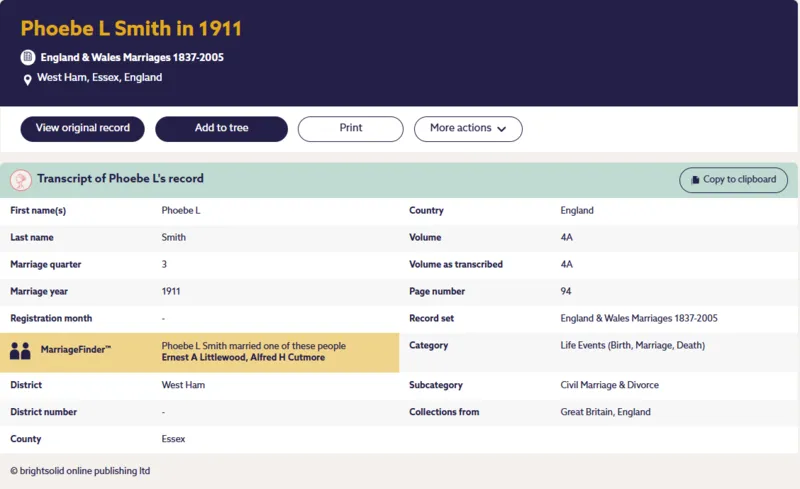
The match was originally planned for 12th January 1895 - it would move twice before finally taking place on 23rd March. Two members had already dropped out, one from Luton, one from Lymington in Hampshire - a remarkable distance to travel to practise twice a week. The gate money was to be shared with the players to defray expenses. The rules were to be modified. And applications were directed not to Nettie herself but to Miss P., 27 Weston Park - the same address. Research has identified Miss P. as Phoebe Louisa Smith, thirteen years old, sister of the club's manager Alfred Hewitt Smith. Nettie signed the letter - but Phoebe handled the correspondence.
Most significantly of all: Nettie signs this letter as Nettie J. Honeyball, publicly and without hesitation, in December 1894 - three months before the match, and three months before the Hull Daily Mail interview in which she declared the club "a stern reality." She was already fully committed, fully public, and fully Nettie.
"Early application to Miss P., 27, Weston-park, Crouch End, N., is desirable."
Nettie J. Honeyball · Letter to the Editor · Holloway Press, 21st December 1894
✦ Primary Source ✦
In Her Own Words - II
The Holloway Press Interview · Friday 22nd February 1895
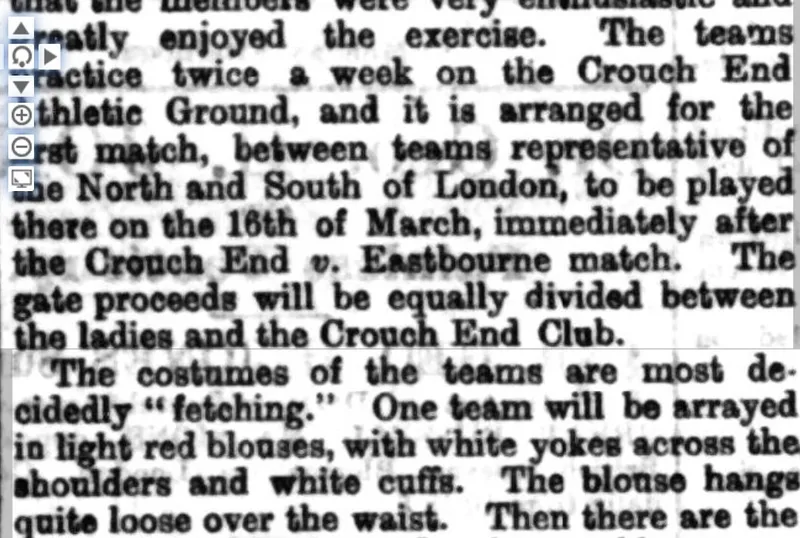
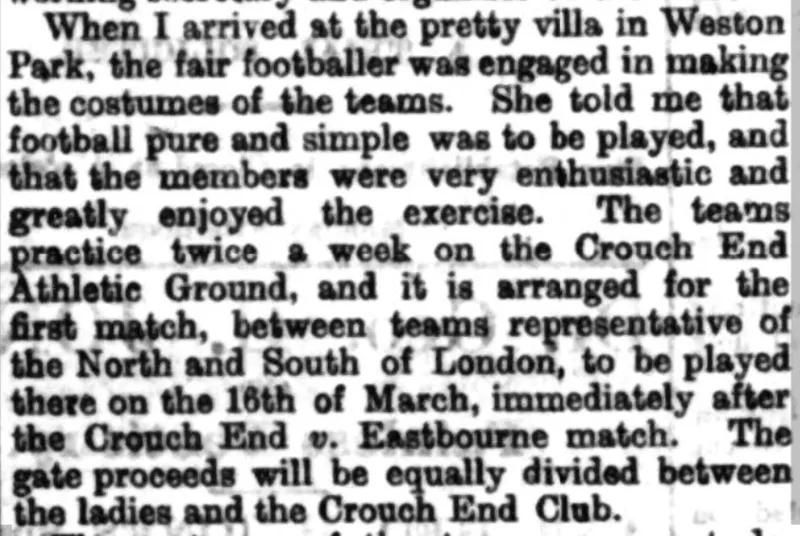
A month before the inaugural match, a reporter from the Holloway Press called at the pretty villa in Weston Park. When he arrived, the fair footballer was engaged in making the costumes of the teams - stitching the kit herself, with her own hands. Not commissioning it. Making it. She was funding the entire enterprise from her own pocket, designing and sewing the uniforms, managing the press, and preparing to captain the North team. The interview that followed is one of the most detailed surviving accounts of Nettie Honeyball - and it contains facts found nowhere else.
On the Match Date
The first match was originally arranged for 16th March - immediately after the Crouch End v. Eastbourne match - with gate proceeds equally divided between the ladies and the Crouch End Club. It was later rescheduled to 23rd March. The teams were practising twice a week on the Crouch End Athletic Ground.
On the Costume
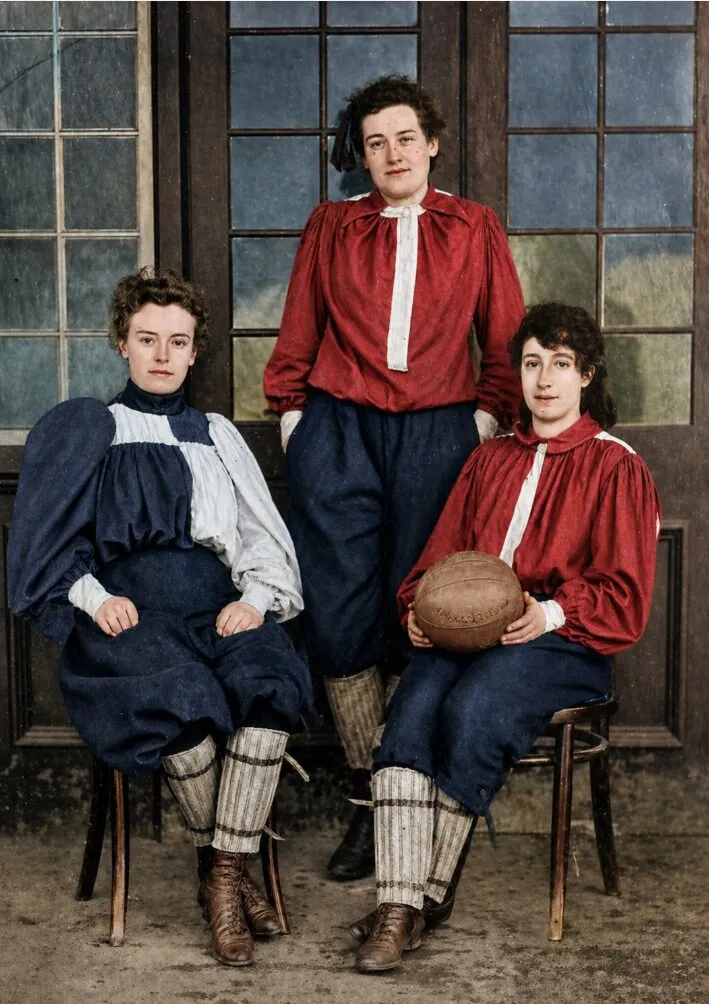
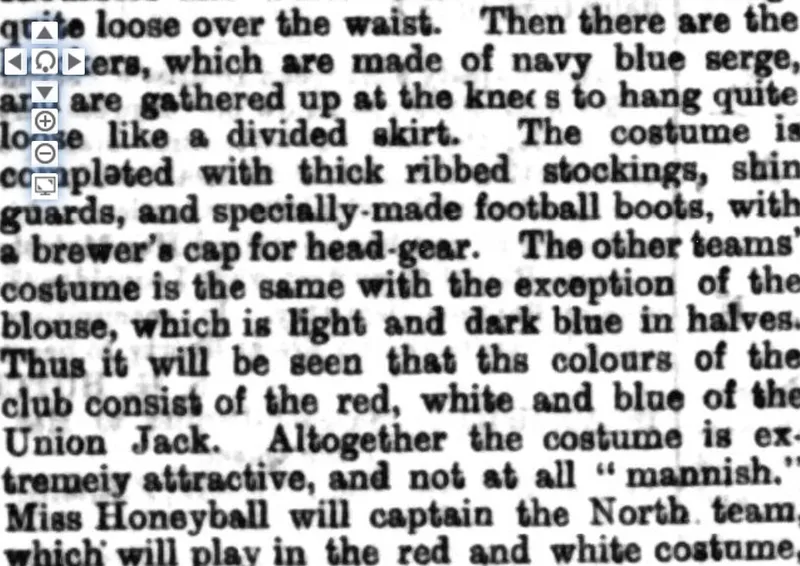
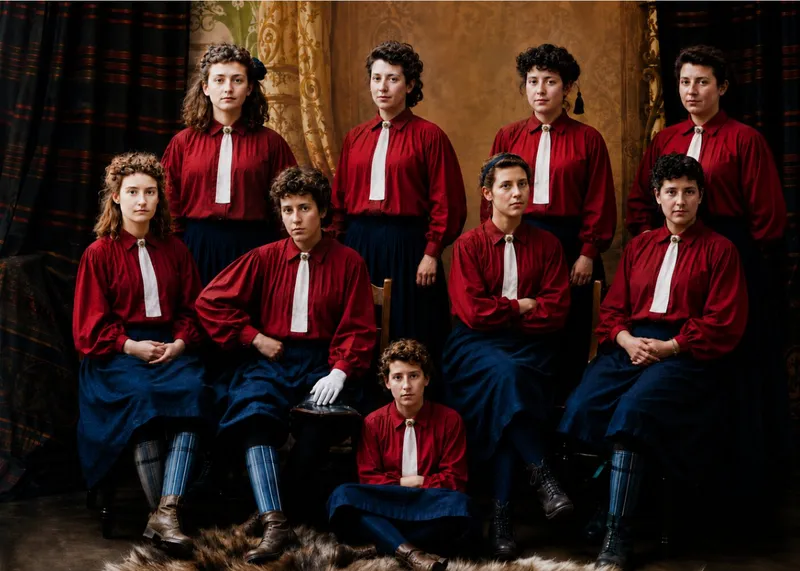
The North team - Nettie's own - would wear light red blouses with white yokes across the shoulders and white cuffs, hanging quite loose over the waist. The knickers were navy blue serge, gathered up at the knees to hang like a divided skirt. The costume was completed with thick ribbed stockings, shin guards, specially-made football boots, and a brewer's cap for headgear. The South team wore the same, but with blouses of light and dark blue in halves. The colours of the club as a whole - red, white, and blue - were those of the Union Jack. The costume was, the reporter noted, extremely attractive, and not at all "mannish."
✦ Let’s Be Rational
When the press described the BLFC kit as “rational” - or when Nellie Gilbert recalled being among the first to wear “the rational” in Essex - they were using a precise term with a specific history. It referred to the principles of the Rational Dress Society, founded in London in 1881 as part of the broader Victorian dress reform movement. The Society described its purpose in terms that left no room for ambiguity:
“The Rational Dress Society protests against the introduction of any fashion in dress that either deforms the figure, impedes the movements of the body, or in any way tends to injure the health. It protests against the wearing of tightly-fitting corsets; of high-heeled shoes; of heavily-weighted skirts, as rendering healthy exercise almost impossible; and of all tie down cloaks or other garments impeding on the movements of the arms. It protests against crinolines or crinolettes of any kind as ugly and deforming… It requires all to be dressed healthily, comfortably, and beautifully, to seek what conduces to health, comfort and beauty in our dress as a duty to ourselves and each other.”
The BLFC kit - loose blouses, serge knickers gathered at the knee, flat boots, no corsets - was rational dress in practice. Lady Florence Dixie had made it an explicit condition of her presidency: the players must dress rationally. When the Burnham Gazette later described the ladies as going on tour “equipped with the leather globe, dresses rational and irrational, and a manager,” it was not mere wordplay. The rational was a political statement, stitched into every seam.
On the Players
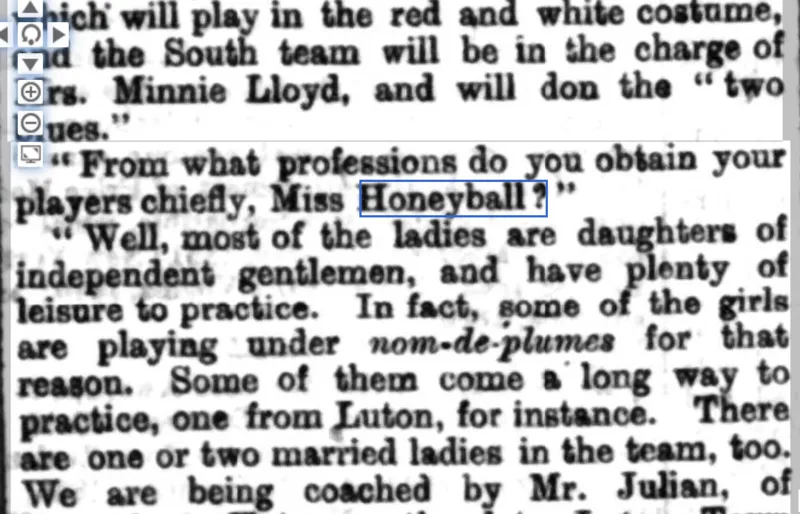
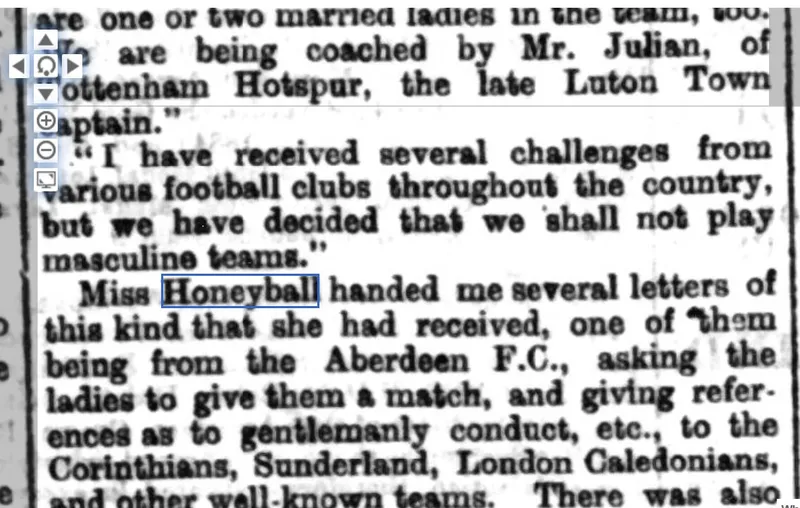
"Well, most of the ladies are daughters of independent gentlemen, and have plenty of leisure to practice. In fact, some of the girls are playing under nom-de-plumes for that reason." One player came from as far as Luton. There were one or two married ladies in the team. They were being coached by Mr. Julian of Tottenham Hotspur, the late Luton Town captain. The South team was in the charge of Mrs. Minnie Lloyd.
On the Challenges
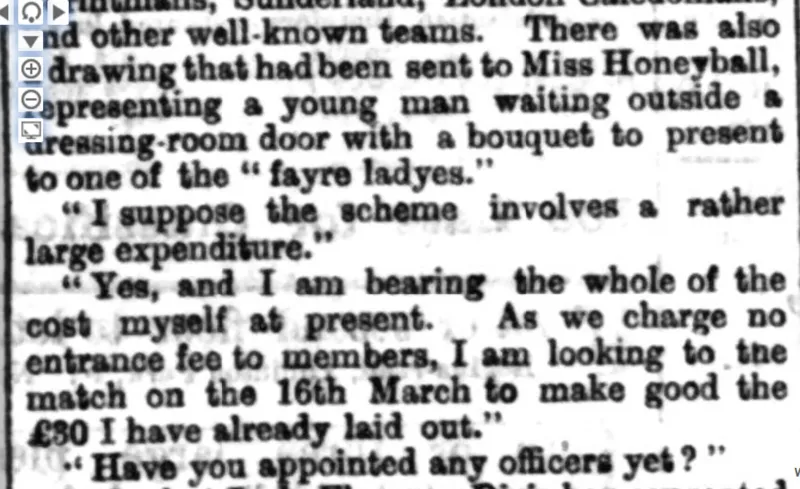
Miss Honeyball had received several challenges from football clubs throughout the country - but the club had decided they would not play masculine teams. She showed the reporter the letters, one from Aberdeen F.C., which gave references as to gentlemanly conduct to the Corinthians, Sunderland, and London Caledonians. There was also a drawing sent to Miss Honeyball by an admirer - a young man waiting outside a dressing-room door with a bouquet for one of the "fayre ladyes."
On Bearing the Cost
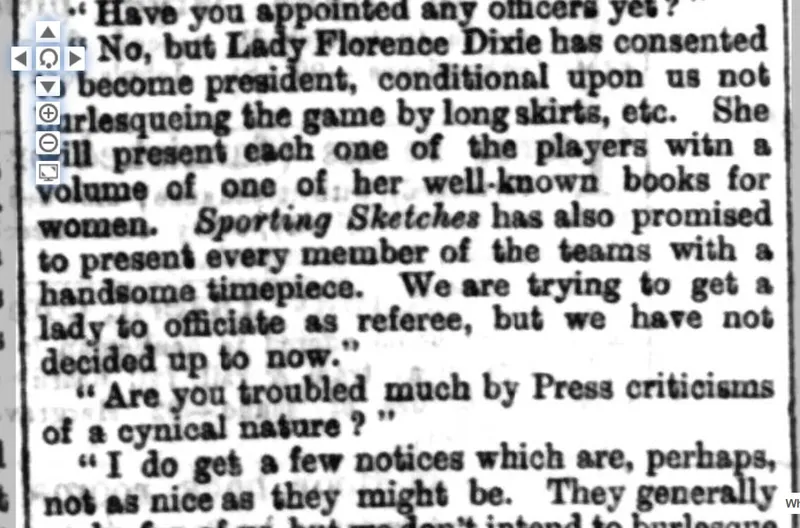
"Yes, and I am bearing the whole of the cost myself at present. As we charge no entrance fee to members, I am looking to the match on the 16th March to make good the £30 I have already laid out." Thirty pounds - a considerable sum in 1895. Lady Florence Dixie had consented to become president, on condition that the game not be burlesqued by long skirts. She would present each player with a volume of one of her books for women. The magazine Sporting Sketches had also promised to present every member of the teams with a handsome timepiece.
On the Press
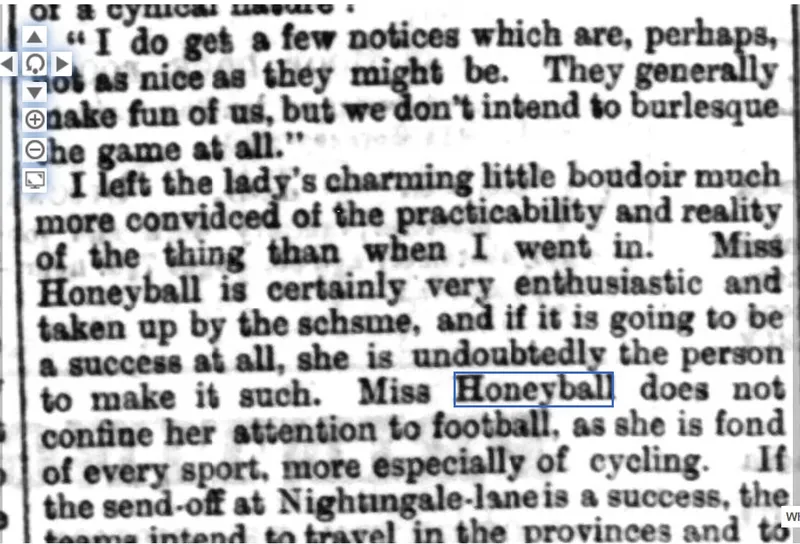
"I do get a few notices which are, perhaps, not as nice as they might be. They generally make fun of us, but we don't intend to burlesque the game at all."
The Reporter's Verdict
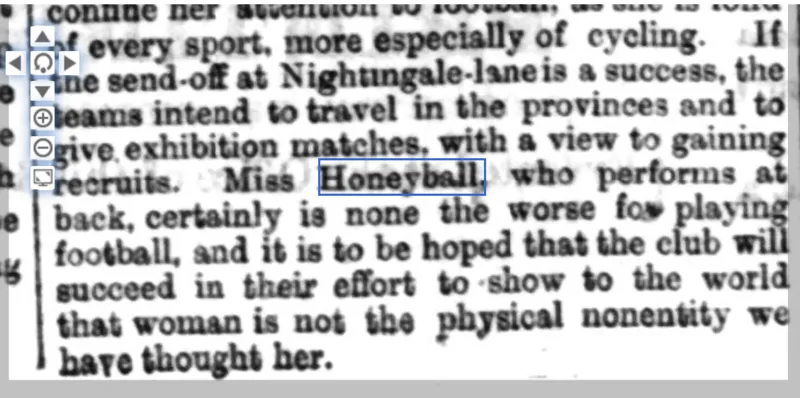
He left the lady's charming little boudoir, he wrote, much more convinced of the practicability and reality of the thing than when he went in. "Miss Honeyball is certainly very enthusiastic and taken up by the scheme, and if it is going to be a success at all, she is undoubtedly the person to make it such." She did not confine her attention to football - she was fond of every sport, most especially cycling. And if the send-off at Nightingale-lane proved a success, the teams intended to travel the provinces and give exhibition matches to gain recruits. Miss Honeyball, the reporter noted, played at back - and was certainly none the worse for playing football. "It is to be hoped that the club will succeed in their effort to show to the world that woman is not the physical nonentity we have thought her."
✦ A Note on the Timepieces and the Books
Lady Florence Dixie promised each player a copy of one of her books for women - almost certainly Gloriana; or, The Revolution of 1900, her feminist utopian novel: a deeply pointed gift. Sporting Sketches promised every member a handsome timepiece. If any of those watches survived - passed down through a family with no idea of its significance - they would be among the most extraordinary artefacts in the history of women's sport.
"When I arrived at the pretty villa in Weston Park,
the fair footballer was engaged in making the costumes of the teams."
Nettie J. Honeyball · Holloway Press, 22nd February 1895
The prevailing view among earlier researchers held that Nettie Honeyball was a pseudonym rather than a real name. No birth, marriage, death, or census record for anyone named Nettie Honeyball has been found that corresponds to the woman described in contemporary accounts, and the name itself has the quality of an invention - vivid, memorable, and slightly theatrical, as if designed to be noticed in a newspaper headline.
Victorian women who stepped into public life, particularly in contexts their society deemed improper, frequently adopted assumed names to protect themselves, their families, and their livelihoods from social and professional consequences. For a woman organising a women's football club in 1895, the risks of public identification were real and considerable. That reading is examined below as Theory One. But it is not the only possibility: as Theory Two sets out, more recent evidence raises a real prospect that Honeyball - if not Nettie - was her genuine surname all along. Both are presented in full below, as independent, self-contained cases, rather than a single settled conclusion.
✦ Two Theories, Independently Researched ✦
This investigation has produced two distinct candidates for the woman behind the name Nettie Honeyball, developed independently and at different stages of this research. Both are set out in full below, in the order in which they were investigated - presented as two separate, self-contained cases for the reader to weigh side by side, rather than a single unfolding argument.
✦ Theory One ✦
What if "Nettie Honeyball" was not a person -
but a constructed identity?
This theory's evidence points to Jessie Mary Ann Allen - founder member, Secretary, and resident of the same Crouch End address - as the most likely person behind the name. A second, independent theory, set out later on this page, reaches a different conclusion.
Same Address
Ellesmere,
27 Weston Park
No Record Exists
No birth, marriage
or death record
Same Role
Founder & driving
force of the BLFC
↓ The full evidence is presented below ↓
THEORY ONE - A PSEUDONYM FOR JESSIE MARY ANN ALLEN
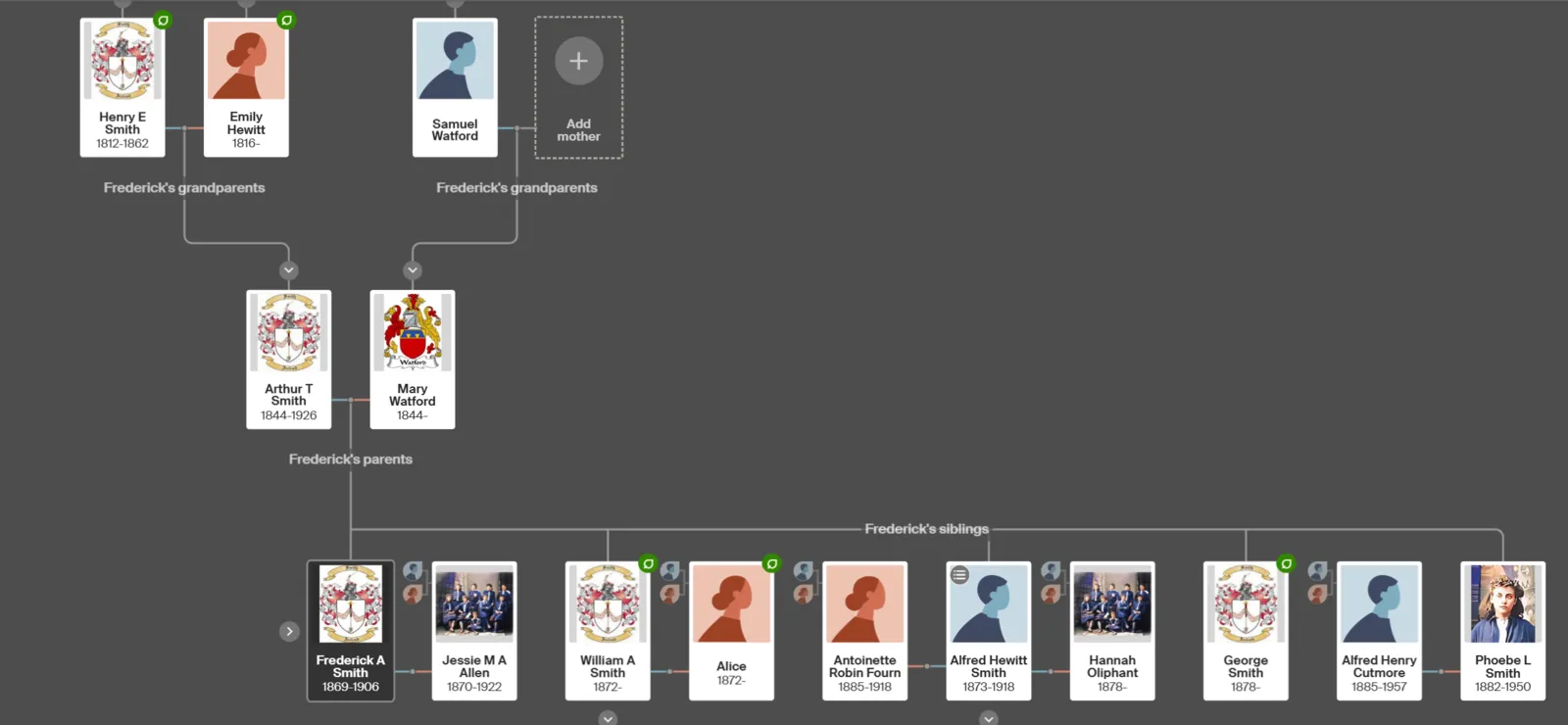
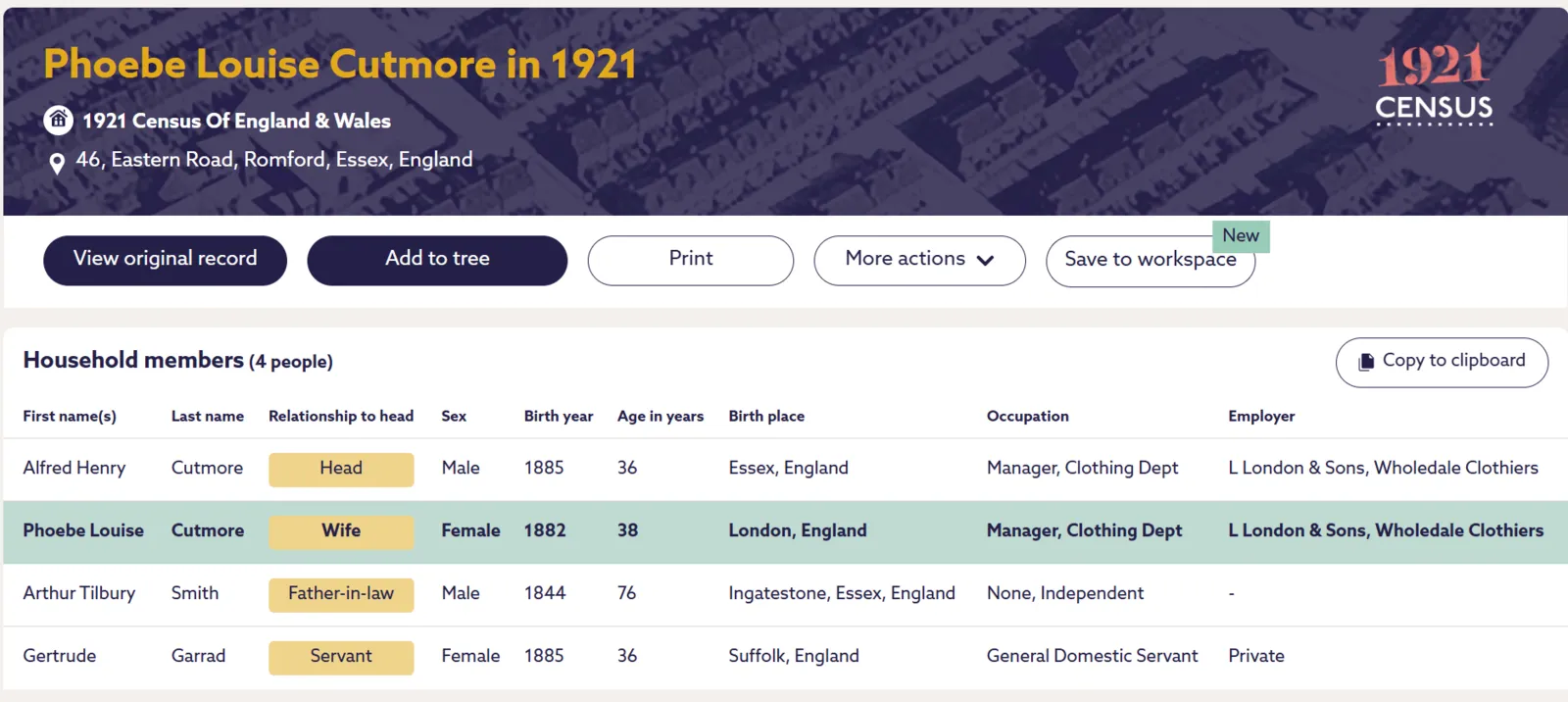
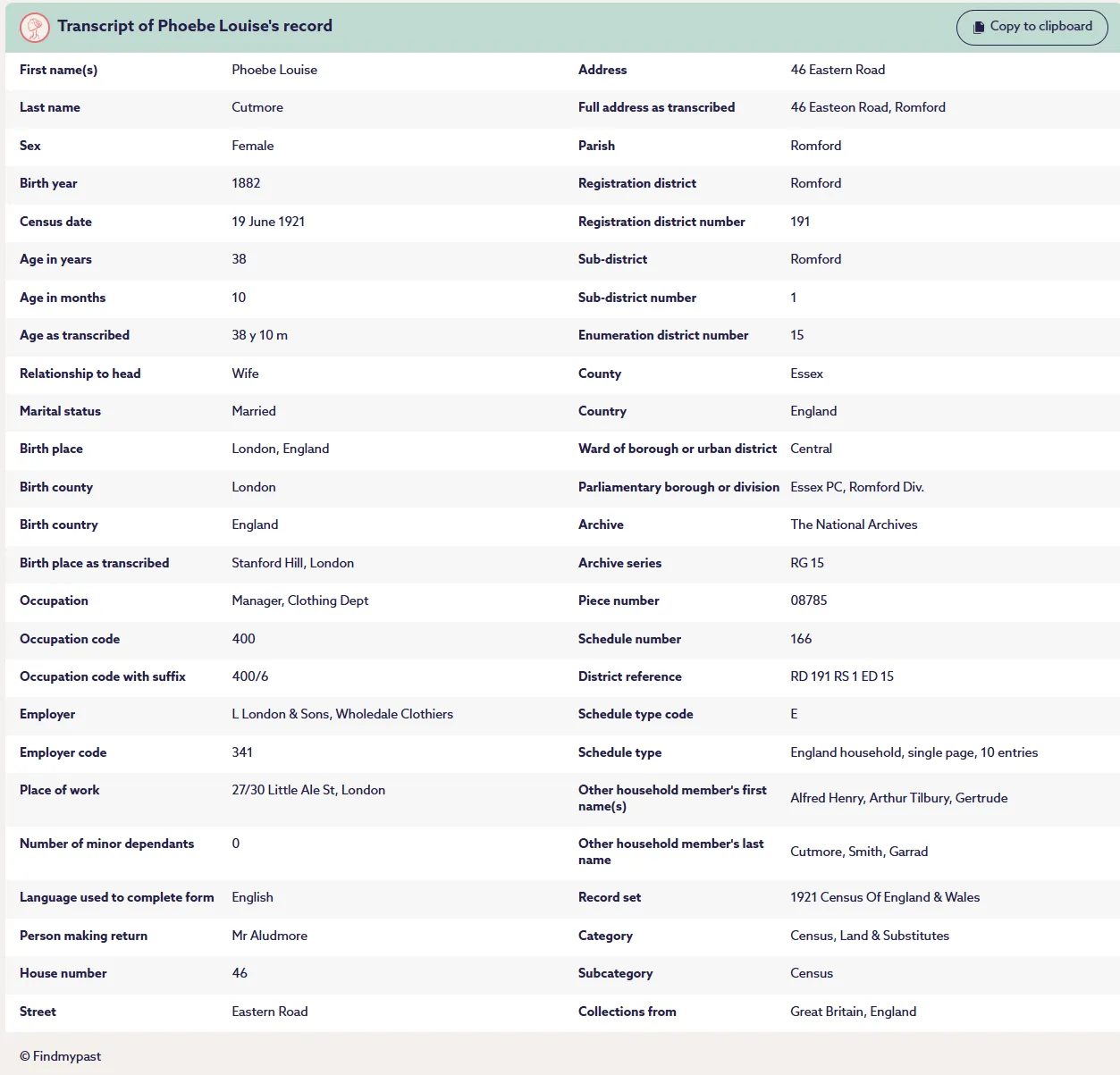
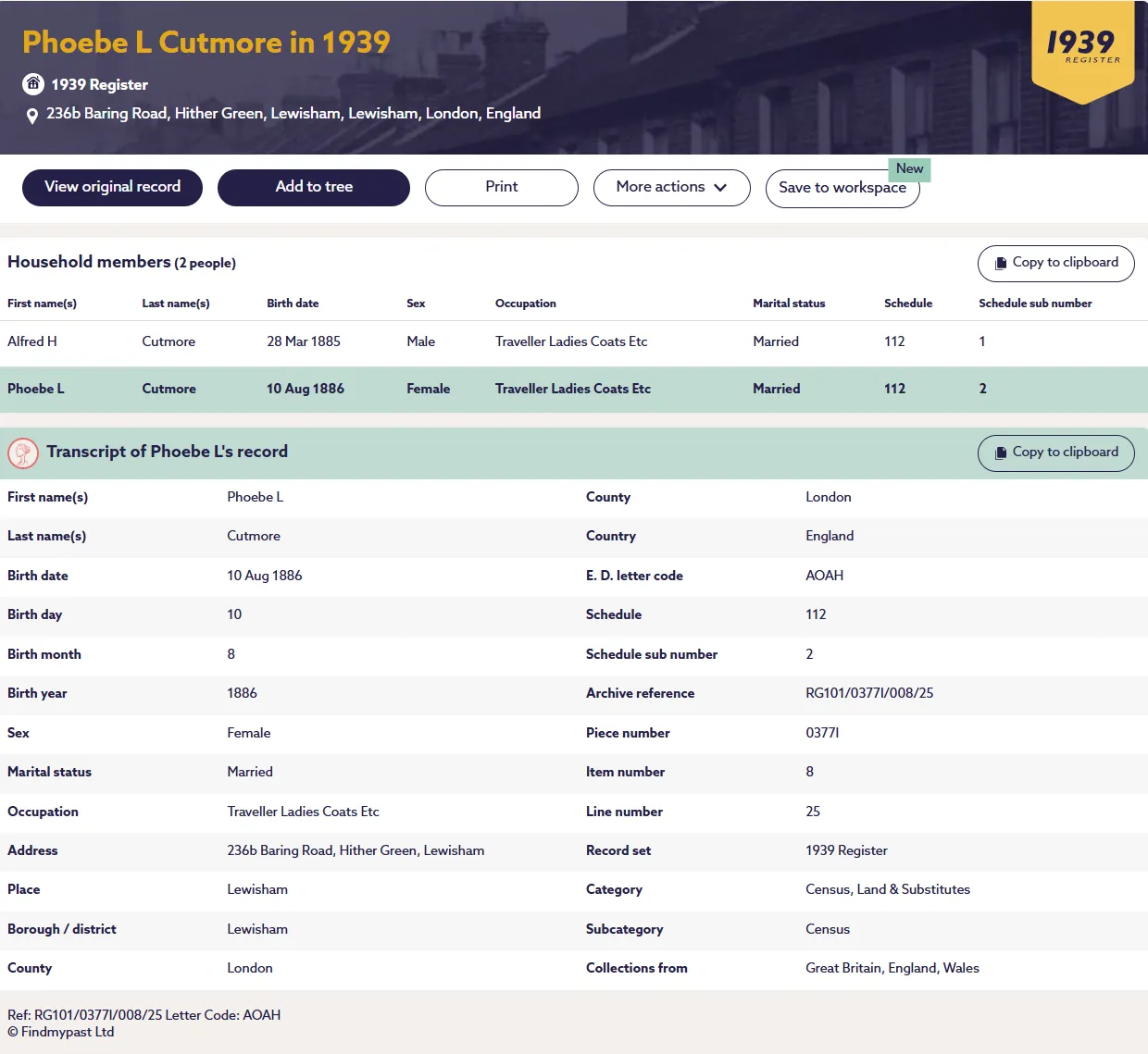
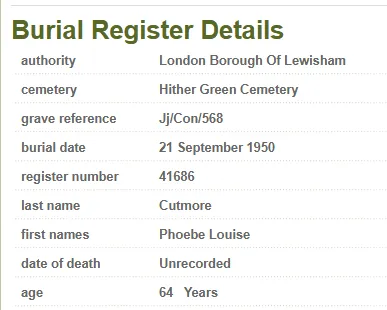
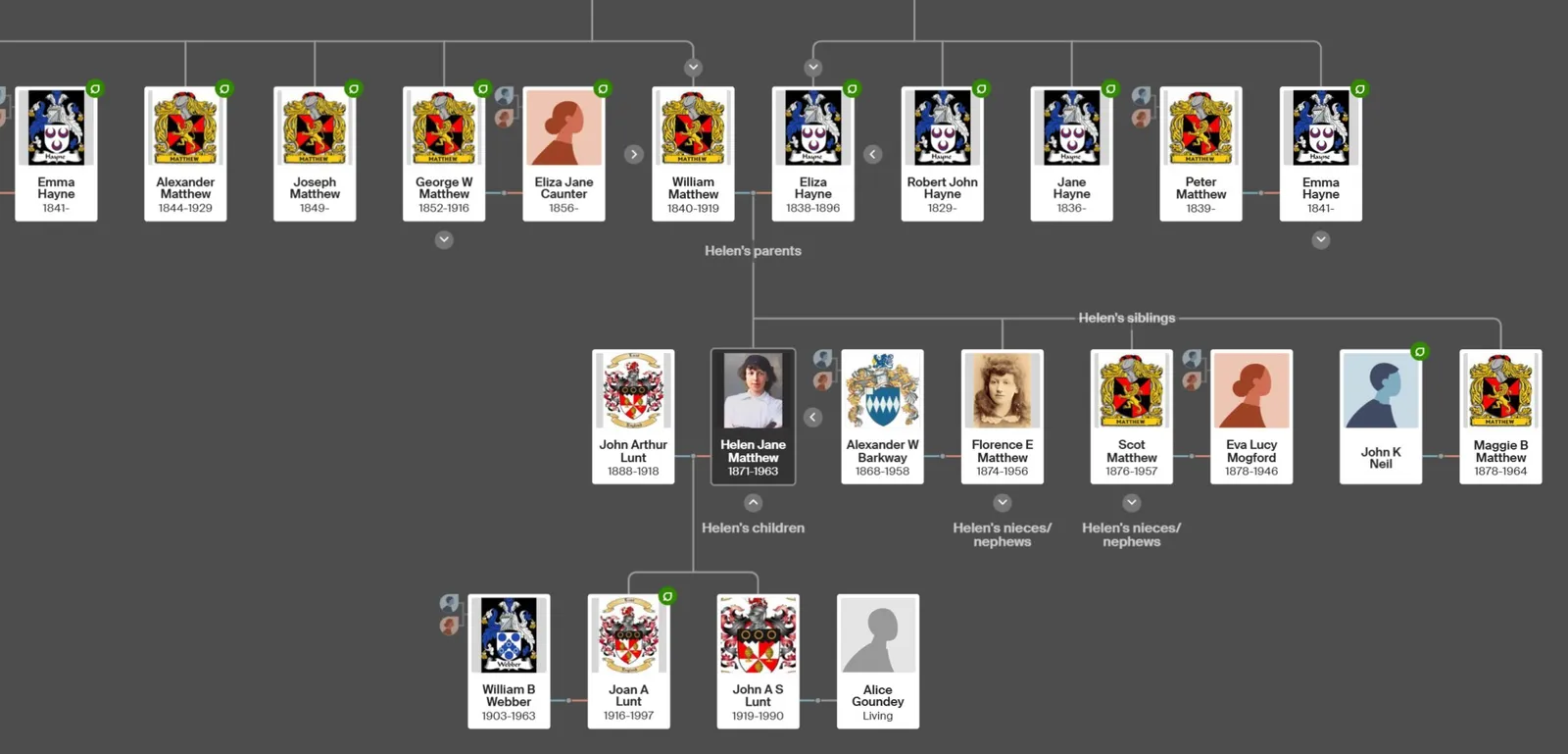
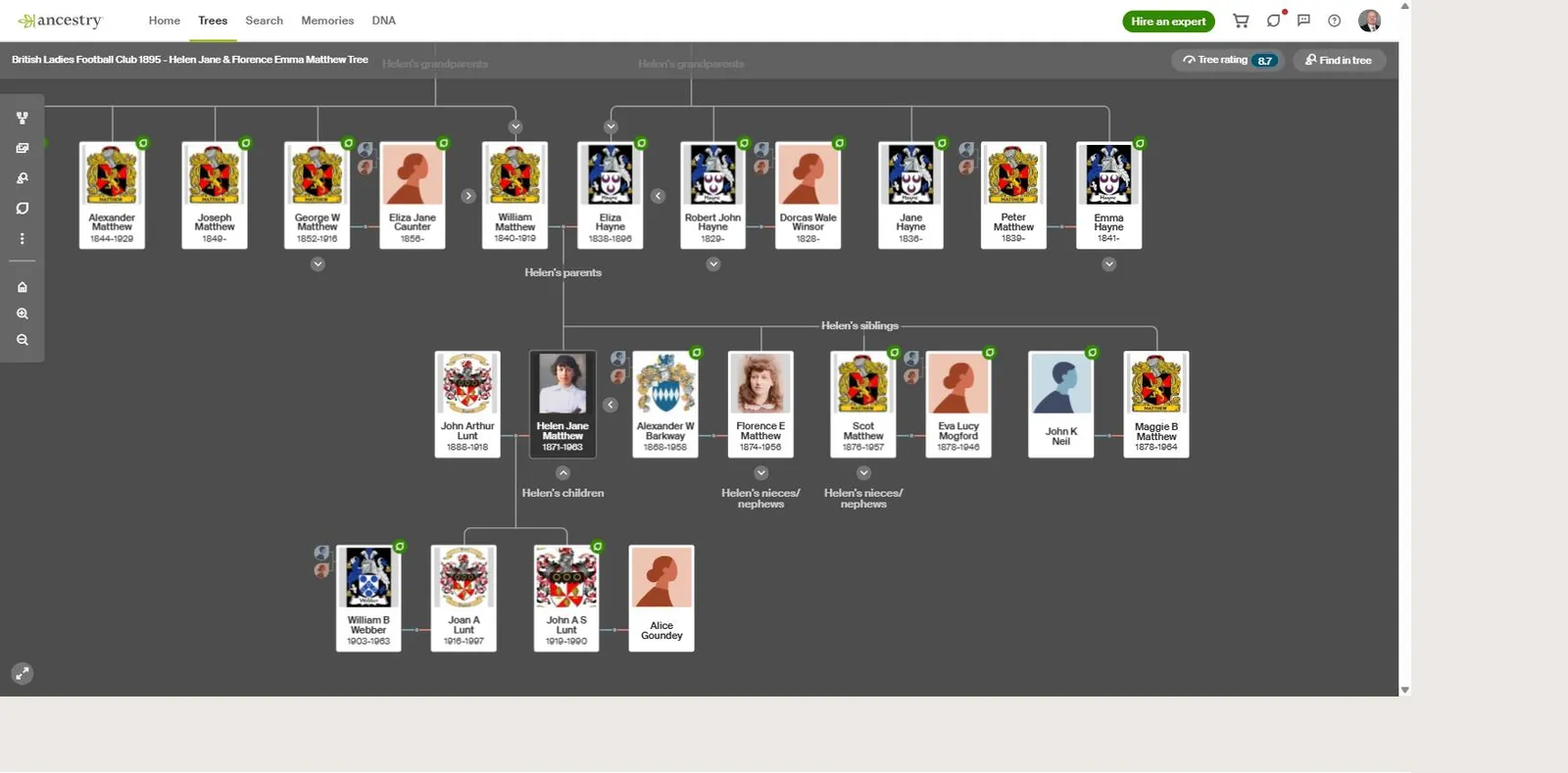
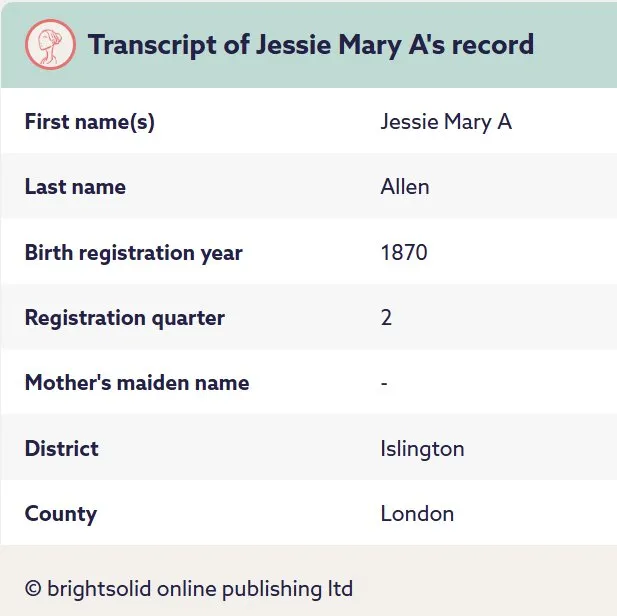
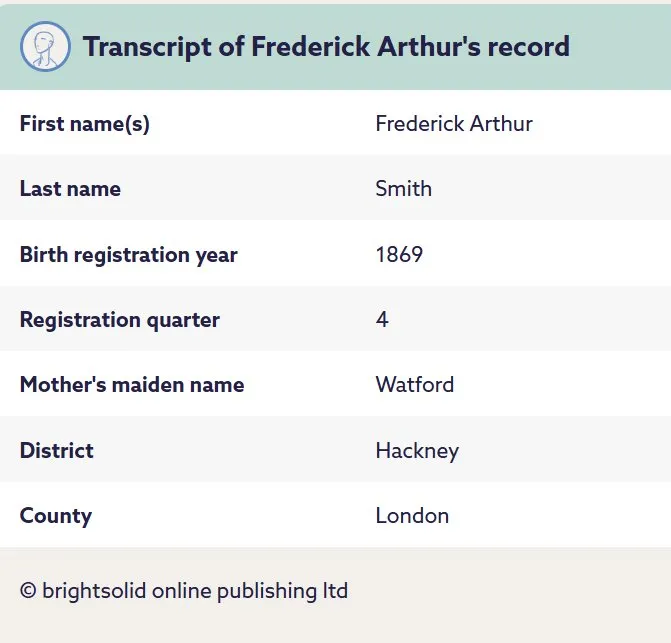
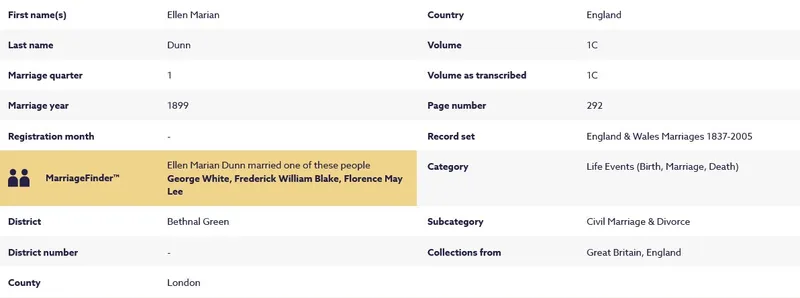
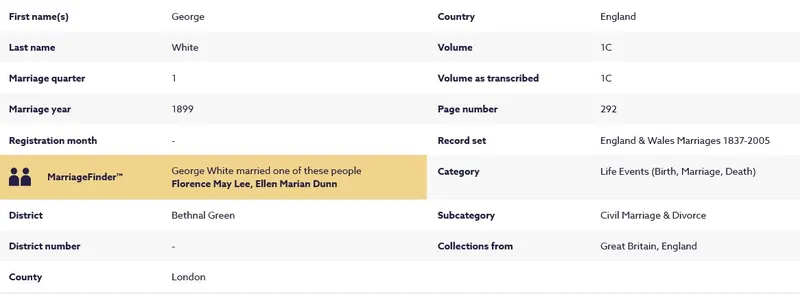
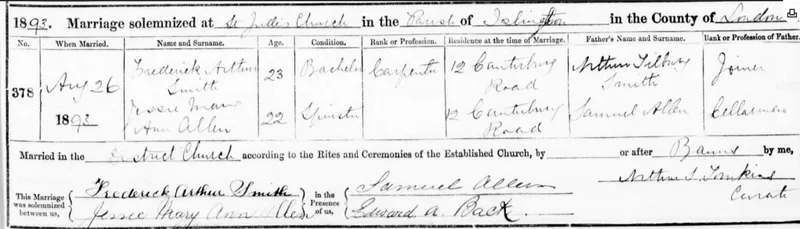
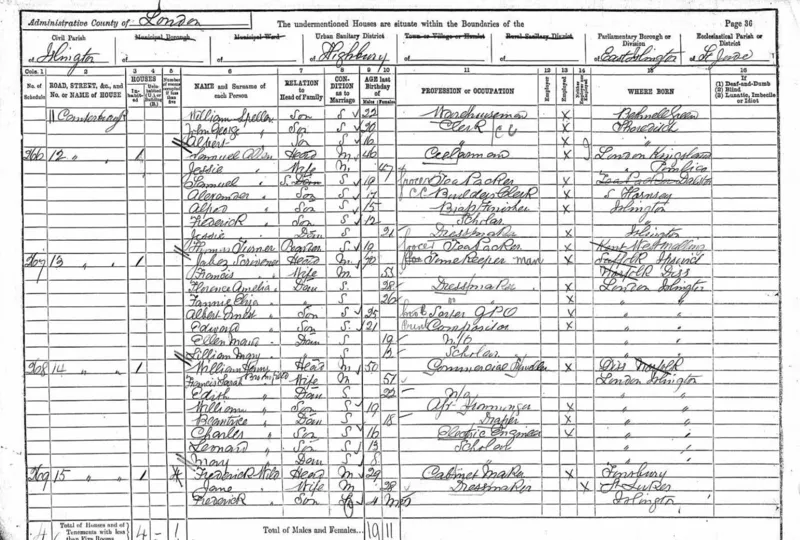
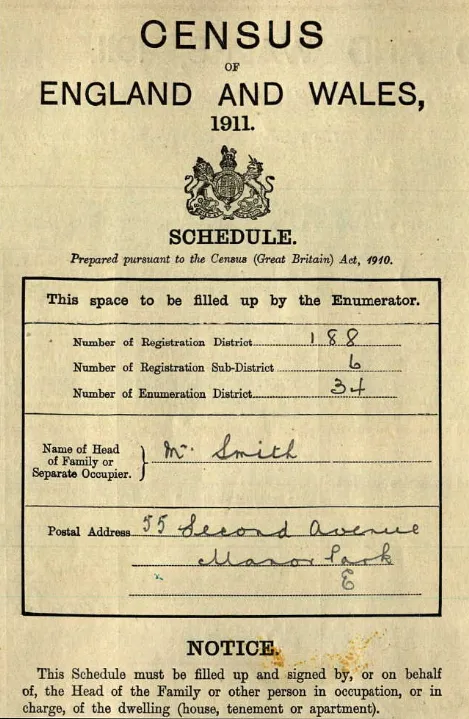
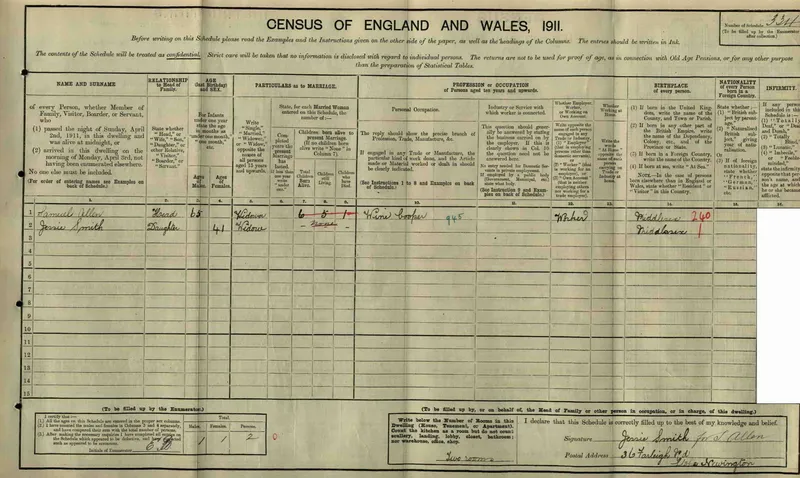
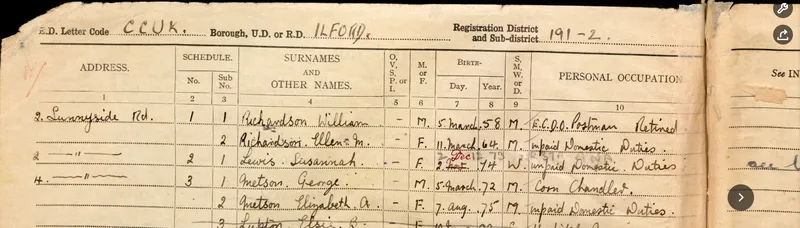
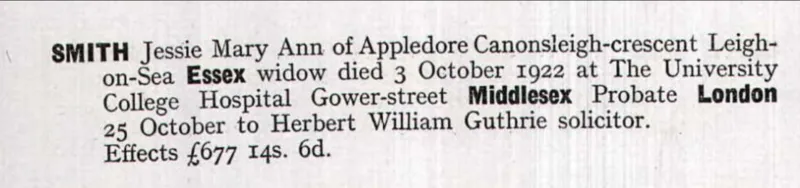
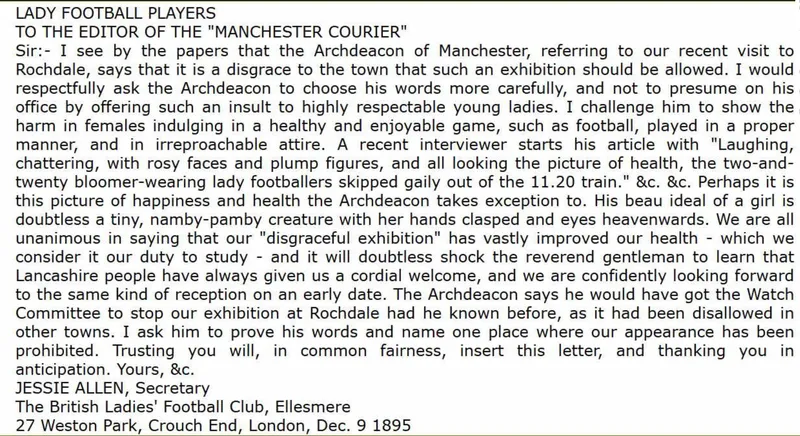
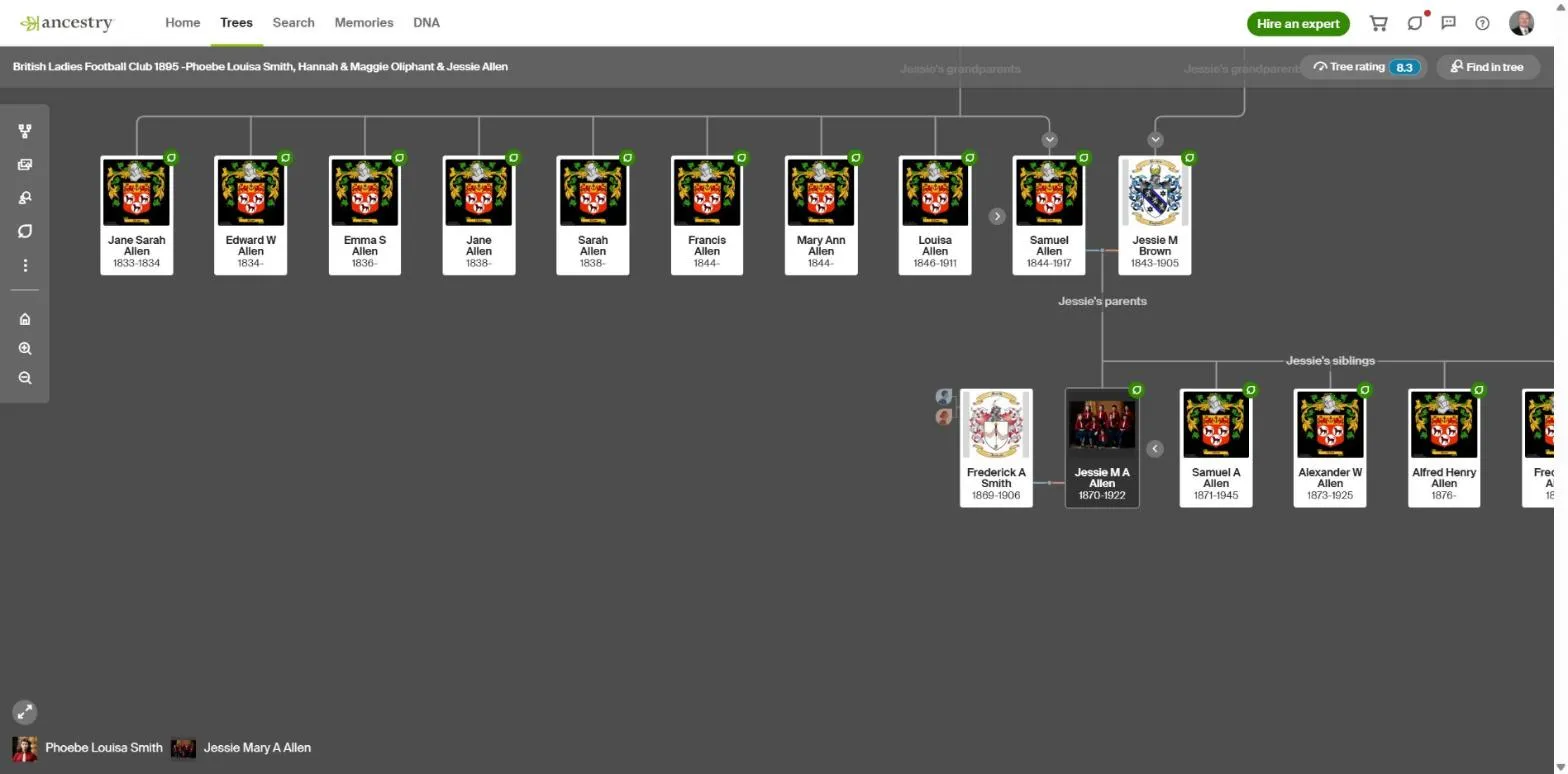
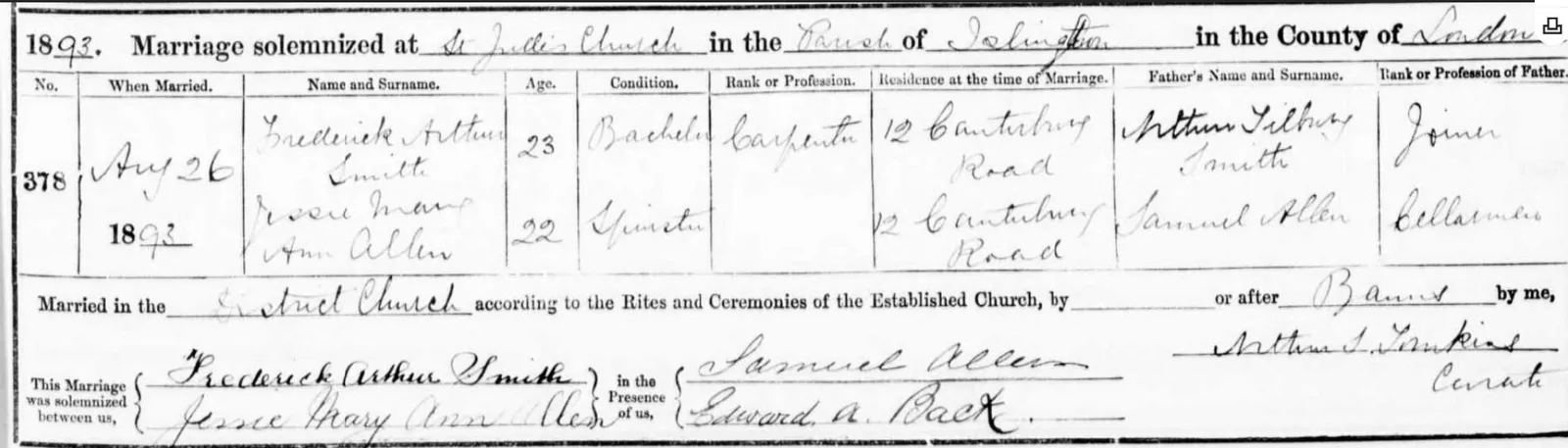
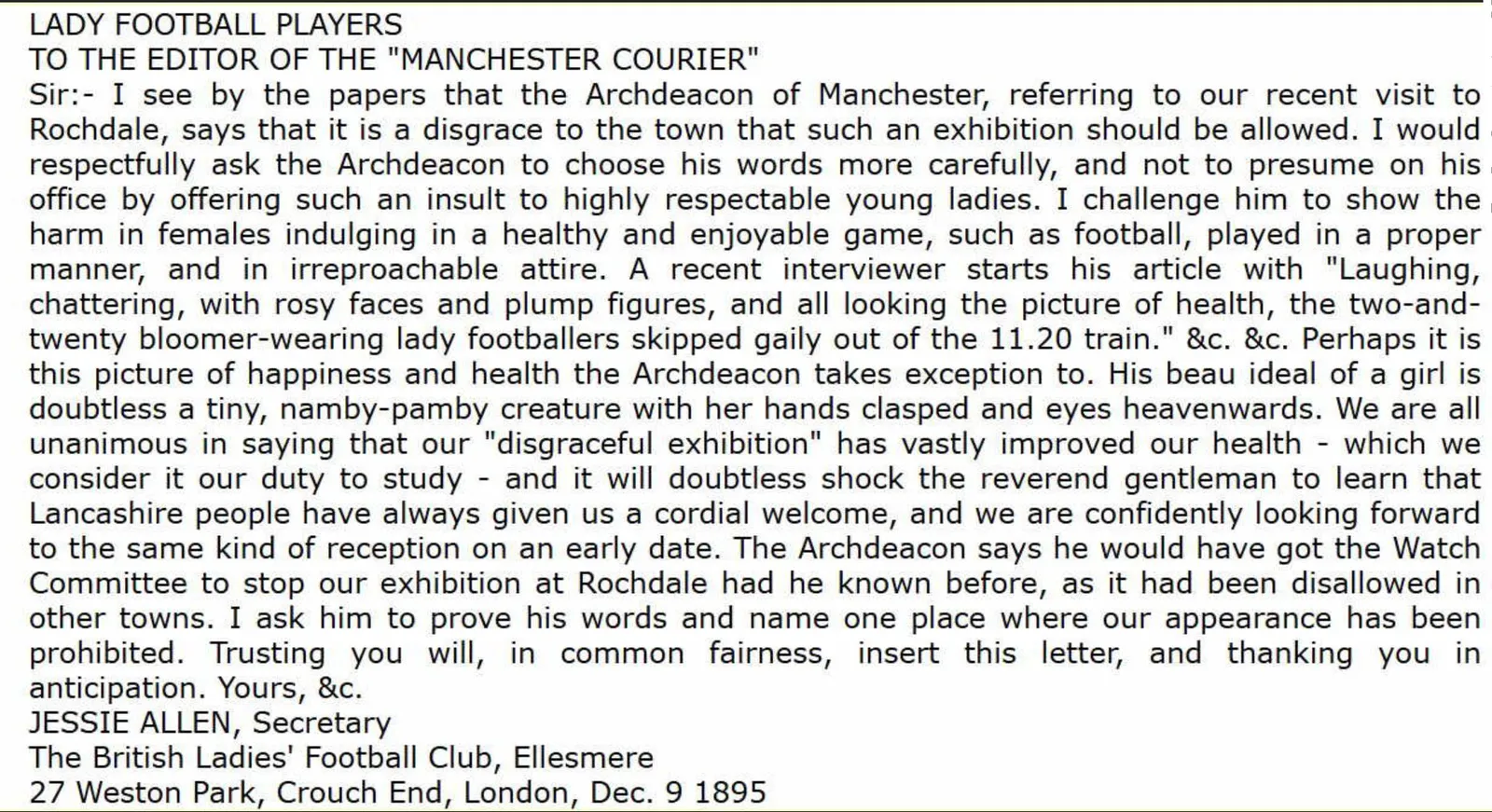
A very compelling candidate for the identity of Nettie Honeyball is Jessie Mary Ann Allen - the founder member and Secretary of the British Ladies Football Club, wife of Frederick Arthur Smith (brother of BLFC Manager Alfred Hewitt Smith), and author of the extraordinary letter to the Manchester Courier of December 1895. The possibility that Jessie Allen and Nettie Honeyball may have been one and the same was first raised by Patrick Brennan of Donmouth.co.uk and further developed by historian Andy Mitchell of Scottish Sport History - both of whom this website gratefully acknowledges. The case for Jessie Allen rests on several converging lines of evidence.
First and most significantly: the shared address. Nettie Honeyball's public statements and correspondence were issued from Ellesmere, 27 Weston Park, Crouch End, London. Jessie Allen's letter to the Manchester Courier of 9th December 1895 - signed in her maiden name as Secretary of the club - was written from precisely the same address: Ellesmere, 27 Weston Park, Crouch End, London. Two women at the same address, both central to the BLFC, both writing publicly on behalf of it - or one woman writing under two names.
Second: the shared role. Nettie Honeyball is identified in contemporary sources as the founder and driving force of the BLFC. Jessie Allen is recorded as a founder member and Secretary. In the club's own records and in the Ancestry research compiled for this website, Jessie Allen and Frederick Arthur Smith are listed as founder members alongside Nettie J. Honeyball - suggesting that in the club's own documentation, Jessie and Nettie were treated as separate individuals. But this does not rule out the possibility that one person held both roles and used two names for different purposes: Nettie as the public-facing founder and captain, Jessie as the administrative Secretary.
Third: the maiden name signature. Jessie had been married to Frederick Arthur Smith since August 1893 - yet her December 1895 letter to the Manchester Courier is signed Jessie Allen, her maiden name. This is a curious choice for a married woman of twenty-five writing in an official capacity. It may reflect a desire to maintain a separate public identity from her married self - consistent with the practice of using a pseudonym for her role as founder and captain.
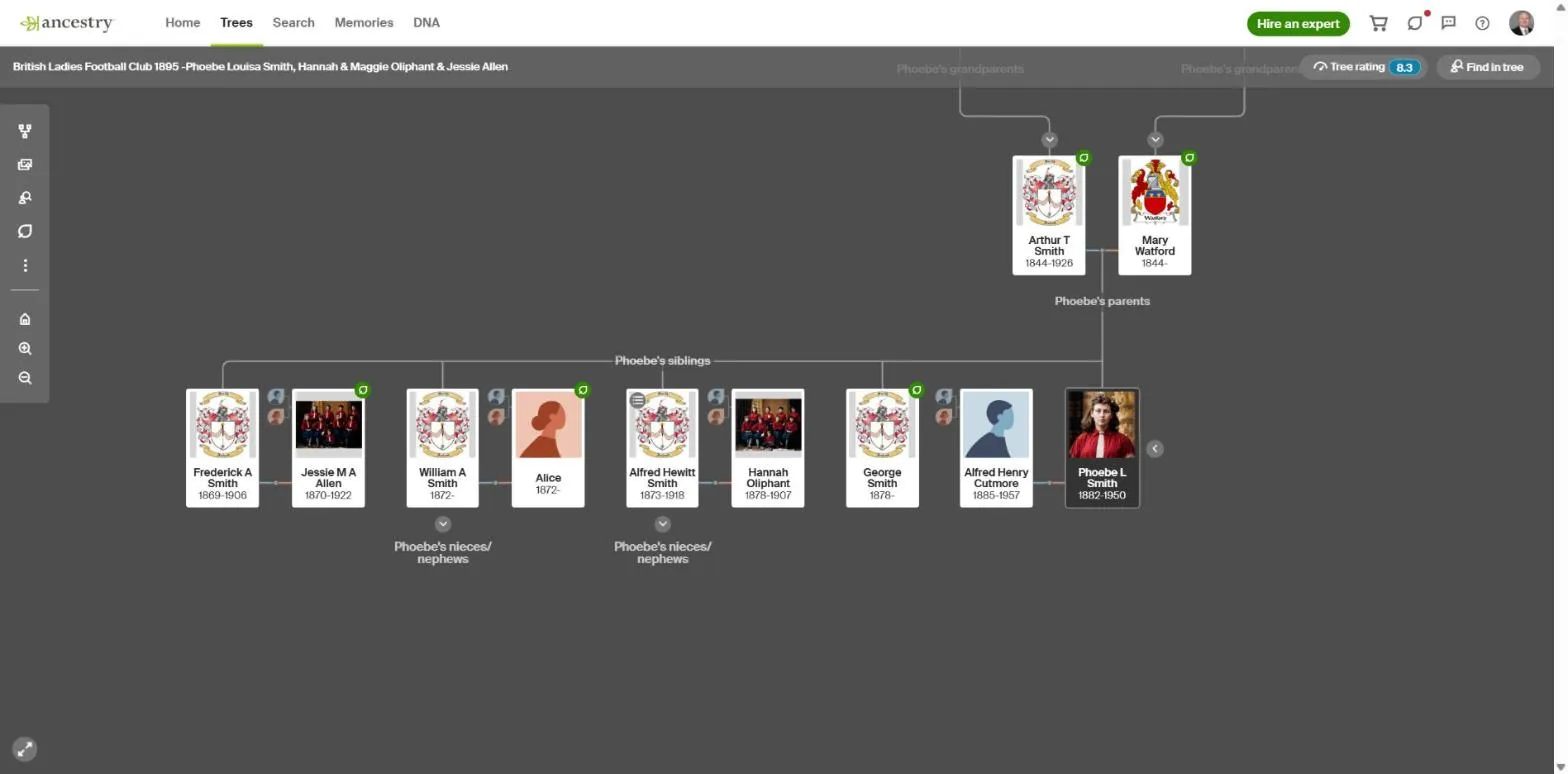
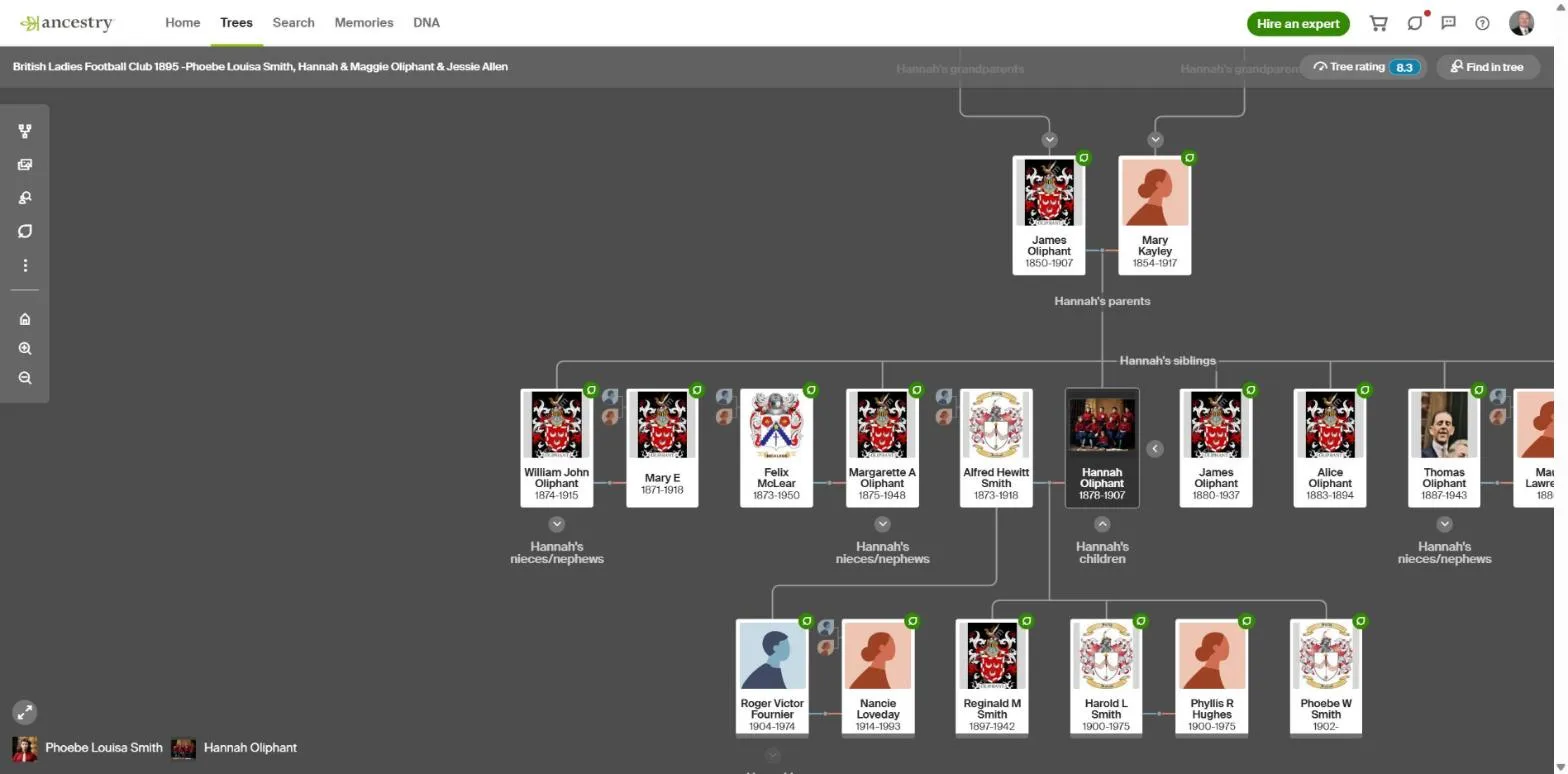
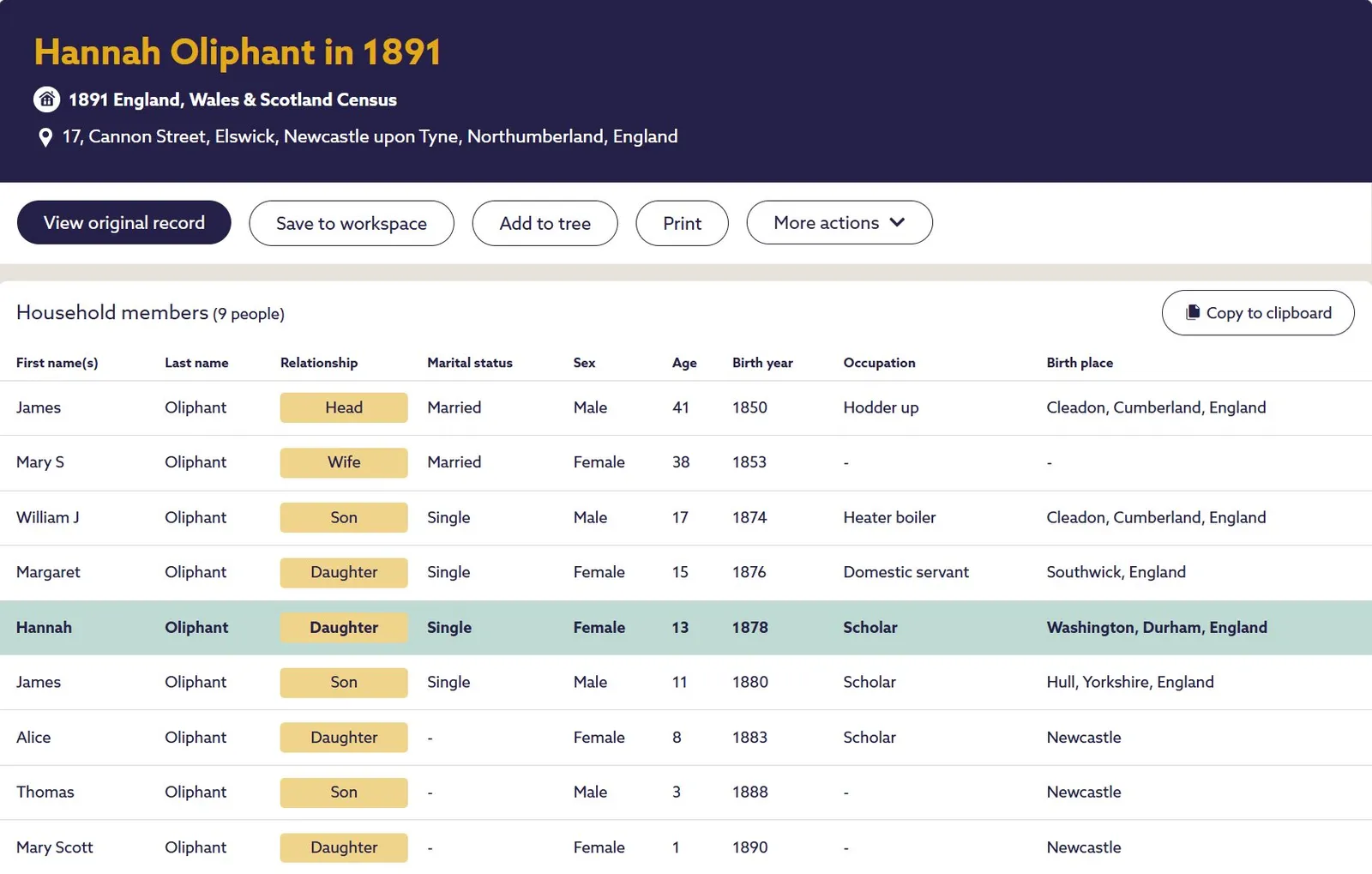
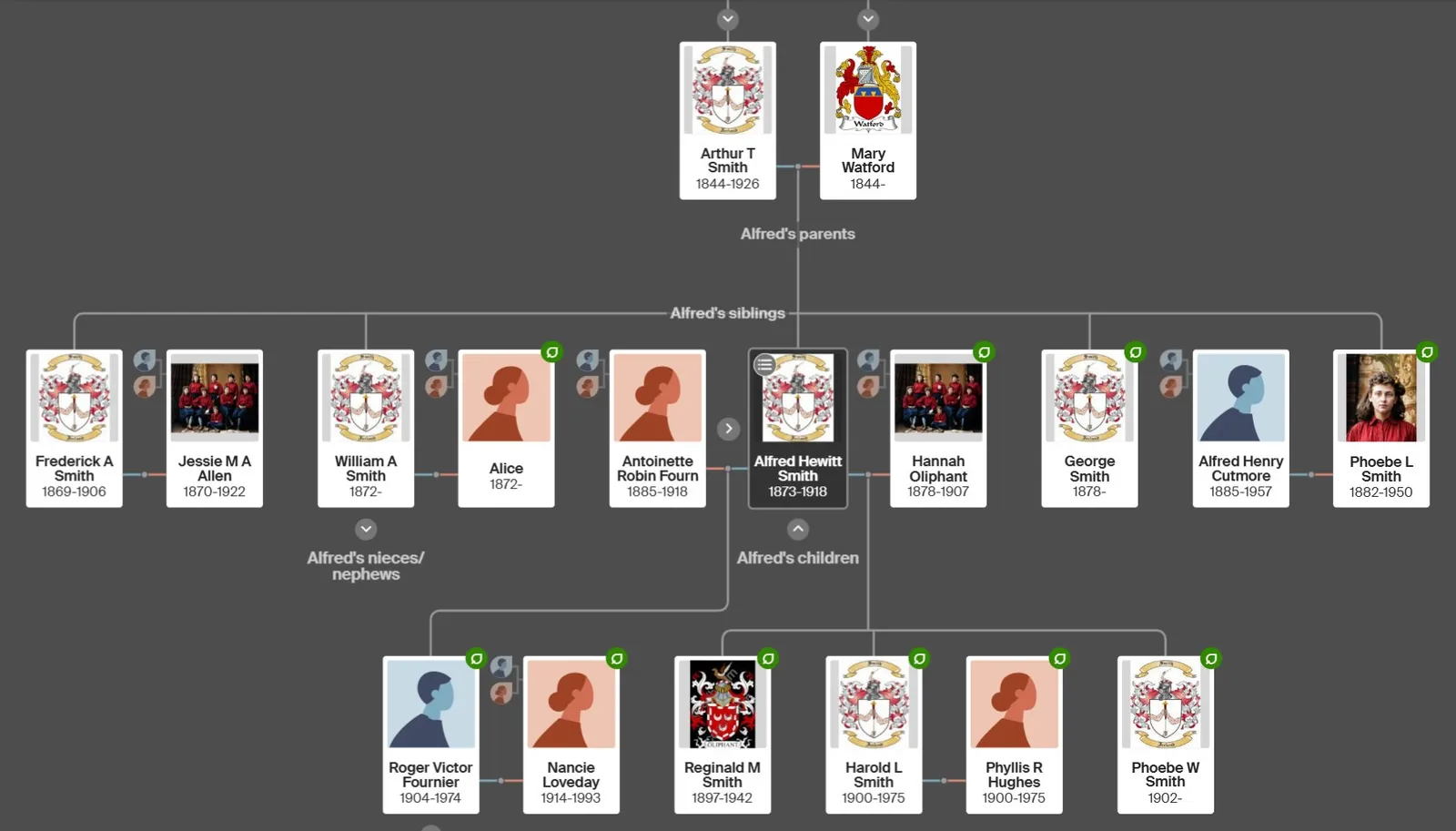
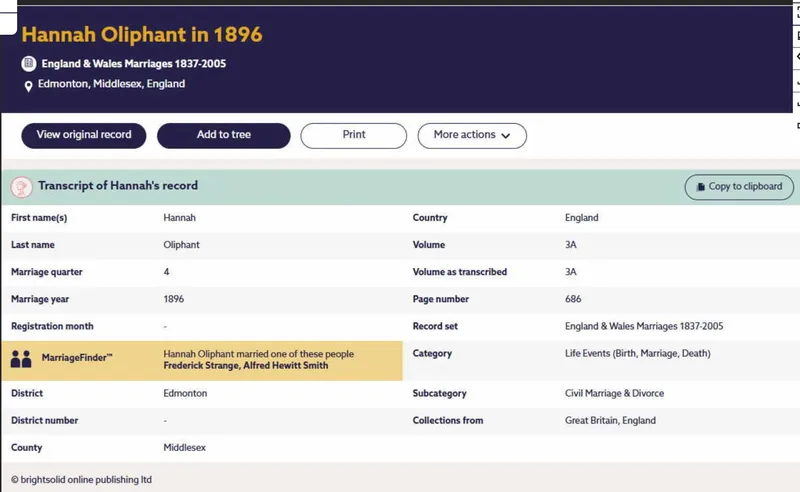
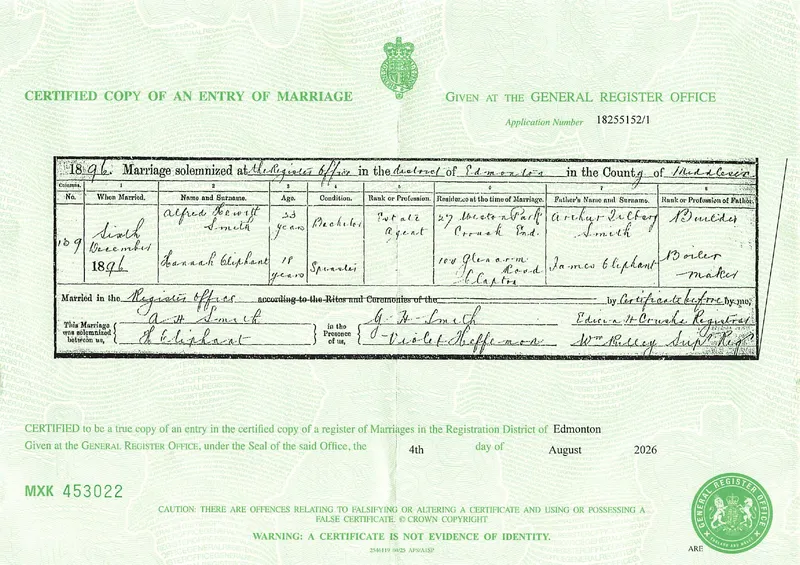
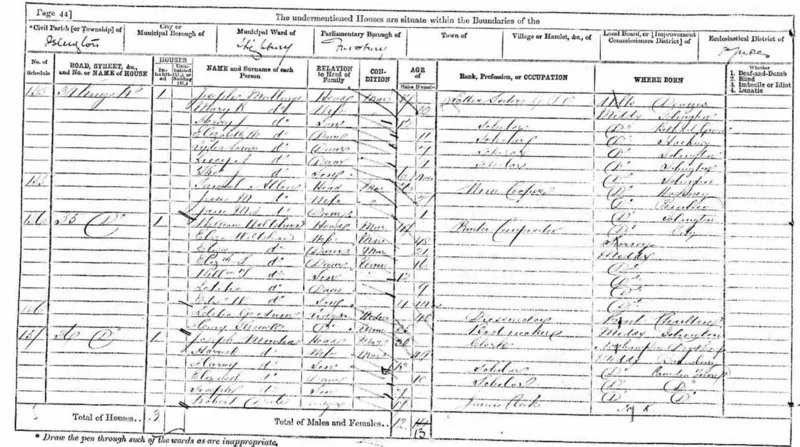
Fourth: the Smith family network. The web of family relationships surrounding the BLFC is extraordinary. Alfred Hewitt Smith managed the club. His brother Frederick married Jessie Allen. Their sister Phoebe Louisa Smith played in the inaugural match. Alfred's wife Hannah Oliphant also played. If Jessie Allen was also Nettie Honeyball, then a single family - the Smiths of Essex - founded, managed, organised, and played for the British Ladies Football Club. The concentration of involvement is remarkable in any reading, but it becomes even more so if the club's most famous name was also a member of that family by marriage.
✦ The Smith Family - The Dynasty Behind the Club
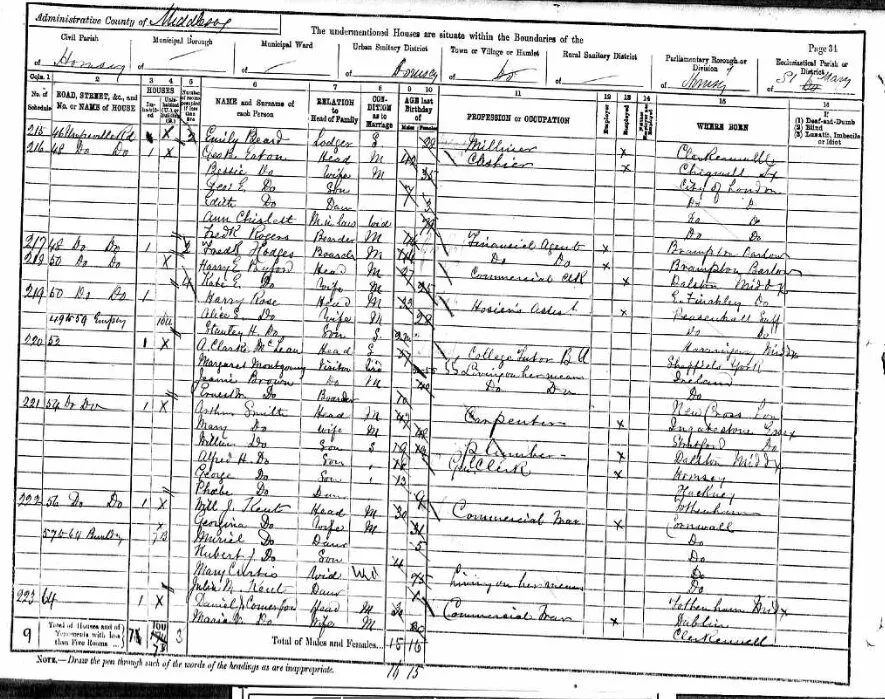
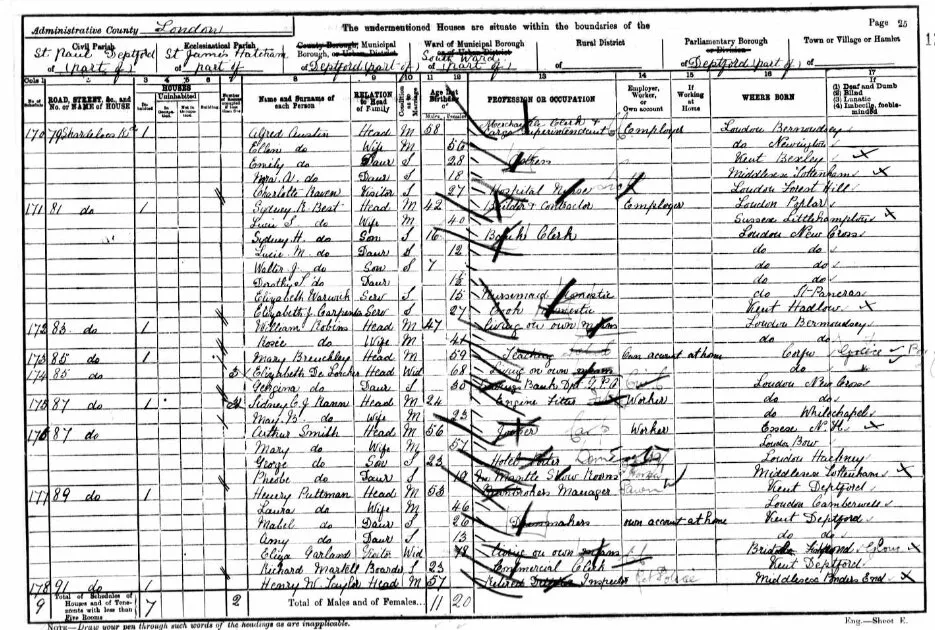
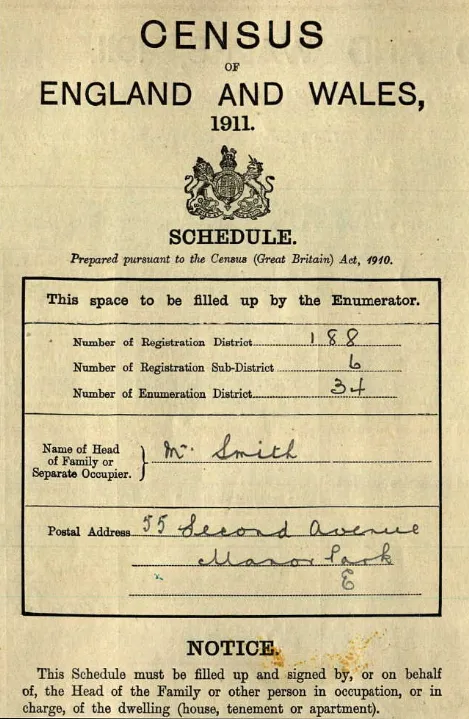
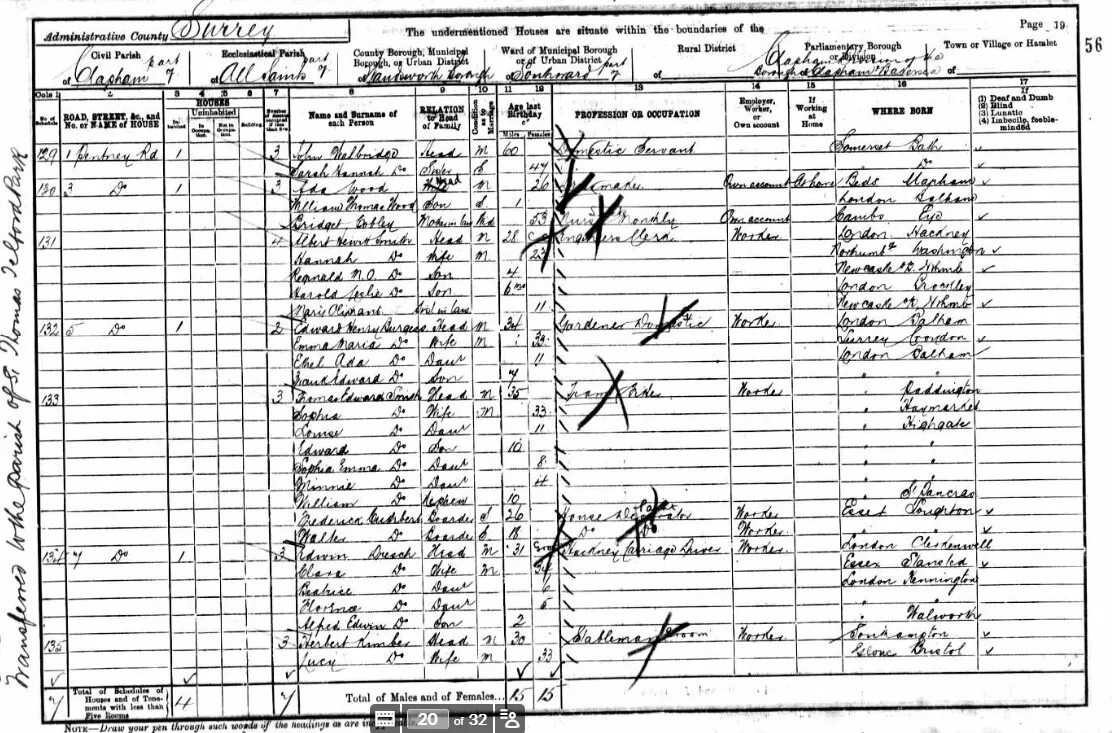
The Smith family of Essex were the organisational heart of the British Ladies Football Club - though their role has never been fully recognised. Their father, Arthur Tilbury Smith, was a carpenter and joiner from Ingatestone, Essex. Of his children, three were directly and deeply involved in the 1895 club.
Alfred Hewitt Smith (1873–1918) - Manager
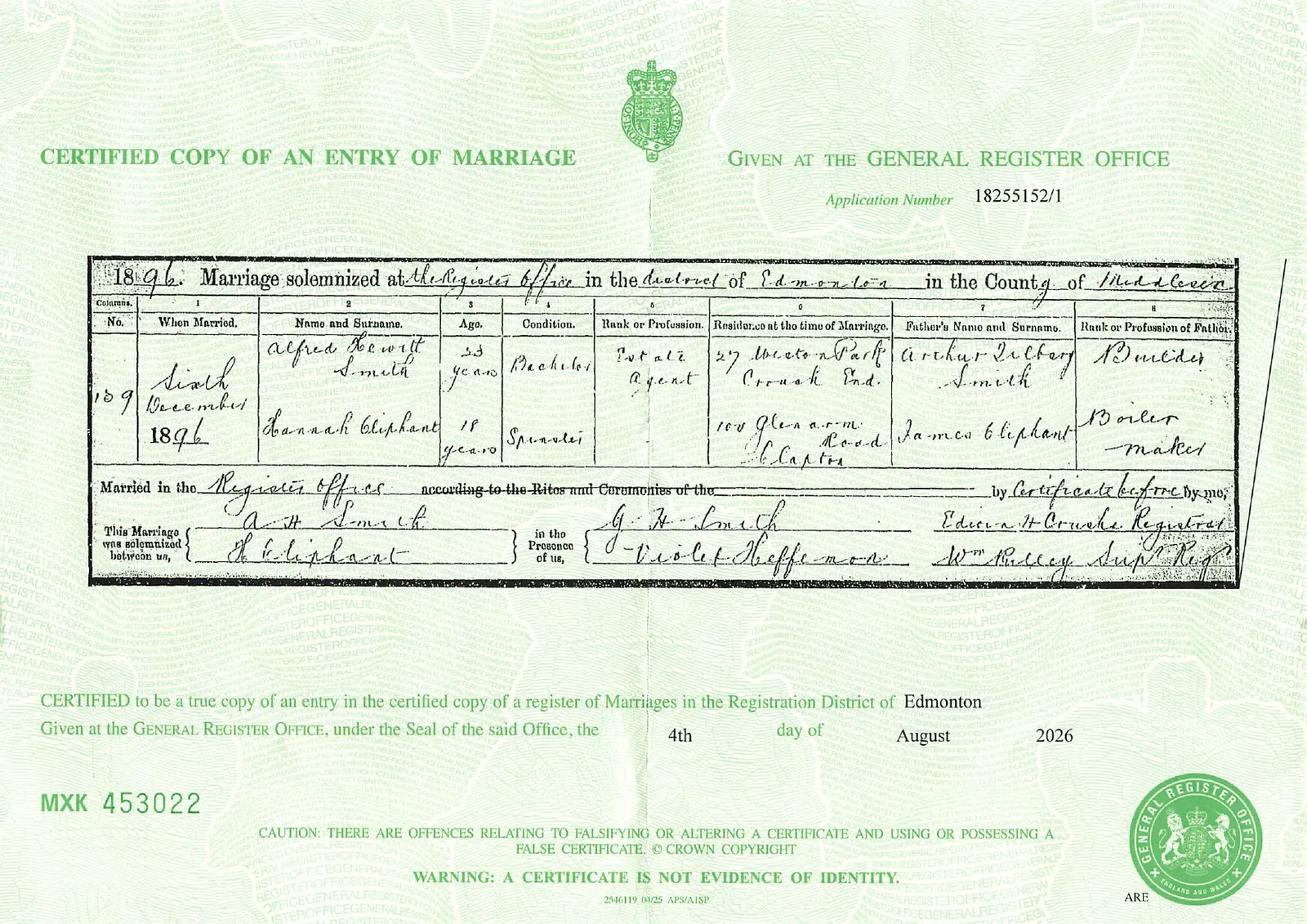
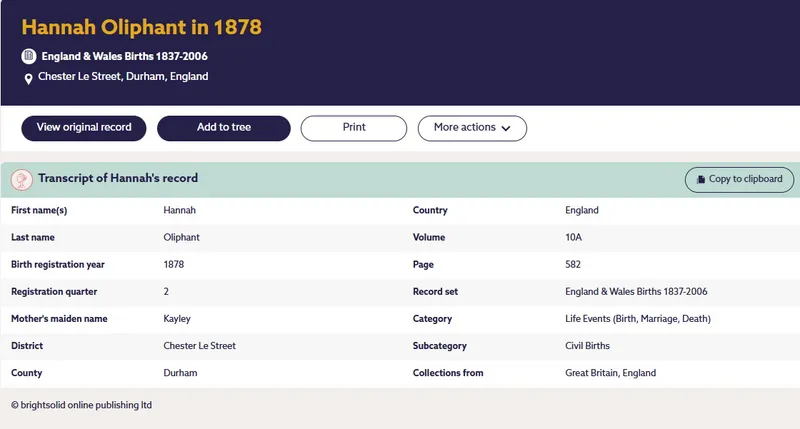
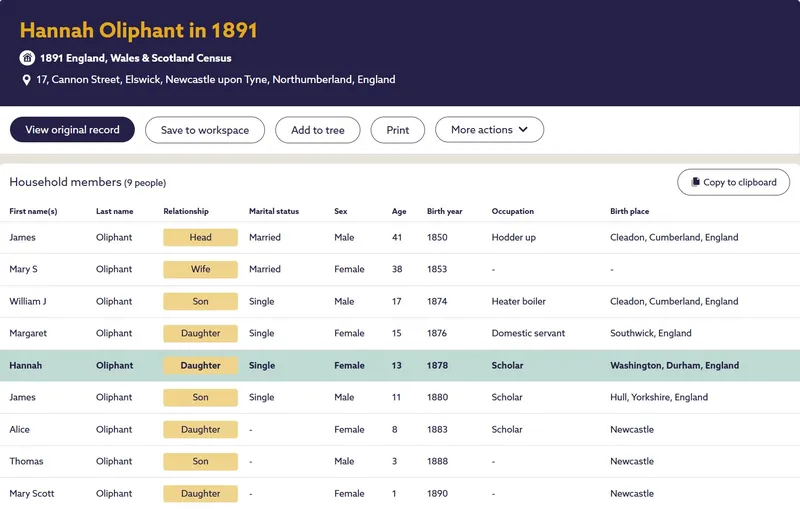
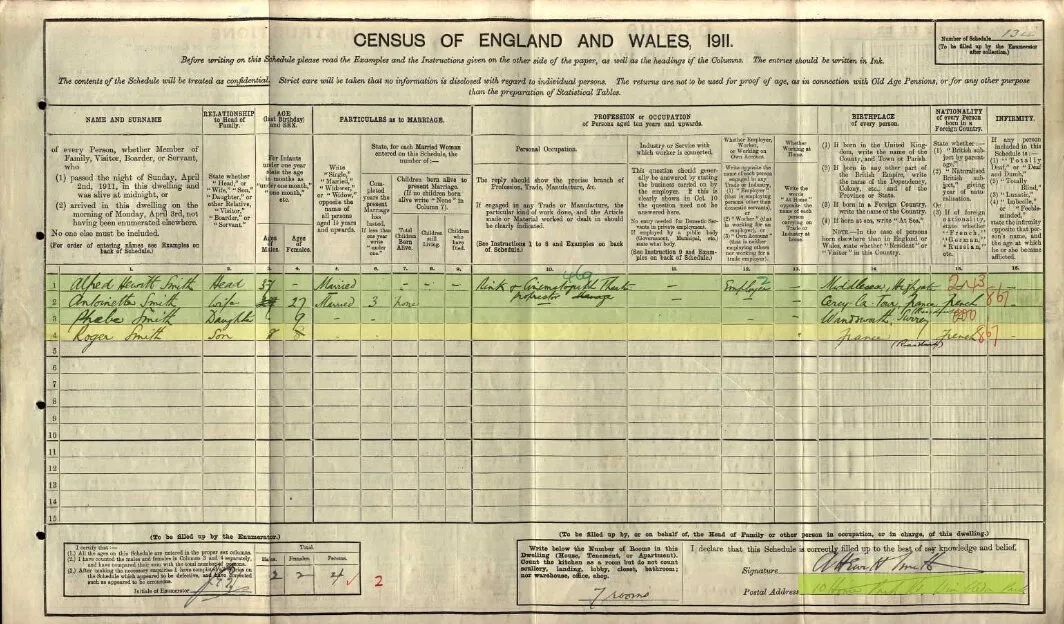
Alfred was the Manager of the British Ladies Football Club - the man responsible for its day-to-day organisation, logistics, and administration. It was Alfred who arranged the matches, coordinated the tours, and kept the club running through its remarkable first year. He married Hannah Oliphant, a Durham woman who was herself a player in the inaugural match, and the couple had three children: Reginald, Harold, and Phoebe. After Hannah's death in 1907, Alfred married a second time - in 1908, to Antoinette Robin-Fournier, a widow whose first husband, Léon Fournier, had died in 1906. Antoinette brought a son, Roger Victor Fournier (1904–1974), into the marriage; Roger subsequently took the surname Smith. Antoinette predeceased Alfred by barely two months. By the time of his death, Alfred was working as an Assistant Manager of Furnished Flats at St James Court, Buckingham Gate, Westminster - a long way, in every sense, from the football fields of 1895.
In 1896, Alfred published a book - The Truth about the British Ladies Football Club - which he sent to journalists. Tragically, no copy of this book is known to survive. What it contained, and what truths it might have disclosed about Nettie Honeyball and the club's inner workings, remains one of the great unanswered questions of women's football history.
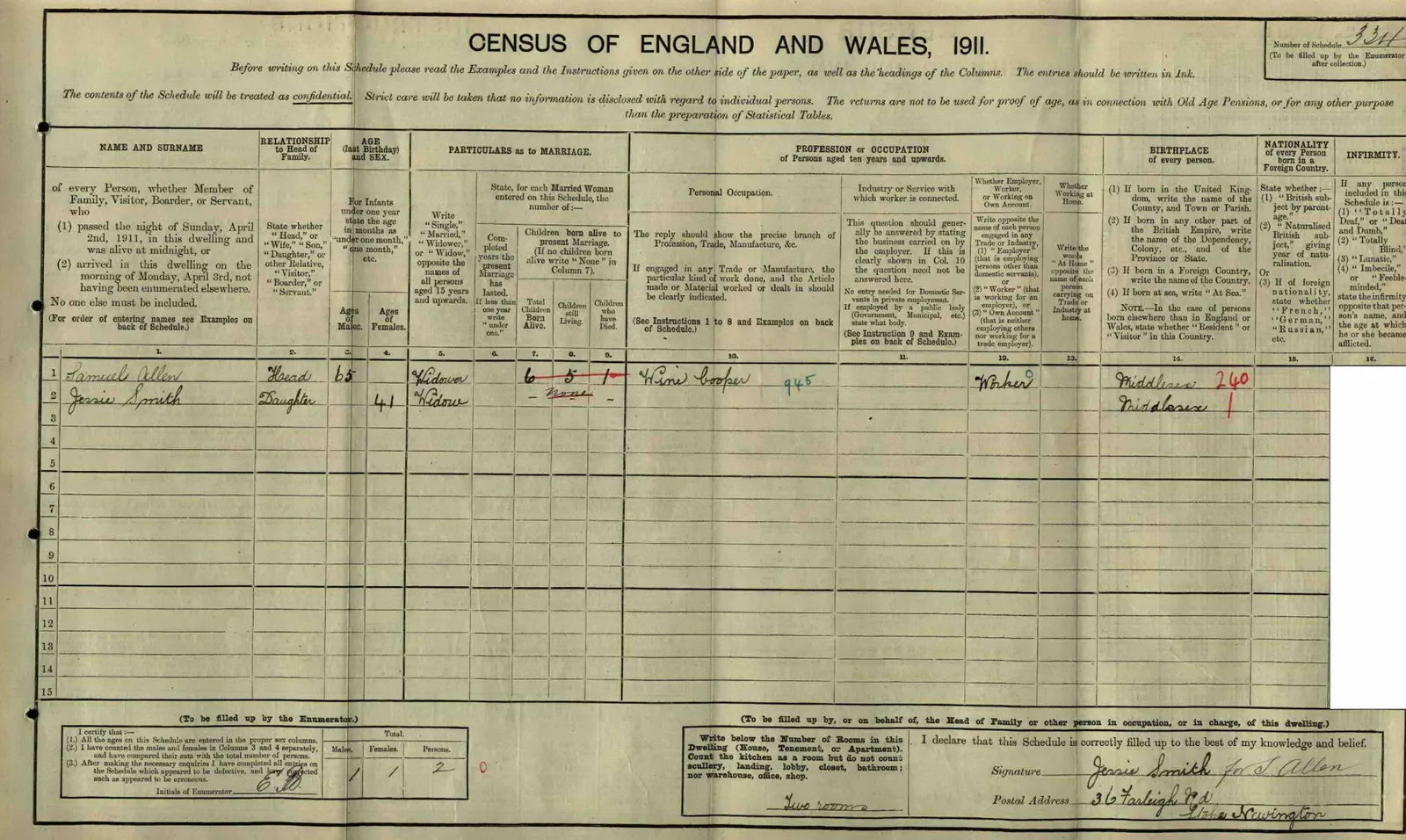
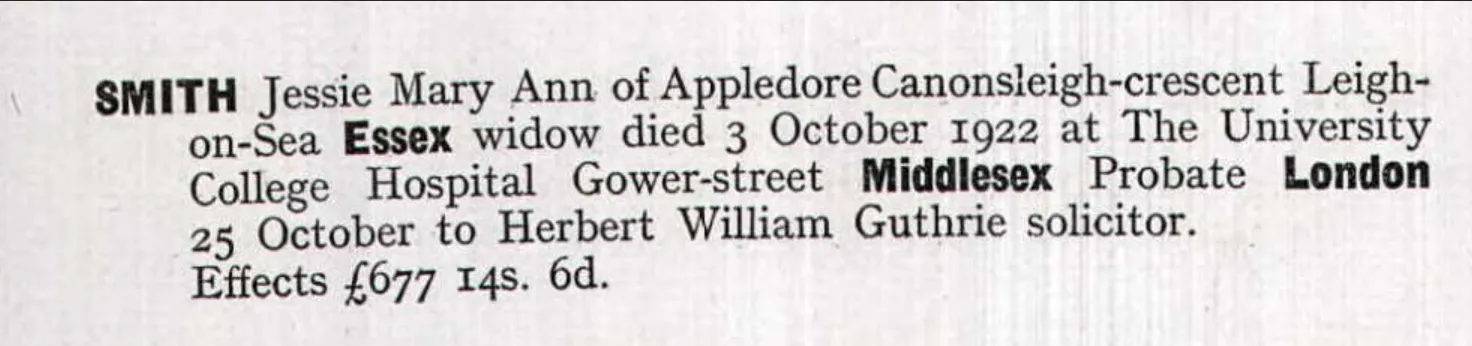
During the First World War, Alfred served as a Private in the Northumberland Fusiliers (No. 57580), on the Home Front. He died on 10th March 1918 at The Grand Hotel, Leigh-on-Sea, Essex, aged forty-five - of syncope and angina pectoris, an inquest being held on 13th March 1918. His estate of £2,000 was administered by his son Reginald Mornington Smith. And there is one final detail that speaks quietly to the enduring bonds of the Smith family: at the time of his death, Alfred had been visiting the home of Jessie Allen-Smith - his sister-in-law, and the widow of his late brother Frederick. The two families, so entwined in the story of the British Ladies Football Club, remained close to the last.
Frederick Arthur Smith (1869–1906) - Founder Member
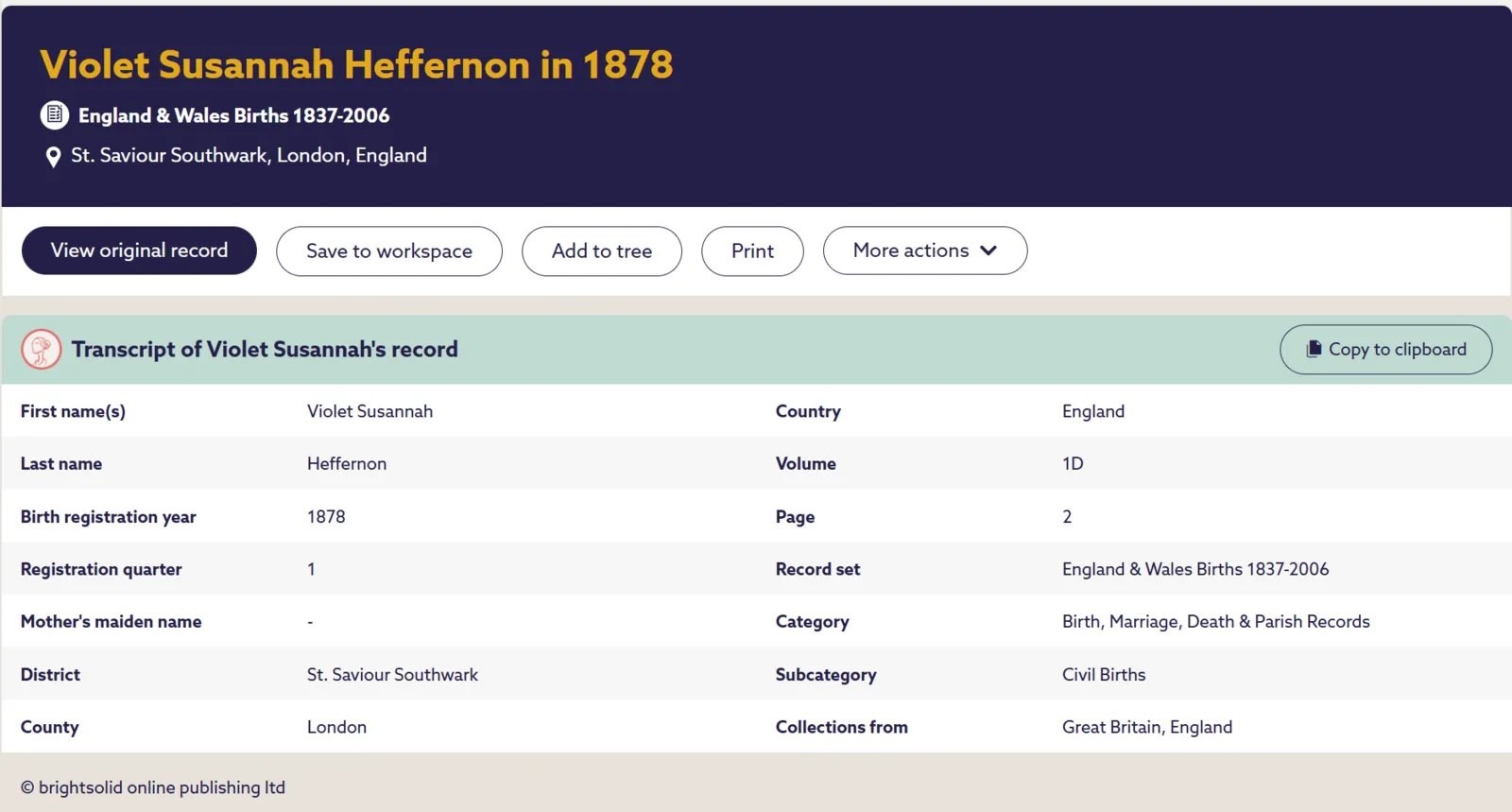
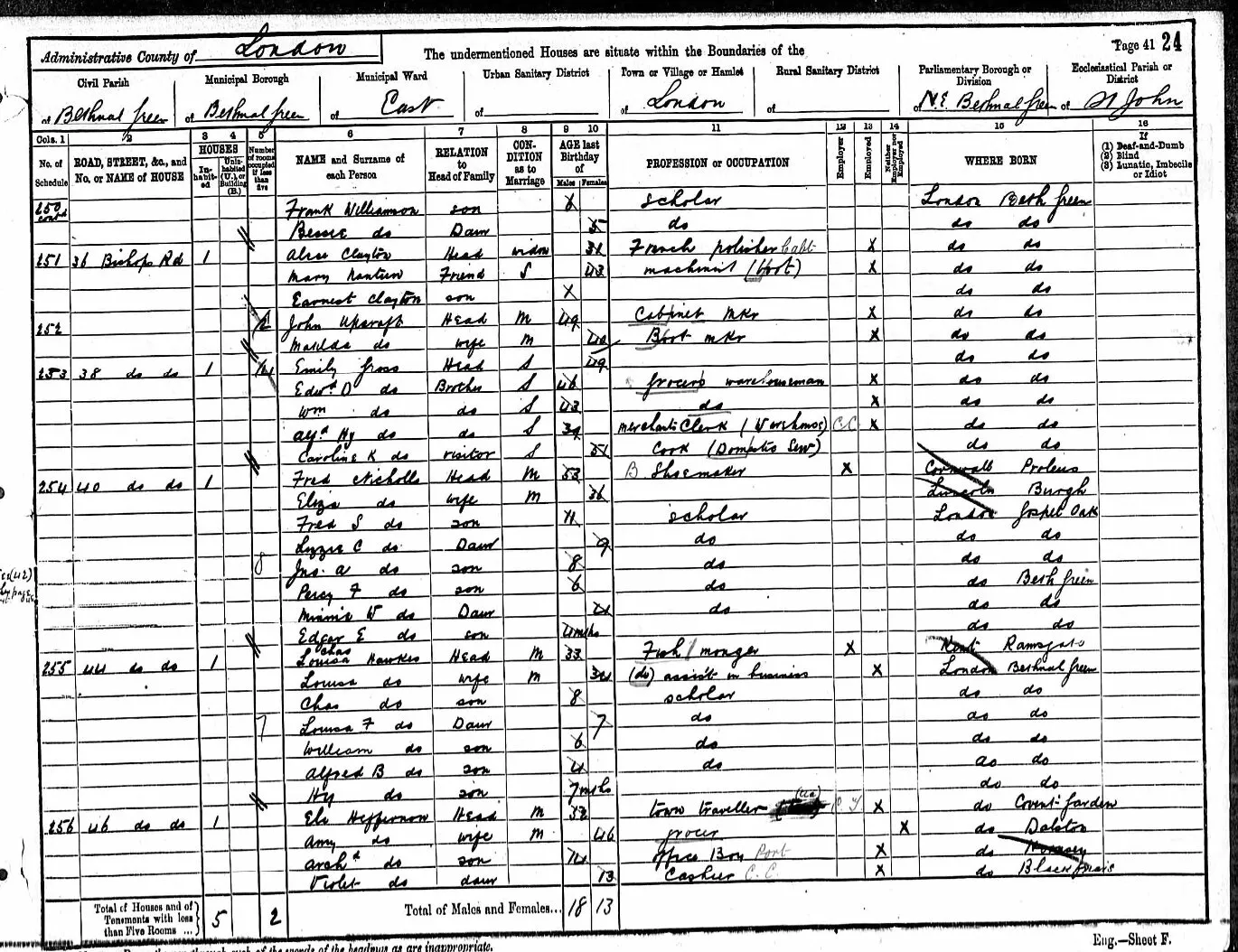
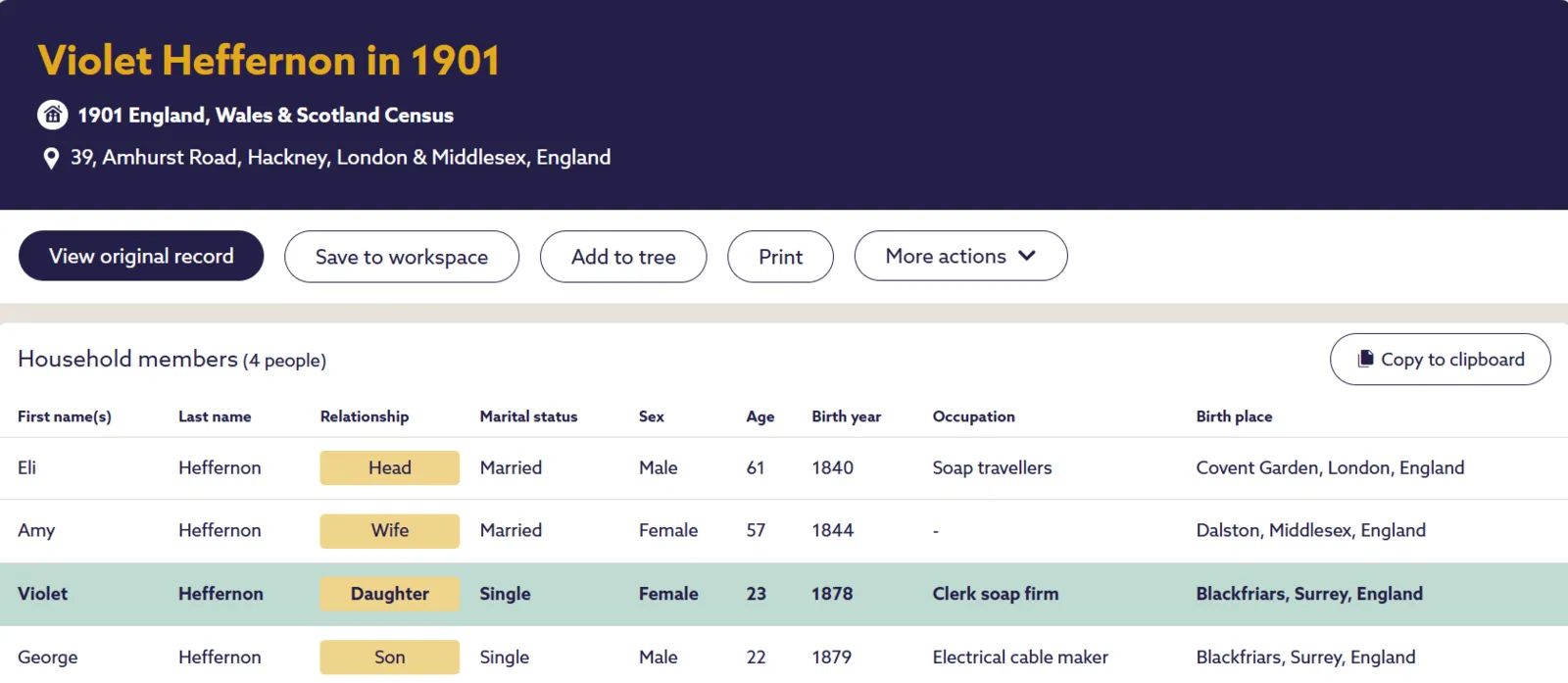
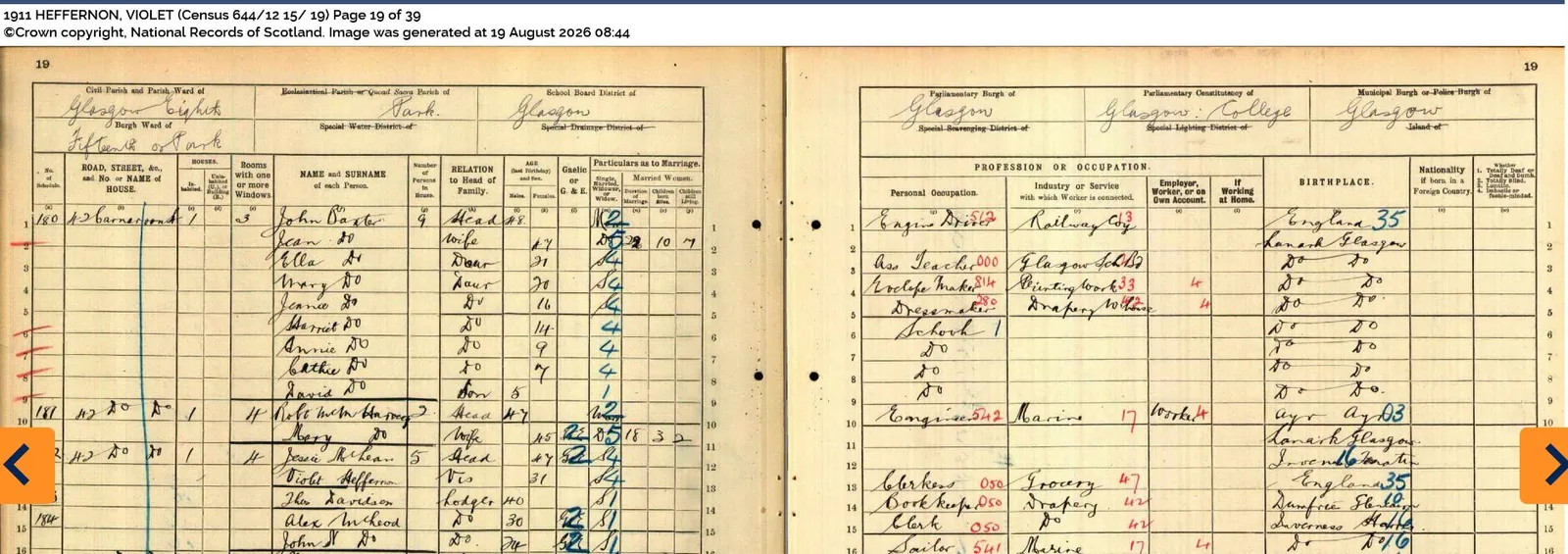
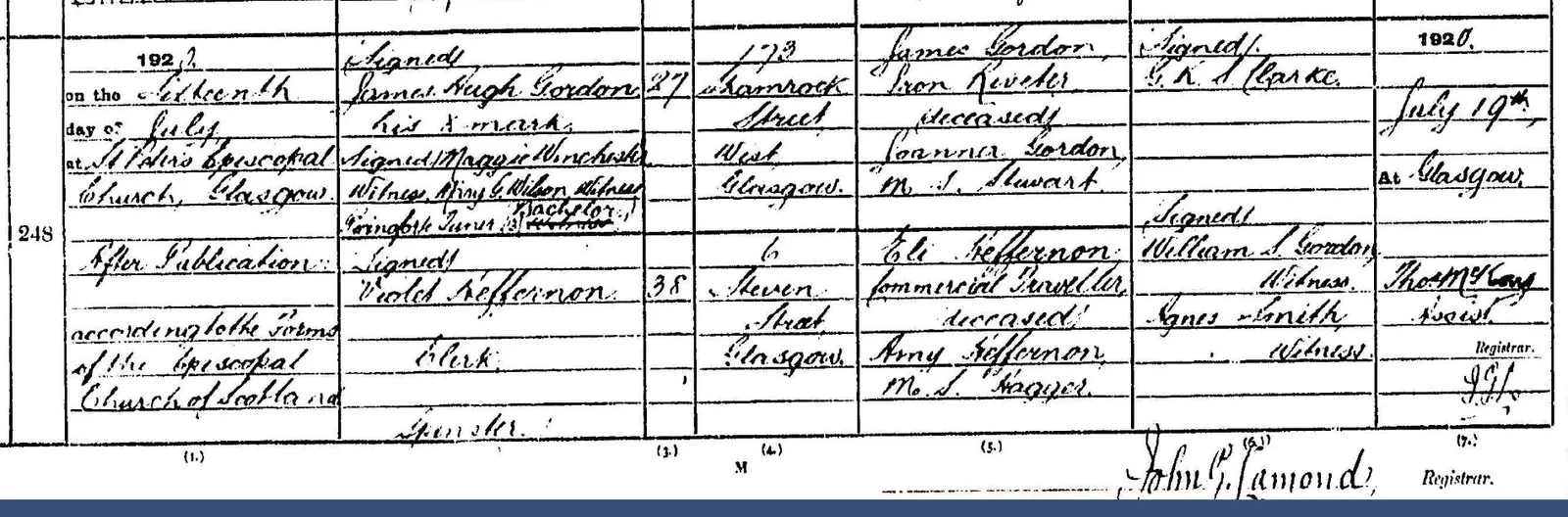
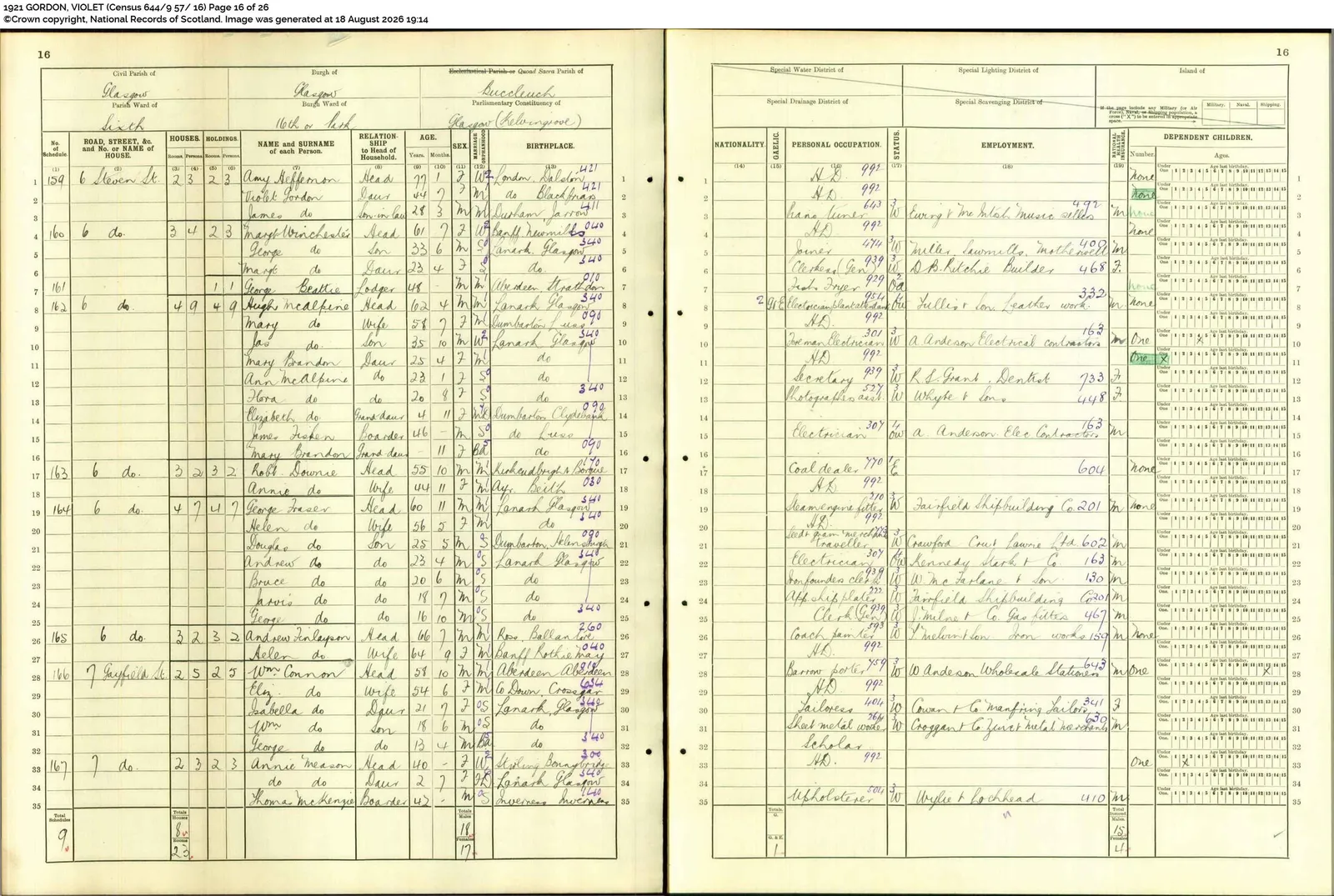
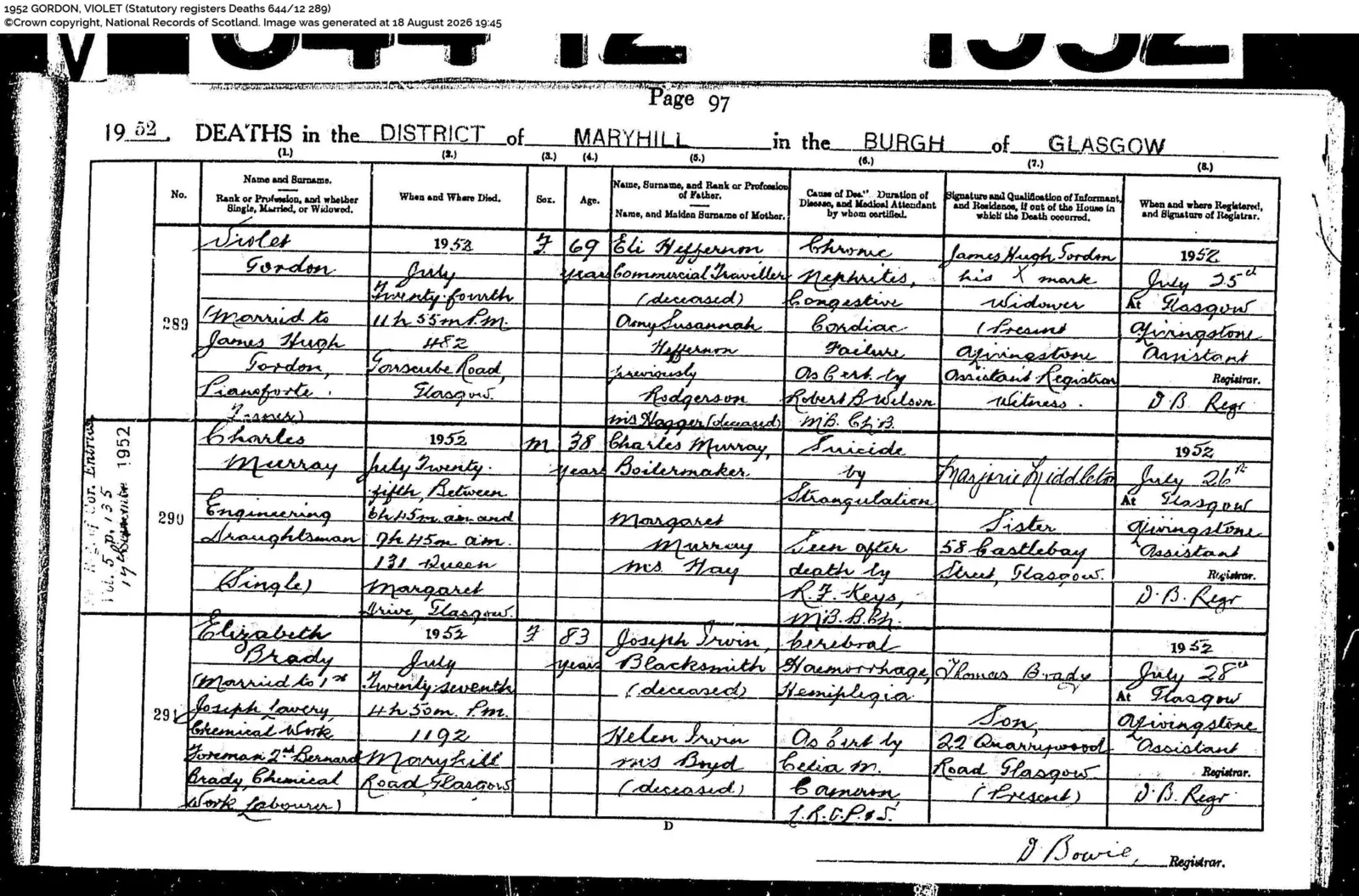
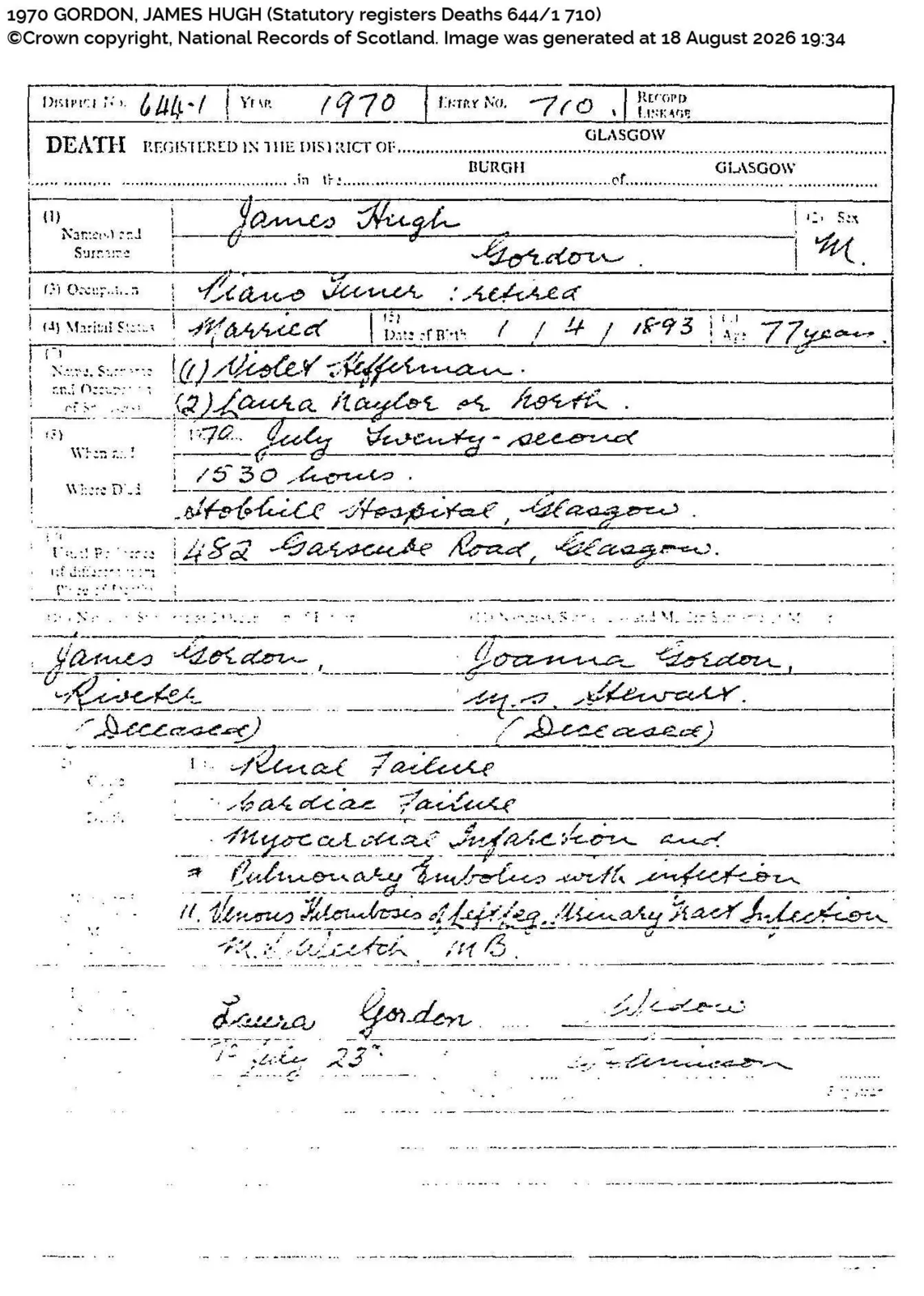
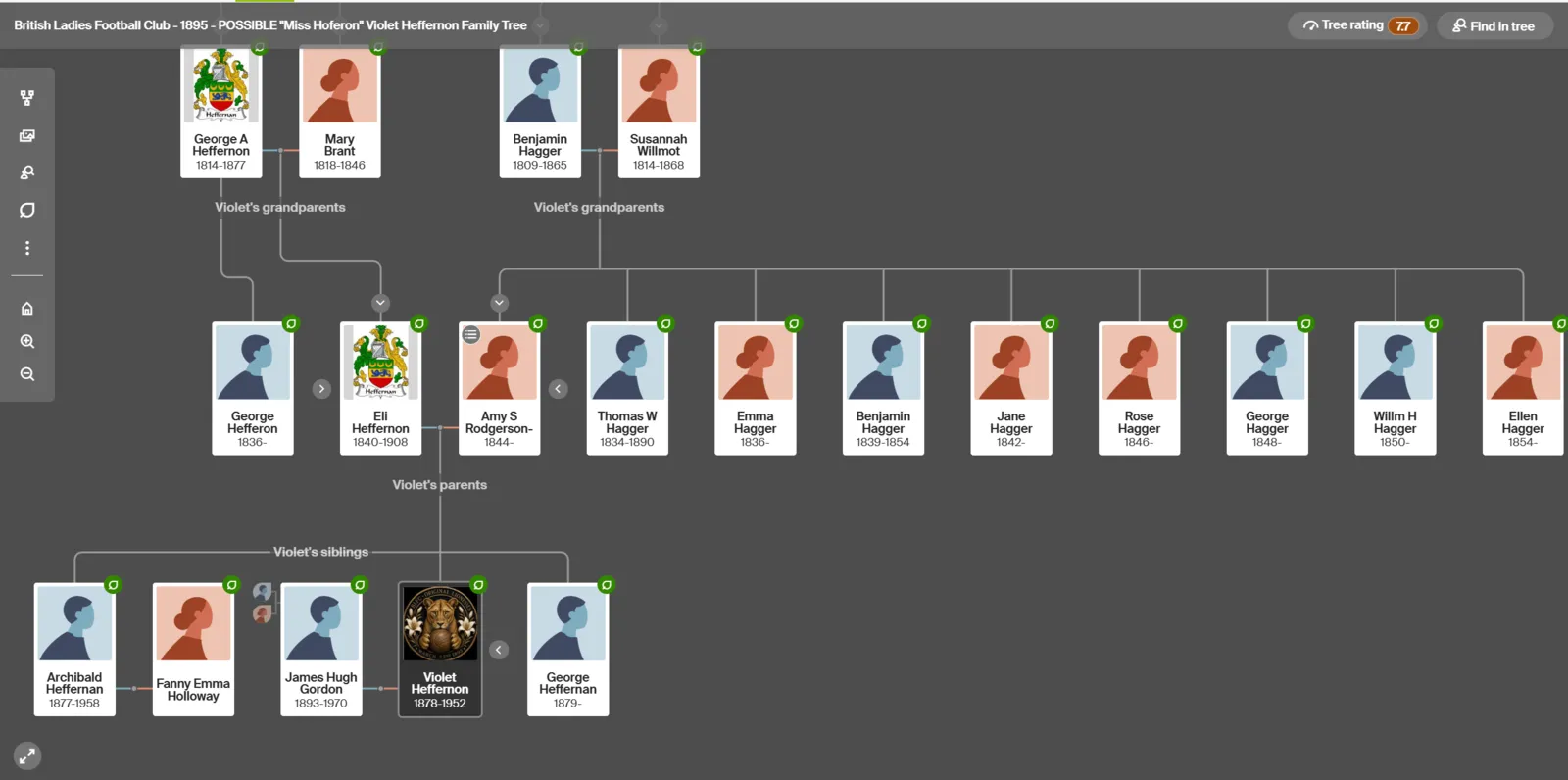
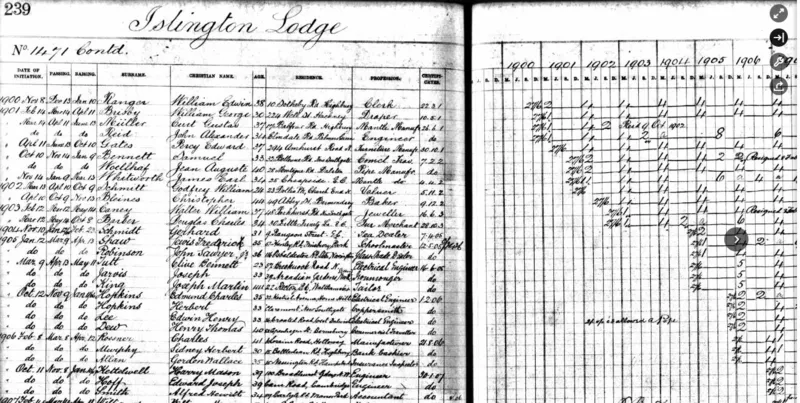
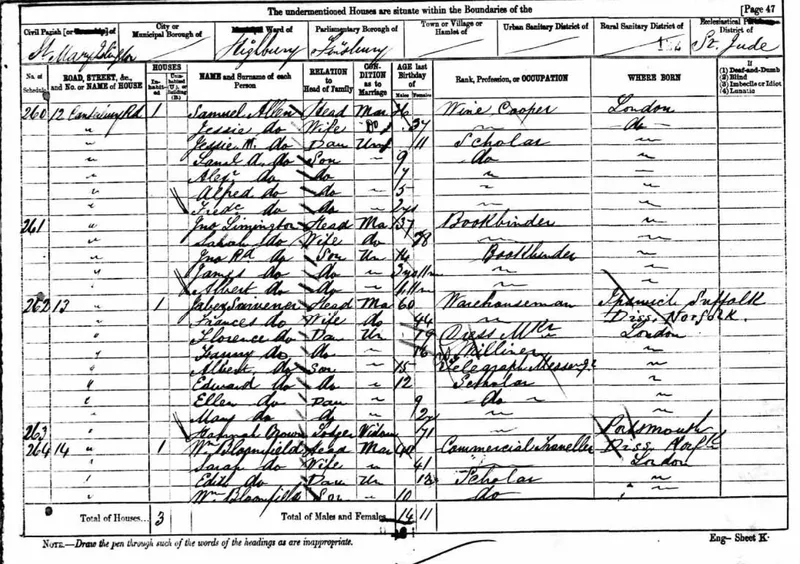
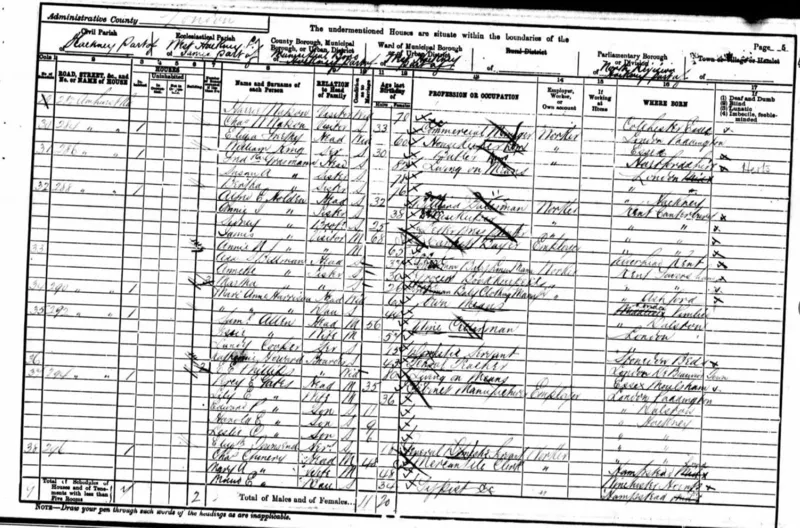
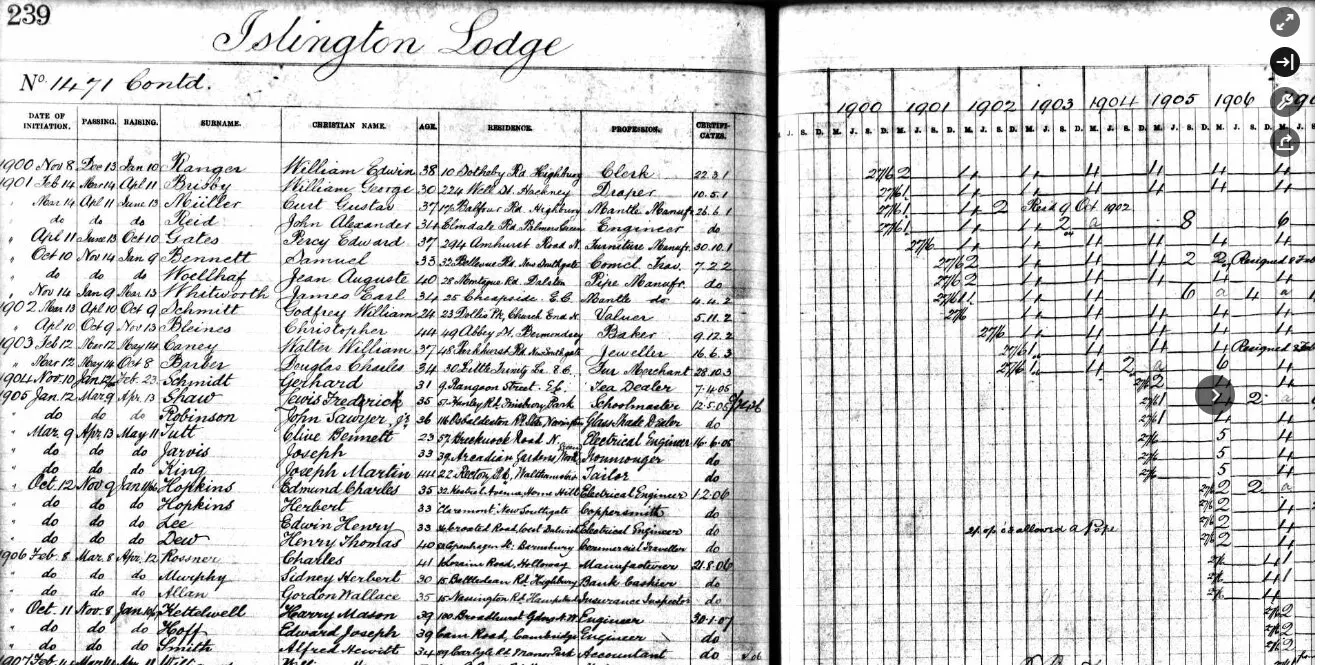
Frederick was the elder of the two brothers - a builder by trade, living at 12 Canterbury Road, Islington, when he married Jessie Mary Ann Allen at St Jude's Church, Islington, on 26th August 1893. He is listed as a founder member of the BLFC alongside Jessie and Nettie J. Honeyball. The family had since moved to 57 Clova Road, Forest Gate, West Ham, and by the time of his death he was living at 290 Amhurst Road, Stoke Newington. Frederick died young, on 26th July 1906, at the East Finchley Convalescent Home, aged thirty-six, of tuberculosis - certified by Frederick B. Batten MB, with the Acting Matron of the home as informant. He was buried two days later, on 28th July 1906, at Abney Park Cemetery, Stoke Newington, in Plot Section H07, Grave 111140. He and Jessie had been married twelve years and had no children. His estate of £190 10s. was left by probate on 13th August 1906 to Jessie, to Alfred Hewitt Smith (then working as an architect's-managing-clerk), and to Jessie's brother Samuel Archibald Allen, a furniture designer - the three people closest to both of them. A small, unresolved thread worth noting here: Violet Heffernon - later the witness at Alfred Hewitt Smith's own wedding in 1896 - was living with her family at 39 Amhurst Road, Hackney, at the time of the 1901 census, the same road as Frederick's own address five years later. Amhurst Road runs along the Hackney/Stoke Newington border, and no document has yet placed the Heffernon and Smith households in contact before 1896; the shared street is recorded here as an intriguing coincidence, not a connection.
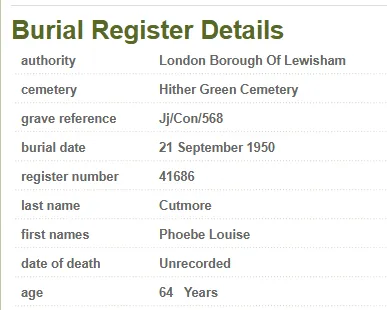
Phoebe Louisa Smith (1881–1950) - Player
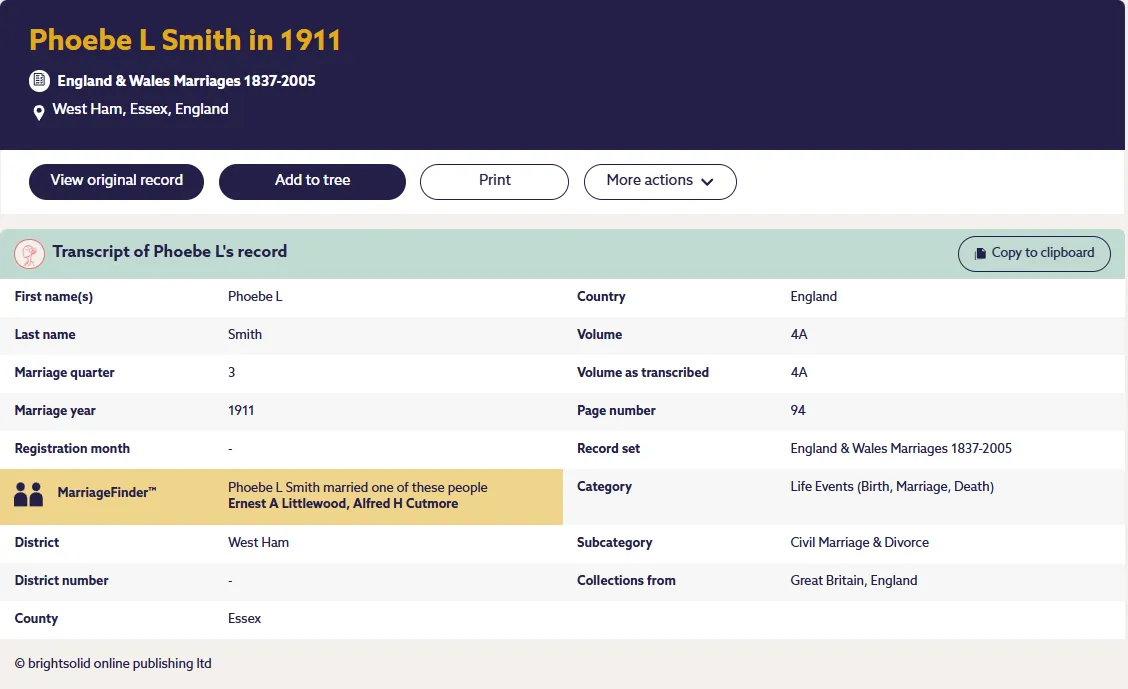
The youngest of the three, Phoebe played in the inaugural match at Crouch End at just thirteen years old. She is the subject of a full biography on this website. That three children of a carpenter from Essex - the manager, a founder, and a player - should together form the backbone of England's first organised women's football club is one of the most remarkable facts in the whole story of the BLFC.
Fifth: the announcement of the disappearance. When Nettie Honeyball vanished from public life in the autumn of 1895, it was Jessie Allen who stepped forward to explain it - citing illness as the cause of Nettie's absence and taking over as club secretary in her place. Consider what this means if the two women were one and the same: the same person announced her own vanishing, from behind a different name - and for a very private and personal reason. A genuine handover between two distinct individuals would more naturally involve a third party making the announcement. Instead, the woman who became secretary is also the woman who explained why the founder had gone. The two roles did not transfer - they collapsed into one.
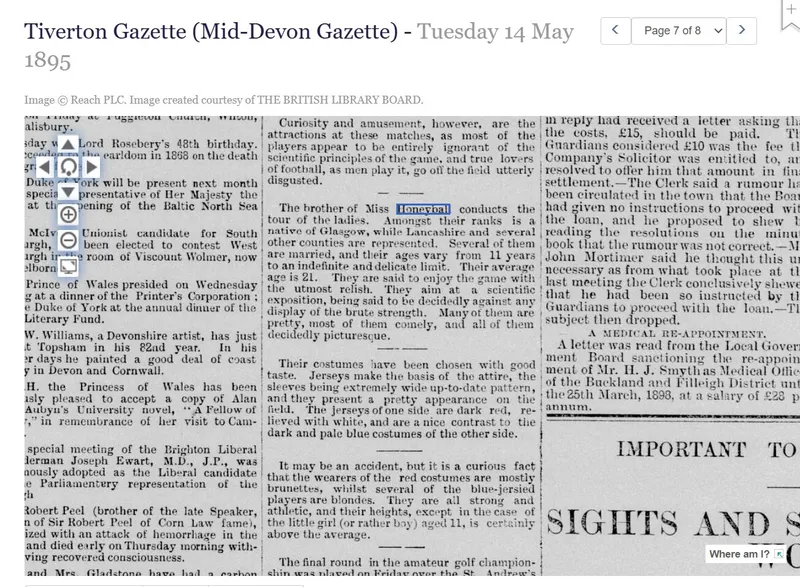
Sixth: the brother who conducted the tour. The Tiverton Gazette of Tuesday 14th May 1895 - reporting on the BLFC's provincial tour - noted that "the brother of Miss Honeyball conducts the tour of the ladies." The man managing the club's touring schedule in May 1895 was Alfred Hewitt Smith - the Manager of the British Ladies Football Club, and the brother of Frederick Arthur Smith, who had married Jessie Mary Ann Allen in August 1893. Alfred was not Nettie Honeyball's brother in any straightforward genealogical sense that has been traced. But he was Jessie Allen's brother-in-law. If Jessie Allen was Nettie Honeyball, then Alfred Hewitt Smith was precisely what the Tiverton Gazette described - her brother. Not by blood. By marriage. And by the deepest possible involvement in a club they had built together.
⚠ Summary of Evidence - Jessie Allen as Nettie Honeyball
✦ Same address: Ellesmere, 27 Weston Park, Crouch End
✦ Both central to founding and running the BLFC
✦ Jessie signed her 1895 letter in her maiden name despite being married
✦ The Smith family connection links every key figure in the club
✦ No independent record of Nettie Honeyball as a real person has been found
✦ Both names appear in the same documents - compatible with dual identity, though equally explained by two people sharing one club address
✦ It was Jessie Allen who announced Nettie's disappearance and cited illness - the same person, in effect, explaining her own vanishing from behind a different name
✦ The Tiverton Gazette of May 1895 reported that "the brother of Miss Honeyball conducts the tour" - the man managing the tour was Alfred Hewitt Smith, Jessie Allen's brother-in-law. If Jessie was Nettie, Alfred was precisely what the paper described: her brother
✦ No photograph of Jessie Allen has ever been found - striking for a woman so central to the club, at a time when many of the lady footballers were photographed extensively. If Jessie and Nettie were one and the same, she would have had every reason to ensure she was never photographed as Jessie alongside images of Nettie Honeyball
WHAT REMAINS UNRESOLVED
The case for Jessie Allen is strong - but it is not yet proven. No document has been found that explicitly identifies Jessie Allen as Nettie Honeyball. Theory Two below, and the November 2026 evidence that follows it, point in a different direction. The research continues, and this page will be updated as new findings emerge.
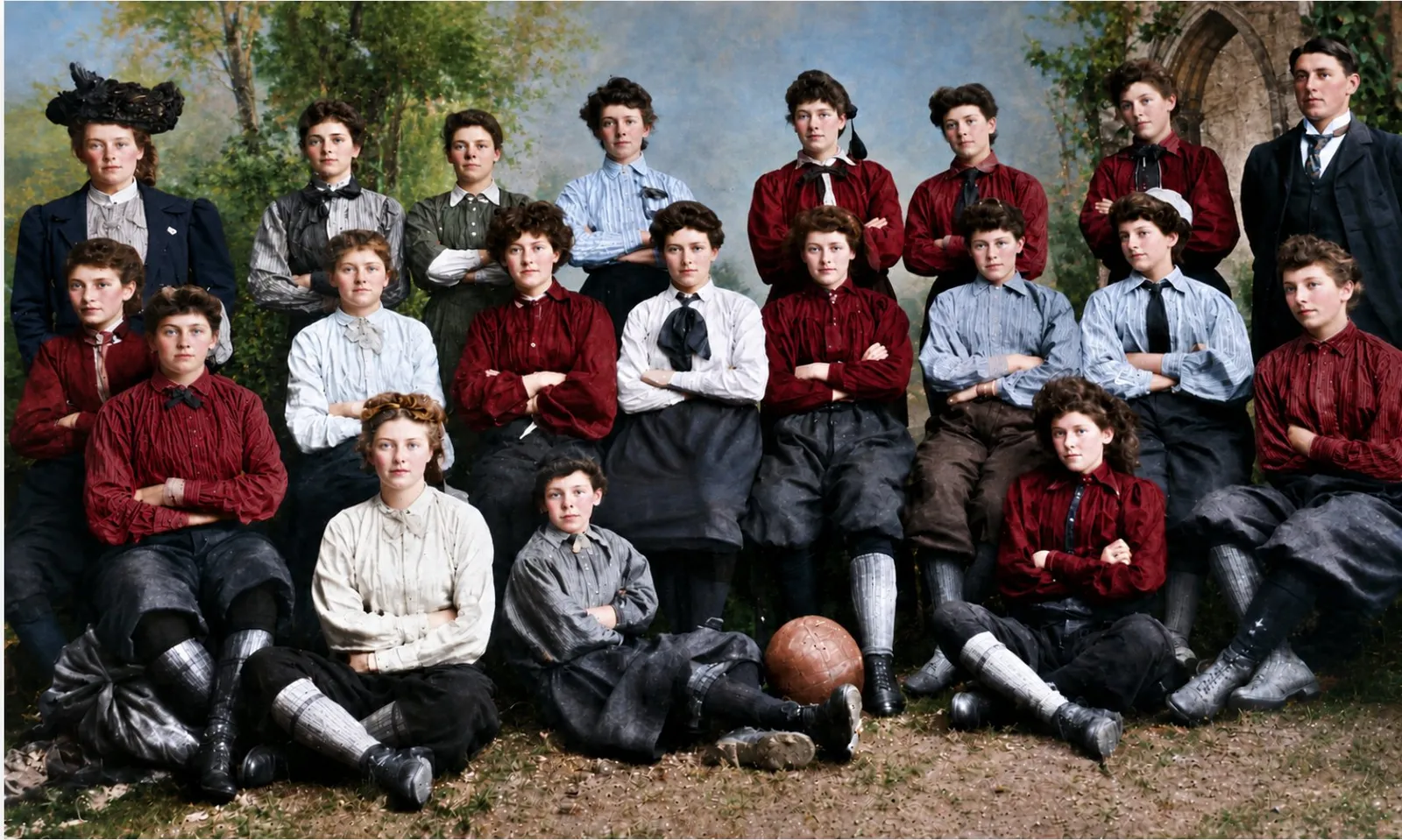
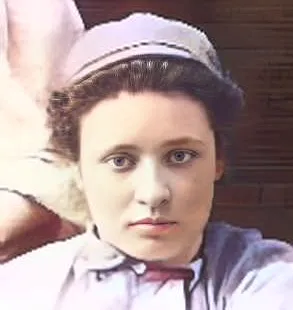
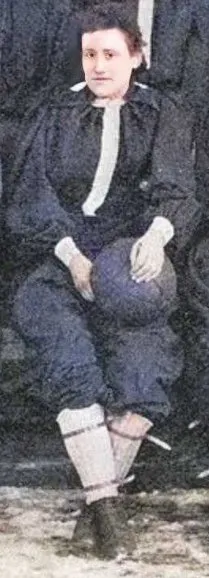
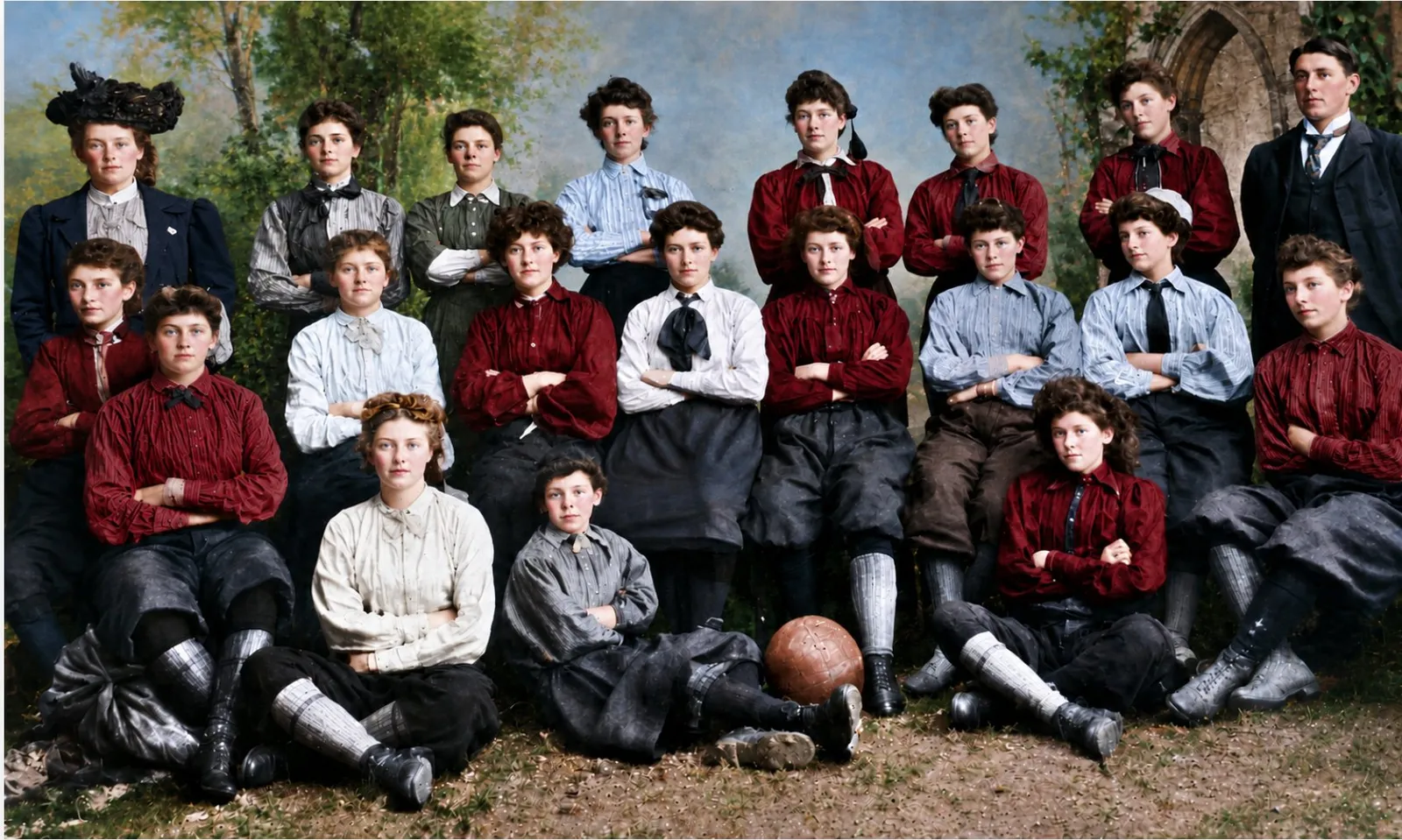
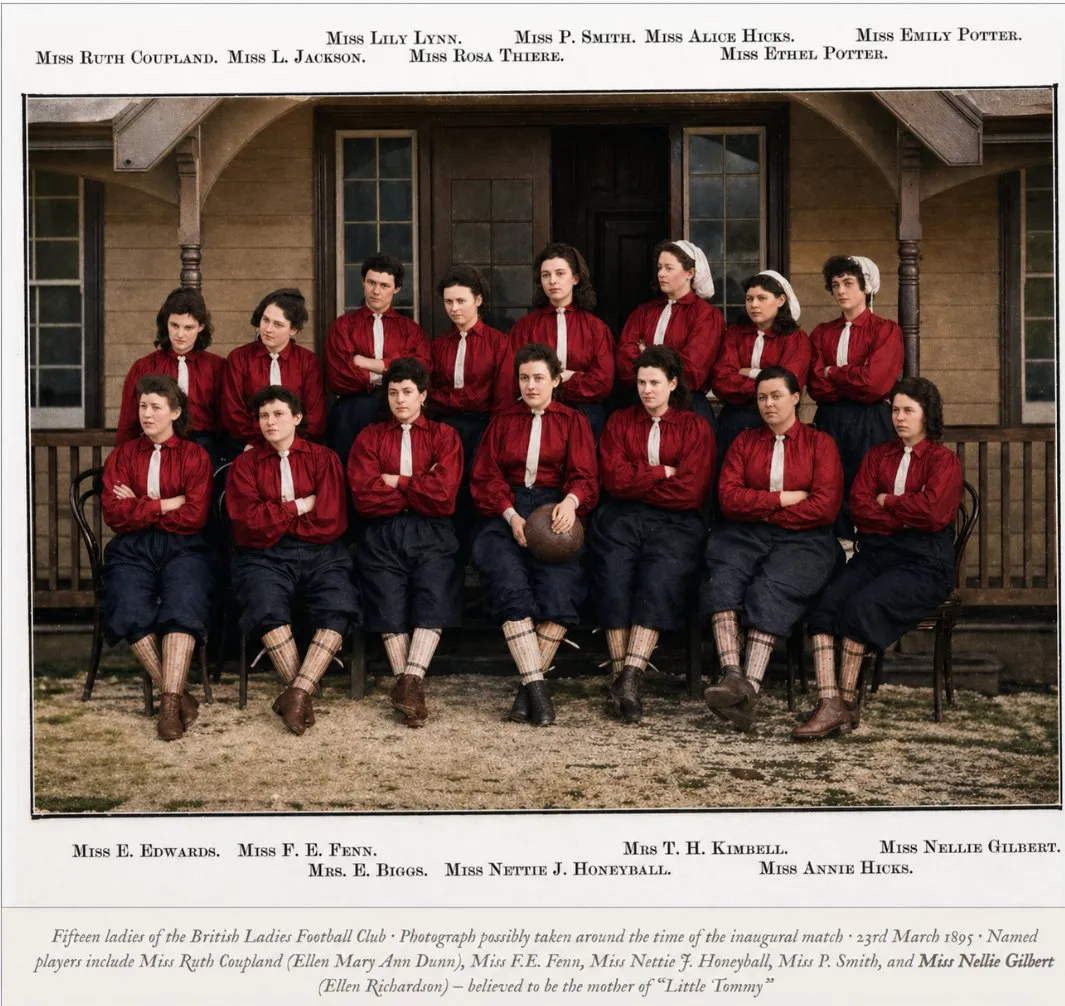
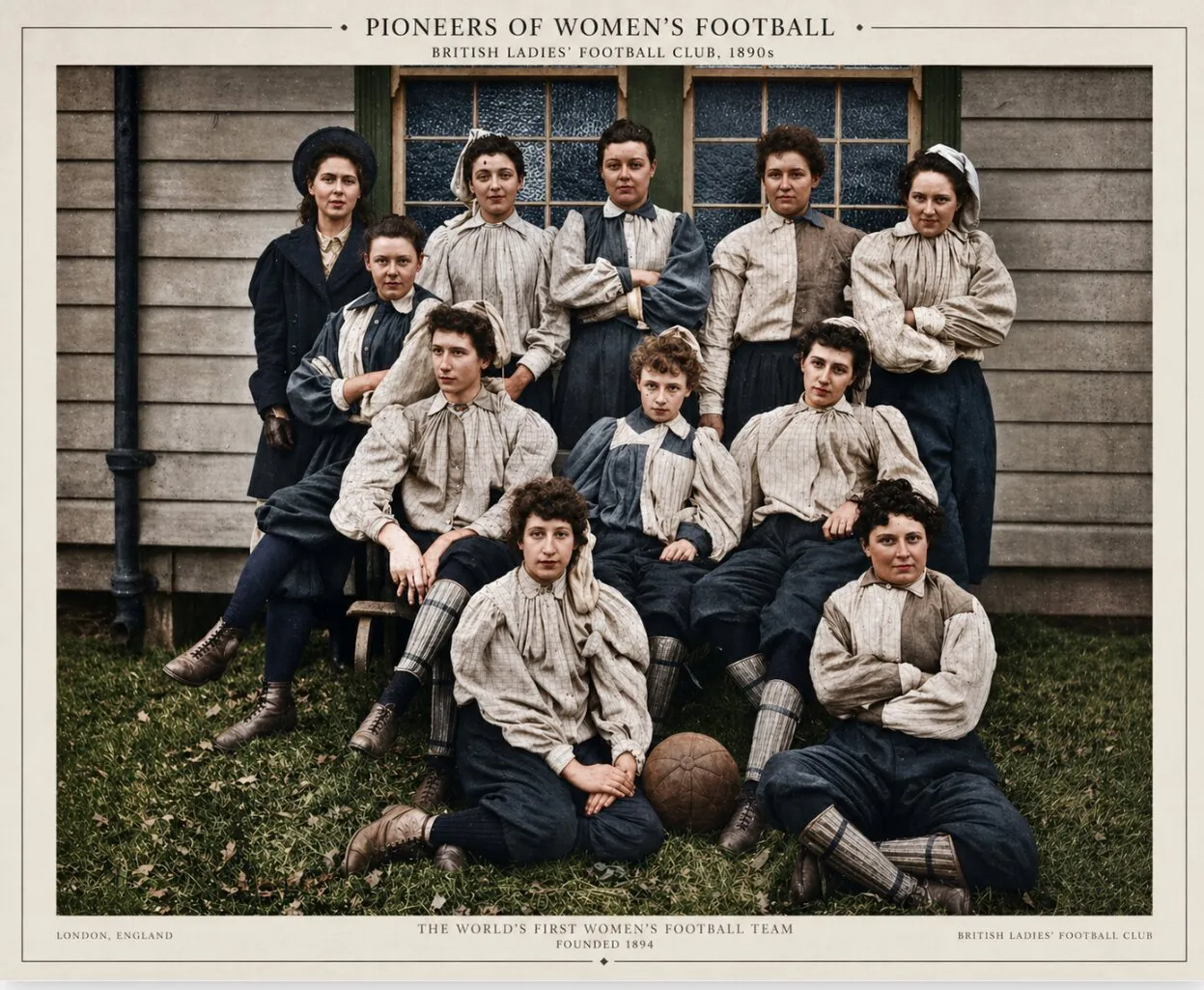
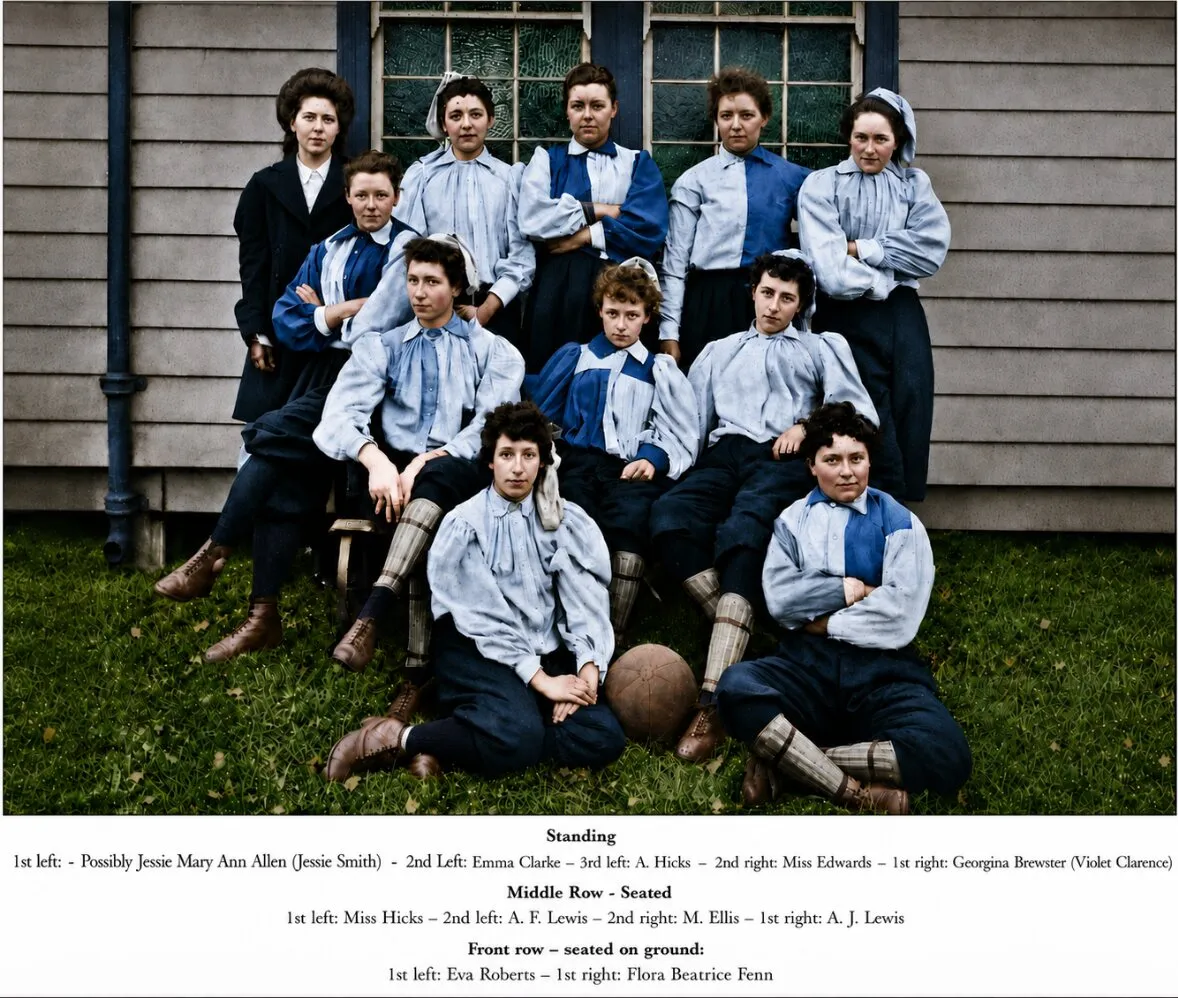
Other lines of investigation remain open. Contemporary newspaper accounts describe Nettie Honeyball in physical terms that may or may not correspond to Jessie Allen. The 1895 team photograph shows a woman identified as Nettie Honeyball on the pitch at Crouch End - but without a confirmed portrait of Jessie Allen at the same age, direct visual comparison is not possible. Census records from the Crouch End area in the mid-1890s have been examined for women of the right age who might correspond to either candidate, without definitive result.
WHY DID NETTIE VANISH? AN UNSUPPORTED HYPOTHESIS
One question has always haunted the Nettie Honeyball investigation: why did she disappear so suddenly, and so completely? She was at the height of her public visibility in the spring of 1895 - giving interviews, captaining matches, writing letters to the press. By the end of May she was gone. The autumn accounts cite illness. By December, Jessie Allen was writing in her own name from the same address. And then silence.
What follows is offered explicitly as an unsupported hypothesis, not a documented finding. There is no positive evidence - no medical record, no confinement, no record of a birth or a loss - for any part of it. The only fact underpinning it is that Jessie Allen's thirteen-year marriage to Frederick Arthur Smith produced no recorded children, which has any number of ordinary explanations having nothing to do with the events imagined below.
Jessie Allen married Frederick Arthur Smith in August 1893. What if, in the early months of 1895, Jessie - playing her most public role as Nettie Honeyball, at the very moment the club was capturing the imagination of the nation - found that she was pregnant? A pregnancy would have been showing by May or June. It would have made continued public life difficult for a woman already operating under an assumed name to protect her identity, and might have required withdrawal from the club, from the press, from the public gaze entirely.
And if that pregnancy did not reach its natural conclusion - if it ended, as so many Victorian pregnancies did, in loss - then the grief of that private experience, coming so hard on the heels of the extraordinary public summer of 1895, could explain the silence, the cited illness, and the way Jessie stepped forward in December, openly and in her own name, as if something had shifted.
To be clear: this is speculation, offered only as a human possibility - a reminder that behind every historical absence there is a life, and that the lives of Victorian women were shaped by forces that rarely left traces in the official record. It is not part of the evidential case for Jessie Allen set out above, and should be weighed as exactly what it is: an imagined explanation, not a documented one. If Jessie Allen was Nettie Honeyball, she deserves to be thought of with gentleness regardless of which explanation, if any, is the true one.
This concludes Theory One. Theory Two, an entirely separate line of enquiry pursued independently of the above, follows below.
✦ Theory Two ✦
A second, independent line of enquiry, pursued separately from the Jessie Allen case set out above, asks a different question entirely - not who Nettie Honeyball's pseudonym concealed, but whether there was a pseudonym at all.
THEORY TWO - HER OWN NAME ALL ALONG: NELLIE HONEYBALL
This second theory starts from a different premise to Theory One above: that Nettie Honeyball may not have been a pseudonym at all, but her own name. The prevailing consensus among earlier researchers held that Nettie Honeyball was a pseudonym. The most thorough published treatment of this question appears on Donmouth.co.uk, a carefully researched website devoted to the history of the British Ladies' Football Club, which makes the case for Jessie Allen as the woman behind the name. That article also considers and dismisses Nellie Honeyball as a candidate - and it is worth engaging directly with its arguments, because original research conducted for this website suggests the dismissal may have been premature.
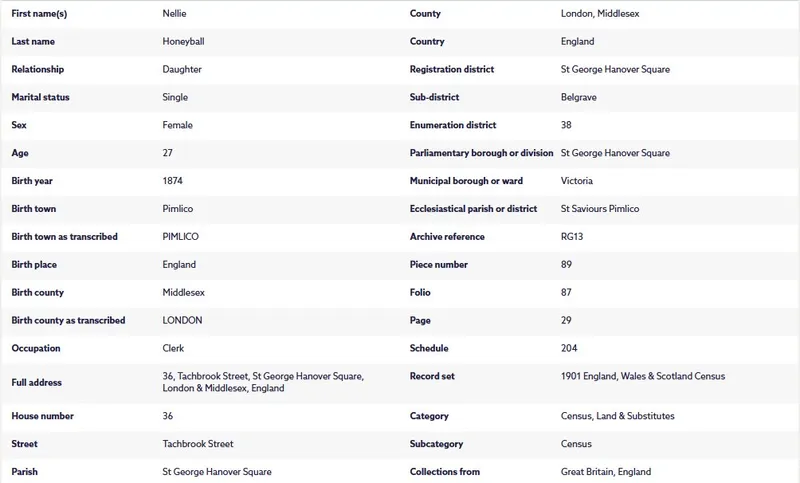
The Donmouth article offers three reasons for rejecting Nellie Honeyball. First, it notes that in 1895 Nellie would have been only about 21 years old - which it considers too young. Second, it observes that Nellie's recorded addresses in the 1881, 1891 and 1901 censuses were at 36 Tachbrook Street, Westminster - a solidly working-class address - and that it seems unlikely she would have been living in middle-class Crouch End while organising a football club, only to return to the family home thereafter. Third, it points to the existence of another candidate - a Janetta Honeyball, aged 21 in 1891, recorded as a cashier at a grocery shop at 155–159 Lambeth Walk, with her place of birth given as Pimlico - who the article considers a more promising lead, though one who has also proved elusive.
These are reasonable objections. But each of them can be answered, or at least significantly qualified, in the light of new evidence.
On the question of age: twenty-one or twenty-two is not implausibly young for a woman of drive and organisational ability to found a football club, particularly one with the backing of an aristocratic patron in Lady Florence Dixie. Youth and ambition are not disqualifying characteristics.
On the question of address and class: the Donmouth article assumes that because Nellie's census addresses were at Tachbrook Street, she must have been living there in 1895. But census records are snapshots taken five or ten years apart - they tell us nothing about where someone was living in the intervening years. A young woman of twenty-two might perfectly well have moved away from the family home in Westminster to lodgings or a position in Crouch End, and returned after the club's activities wound down. This was a common pattern for working women of the period.
On Janetta Honeyball: the Donmouth article acknowledges that Janetta has "vanished without trace" from the records before and after 1891 - which makes her, if anything, a less reliable candidate than Nellie, whose life can be traced across multiple censuses and whose death in 1941 is documented.
A second major piece of scholarship reinforces the case for Nellie. In June 2023, historian Andy Mitchell of Scottish Sport History published an article titled "Solving the Enigma of Nettie Honeyball", drawing on a newly-digitised newspaper source that had not previously been available to researchers. His findings are significant.
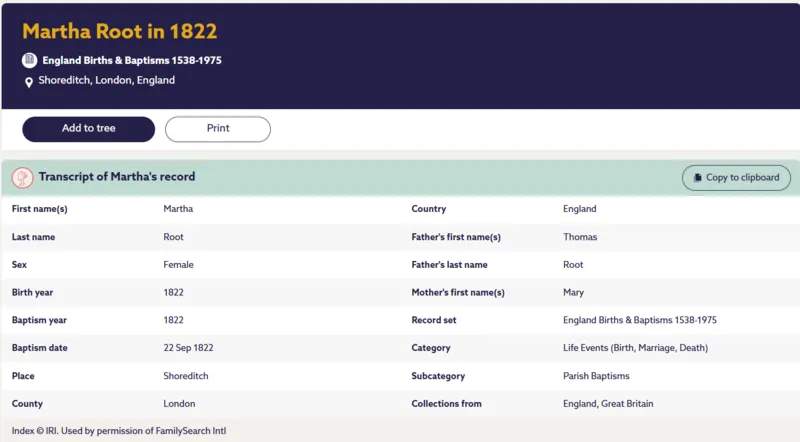
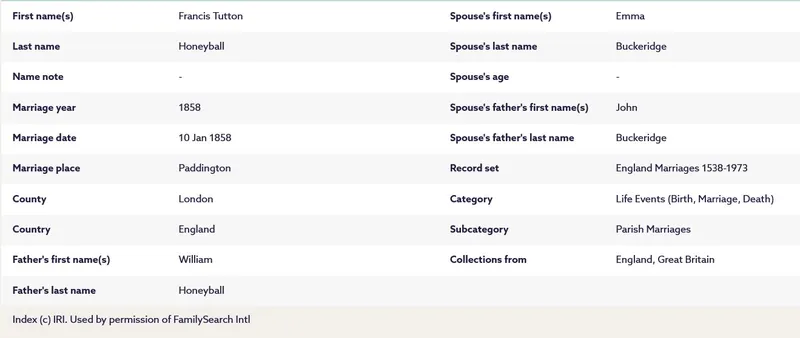
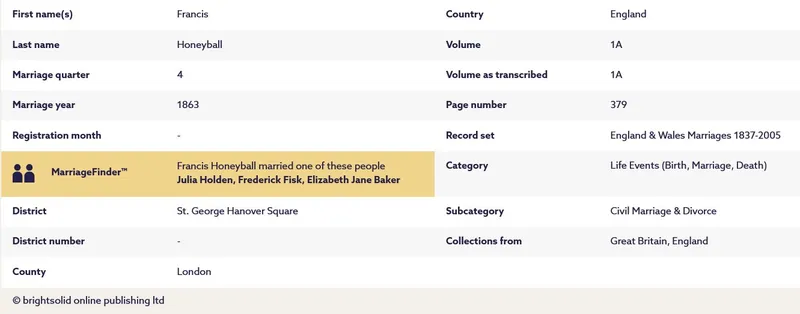
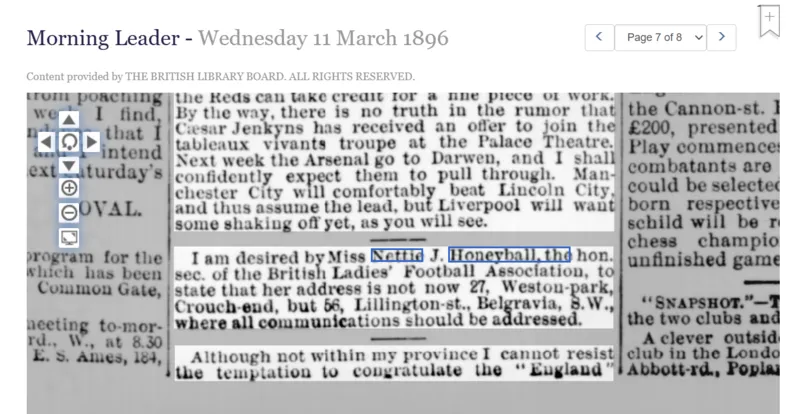
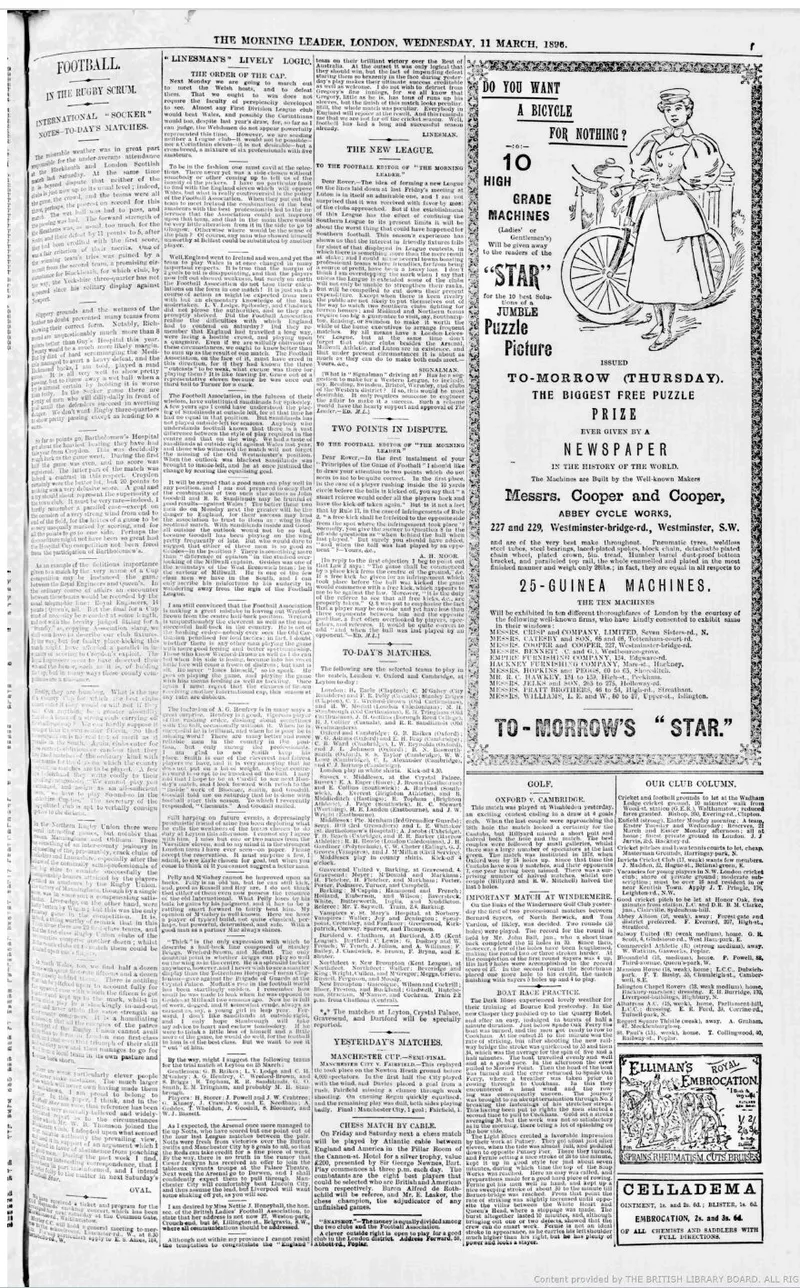
Mitchell's key discovery was a notice in the Morning Leader of 11th March 1896, in which Nettie Honeyball herself announced a change of address: she was no longer at 27 Weston Park, Crouch End, but could now be reached at 56 Lillington Street, Belgravia, S.W. Lillington Street lies a few streets from 36 Tachbrook Street, where Nellie Honeyball grew up; No. 56 itself was the home of Francis Tutton Honeyball, the Sparkford-born cabinet maker (not his Langport namesake - see “Two Francis Tutton Honeyballs” in the November 2026 section below), whose daughter Anne Jane Honeyball had been born there. Francis was very probably Nellie's uncle, her father's brother. Mitchell describes the notice as "the missing link historians have searched for." Nettie did not vanish after 1895. She moved - to Pimlico.
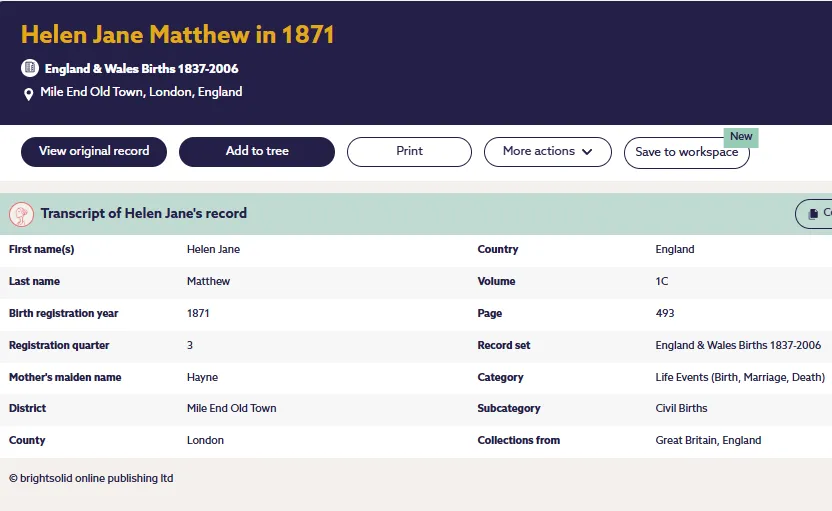
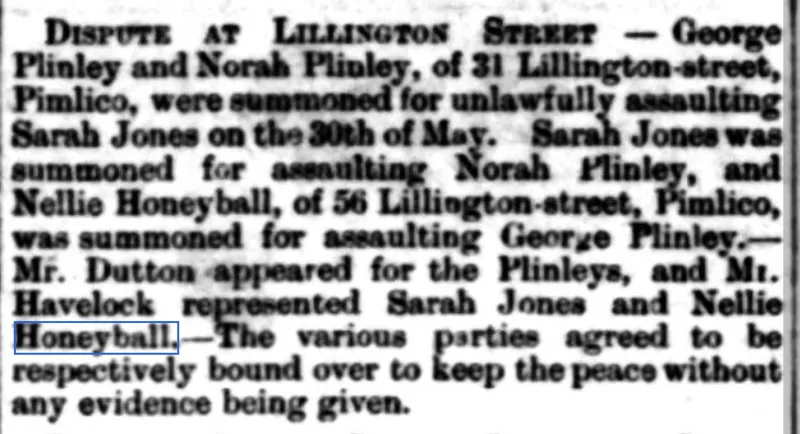
Still more compelling is a court record Mitchell uncovered from the Westminster and Pimlico News of 12th June 1896, which reported a dispute that ended at Westminster Magistrates' Court, where Nellie Honeyball of 56 Lillington Street was bound over to keep the peace. This places Nellie at precisely the address Nettie had given as her forwarding address, in precisely the right period. Anne Jane Honeyball, very probably her cousin, had grown up at 56 Lillington Street - she is there in the 1871 and 1881 censuses, but not in 1891, and where she was living in 1896 is not known - but it is Nellie who is recorded there in June 1896, the very months after Nettie's address change.
The clipping behind Mitchell's discovery - headlined "Dispute at Lillington Street" - is now held in this archive, and confirms the report precisely: George and Norah Plinley, of 31 Lillington Street, Pimlico, were summoned for assaulting Sarah Jones; Sarah Jones was summoned in turn for assaulting Norah Plinley; and Nellie Honeyball, of 56 Lillington Street, Pimlico, was summoned for assaulting George Plinley. All parties agreed to be bound over to keep the peace without any evidence being given - a minor neighbourhood scuffle, notable today only for the address it fixes: Nellie Honeyball, living at 56 Lillington Street in June 1896, three months after Nettie Honeyball had given that same address as her own.
Mitchell also draws attention to Nettie's own press interviews, in which she spoke of a sister among the recruits and of brothers she had grown up with. Anne Jane Honeyball's brothers had both died young; how the interviews fit Nellie's family is set out in the November 2026 section below.
Patrick Brennan’s account of the match at Caversham, Reading, on 15th April 1895 gives the referee as “a Mr. Honeyball, presumably a brother of Nettie.” If that is right, a brother sharing the surname would be strong evidence that Honeyball was her name by birth. But it should be treated as Brennan’s suggestion rather than an established fact: searches of the April 1895 newspapers have not yet found any report naming a Mr. Honeyball as referee at Reading or Caversham, and the Maidenhead Advertiser of 17th April 1895 names the referee at Maidenhead as Mr. A. Hewitt Smith. The press of the day was loose with the word “brother” - the Sporting Man’s reporter at Newcastle described the man organising the tour, almost certainly Alfred Hewitt Smith, as “the brother of Nettie Honeyball” - and the Star’s “her brother, Mr. Honeyball, or Hewitt Smith” is discussed in the November 2026 section below.
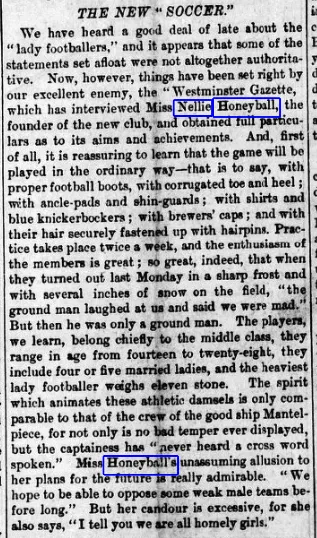
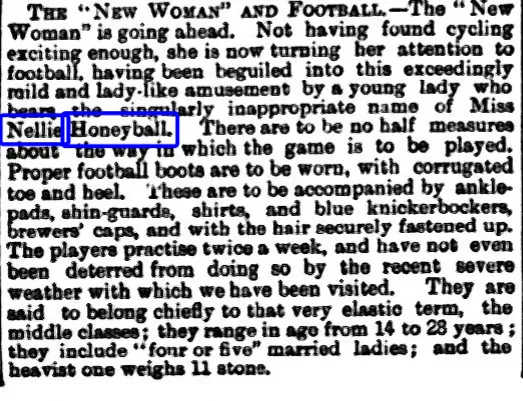
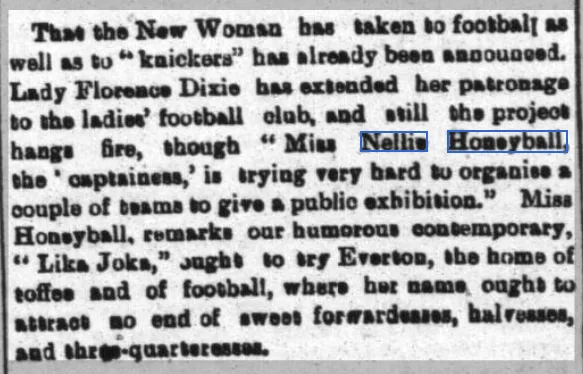
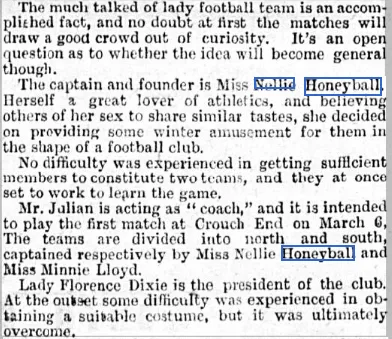
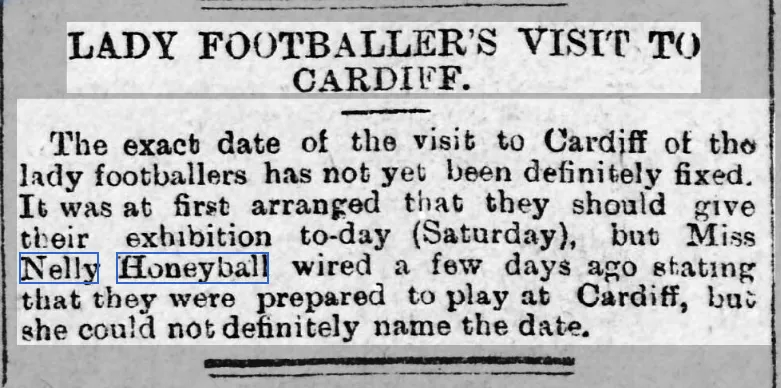
A further, independent line of evidence comes from the wider contemporary press. Outside the club’s own notices and match reports, which consistently render the name as Nettie, or Netty, the press of the first half of 1895 named the founder almost always as Nellie, or occasionally Nelly. The Eastern Mercury of 26th February 1895, for instance, also corroborated two details already known from the club’s own accounts - Mr Julian as coach and Miss Minnie Lloyd captaining the second team (see “On the Players,” above) - while noting that the first match was then still planned for 6th March at Crouch End, a date later put back to the 23rd.
Set out in full, the newspaper record makes the pattern easier to see at a glance than any paragraph can. Ten independent notices between January and April 1895 name the founder - nine as "Nellie," one as "Nelly" - and not once as "Nettie":
| Date |
Newspaper |
Place |
Context |
| 9 Jan 1895 |
Southern Echo |
Southampton |
"No girlish folly, but stern reality... Miss Nellie Honeyball, the secretary of the British Ladies Football Club" |
| 25 Jan 1895 |
Music Hall and Theatre Review |
London |
"Miss Nellie J. Honeyball, of 27, Weston Park, Crouch End, N., desires us to mention that there is a vacancy for two more ladies" |
| 26 Jan 1895 |
To-day |
London |
"Miss Nellie Honeyball, the captainess, is trying very hard to organise a couple of teams to give a public exhibition" |
| 1 Feb 1895 |
The Globe |
London |
"The Westminster Gazette... has interviewed Miss Nellie Honeyball, the founder of the new club, and obtained full particulars" |
| 2 Feb 1895 |
Irish Field |
Dublin |
"Its secretary, Miss Nellie (J.) Honeyball (sweet name, Honeyball!) has been writing to the sporting papers" |
| 9 Feb 1895 |
Wellington Journal & Shrewsbury News |
Wellington, Shropshire |
"...beguiled into this exceedingly mild and lady-like amusement by [a] young lady who bears the singularly inappropriate name Miss Nellie Honeyball" |
| 16 Feb 1895 |
Liverpool Weekly Courier |
Liverpool |
"...Nellie Honeyball, the 'captainess,' is trying very hard to organise [teams]... to give a public exhibition" |
| 26 Feb 1895 |
Eastern Mercury |
London |
"The captain and founder is Miss Nellie Honeyball. Herself a great lover of athletics..." |
| 30 Mar 1895 |
Grantham Journal |
Grantham |
"Miss Nellie Honeyball, secretary of the British Ladies' F.C., has addressed a letter to the committee of the various League Clubs in Lancashire" |
| 10 Apr 1895 |
Maidenhead Advertiser |
Maidenhead |
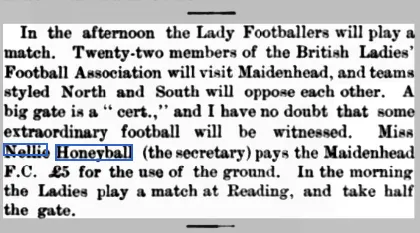
"Miss Nellie Honeyball (the secretary) pays the Maidenhead F.C. £5 for the use of the ground" |
| 18 May 1895 |
South Wales Daily News |
Cardiff |
"Miss Nelly Honeyball wired" ahead of a planned visit to Cardiff |
The Globe and the Wellington Journal & Shrewsbury News carry the same syndicated Westminster Gazette interview, and should be counted as one witness rather than two; the Eastern Mercury, Liverpool Weekly Courier, Maidenhead Advertiser and South Wales Daily News each appear to be independent local reporting, filed months apart, and all settle on the same name.
Mitchell stops short of a definitive conclusion, leaving the question open between Anne and Nellie. The burial and probate evidence below, gathered for this website, and the family reconstruction in the November 2026 section take the case further.
Across Greater London as a whole, at least 121 Honeyballs are recorded as buried - confirmed from Find a Grave memorials spanning multiple cemeteries including Brompton, Camberwell, Tower Hamlets, South Ealing, East Finchley, Rippleside in Barking, and St James Churchyard, Piccadilly. The true total, including unindexed records, is estimated at 130–160 individuals. Research shows that these burials represent not one family but several distinct branches of the Honeyball surname - a name of Devon and Somerset origin that migrated into London during the 19th century and expanded across multiple districts. Against that backdrop, the concentration at Old Brompton Cemetery is all the more striking: of those 121 confirmed London Honeyballs, a remarkable 24 are interred in Brompton Cemetery alone - one of the largest single-cemetery clusters for this surname anywhere in London, in the cemetery that served the Westminster and Pimlico community for generations. A community buries its dead close to home. The Honeyball burials at Old Brompton, as identified in the cemetery registers, are as follows:
| Name |
Born |
Died |
Plot |
| Francis William Honeyball |
21 May 1858 |
30 Nov 1867 |
J, 81.3, 32.3 |
| William Honeyball |
- |
20 Mar 1869 |
AI, 171.3, 86.0 |
| William Edward Honeyball |
- |
6 Aug 1881 |
AB, 49.6, 155.0 |
| William Honeyball |
- |
30 Nov 1887 |
AI, 193.6, 57.3 |
| Christine Honeyball |
July 1875 |
10 Nov 1887 |
AI, 193.6, 57.3 |
| Florence Honeyball |
- |
20 Sep 1888 |
AI, 171.3, 86.0 |
| William Honeyball |
- |
7 Jan 1904 |
AI, 193.6, 57.3 |
| Mary Honeyball |
- |
28 Nov 1921 |
M, 147.6, 151.0 |
| Nellie Honeyball |
1873 |
8 Dec 1941 |
M, 147.6, 151.0 |
| Edith Mary Honeyball |
1876 |
March 1959 |
M, 147.6, 151.0 |
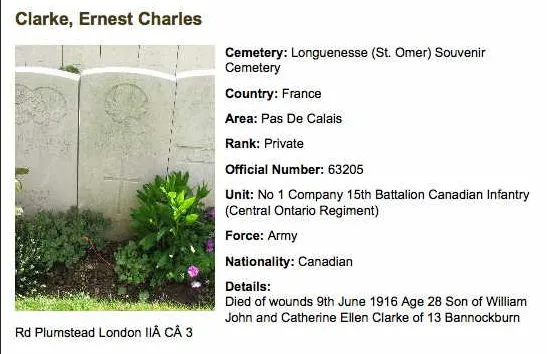
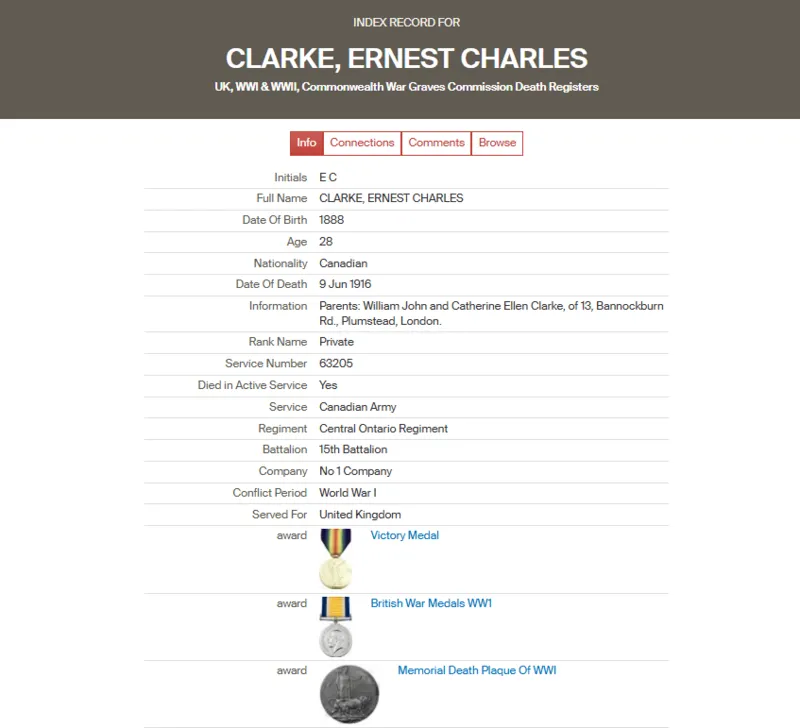
The most significant entry is Nellie Honeyball, born 1873, died 8th December 1941, buried at plot M, 147.6, 151.0. Her birth year of 1873 is consistent with the age of the woman described as Nettie Honeyball in the 1895 newspaper accounts. She is buried alongside her sister Edith Mary Honeyball (born 1876, died March 1959) in the same plot. Both women are part of the Honeyball family tree constructed for this investigation.
The cemetery's own burial registers establish the order in which this plot was used. Mary Honeyball - Frederick's widow, and mother to Nellie and Edith Mary - was buried here on 28th November 1921, recorded as the 2nd interment. Nellie herself was buried here on 12th December 1941, four days after her death, recorded as the 3rd interment - a separate, independent record that corroborates the civil death certificate above. The identity of the plot's 1st interment is not yet established. It is not Frederick Honeyball: as the burial register reproduced further down this page shows, he was buried separately in his own private grave at plot a.I. 170.3 × 86.0 in February 1893, nearly thirty years before this plot was first opened. Who the first occupant of Plot M, 147.6, 151.0 was remains an open question for future research.
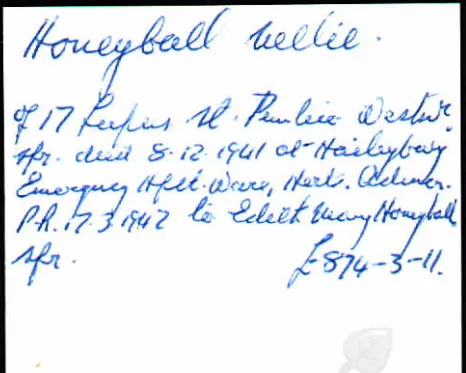
A handwritten probate index card in this archive adds a further, independent record of her death. It gives Nellie Honeyball as "of 17 Lupus Street, Pimlico, Westminster, spinster," and notes that administration of her estate was granted on 17th March 1942 to her sister, Edith Mary Honeyball, spinster, with effects valued at £874 3s. 11d. The details - the address, the date of death, the sister as administrator - match the civil death certificate held elsewhere in this archive exactly, in a second and entirely separate document.
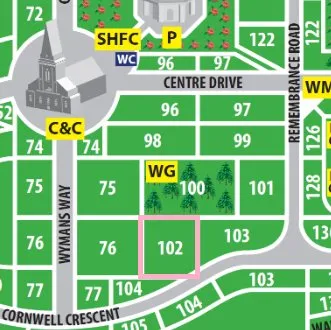
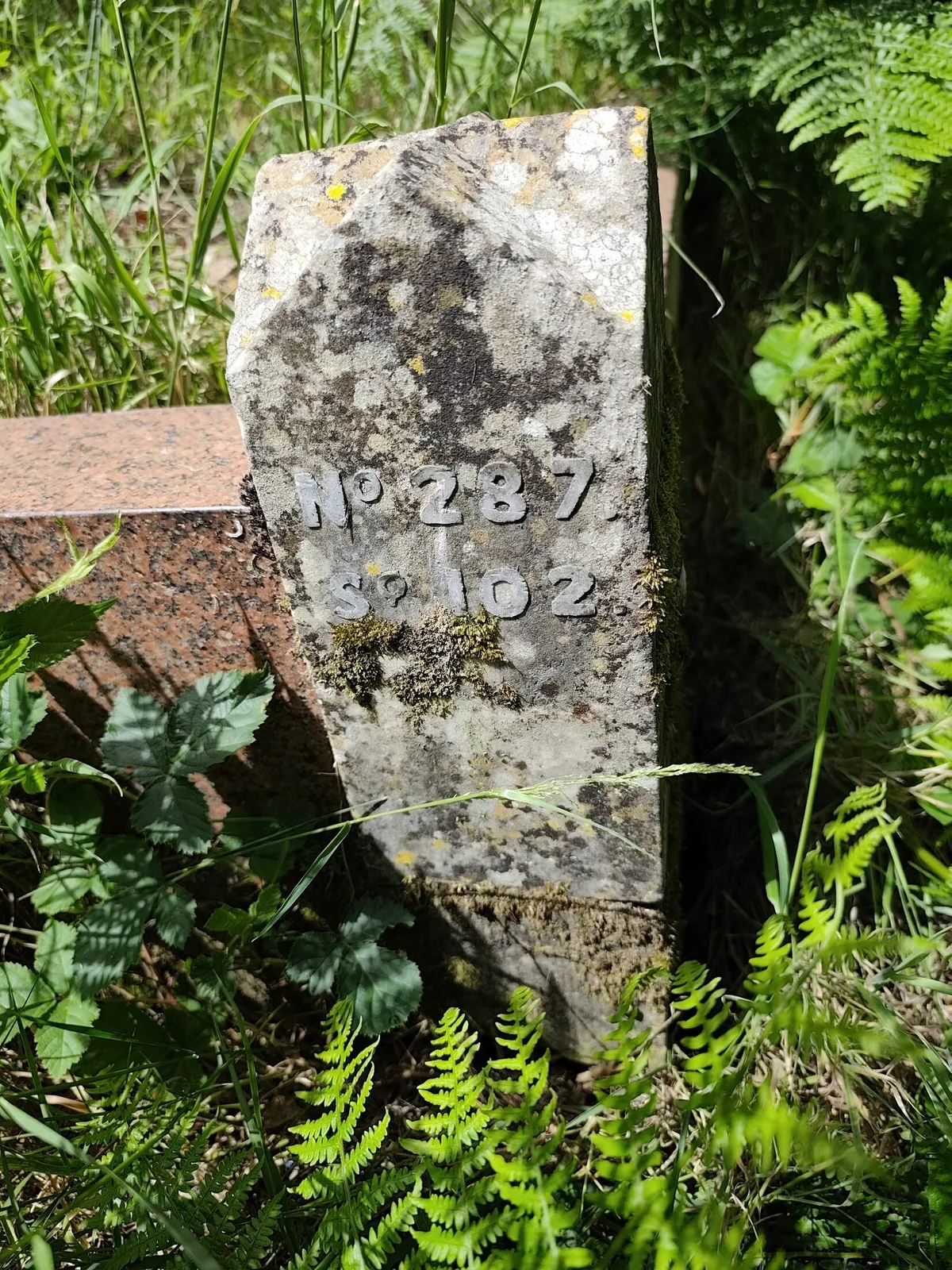
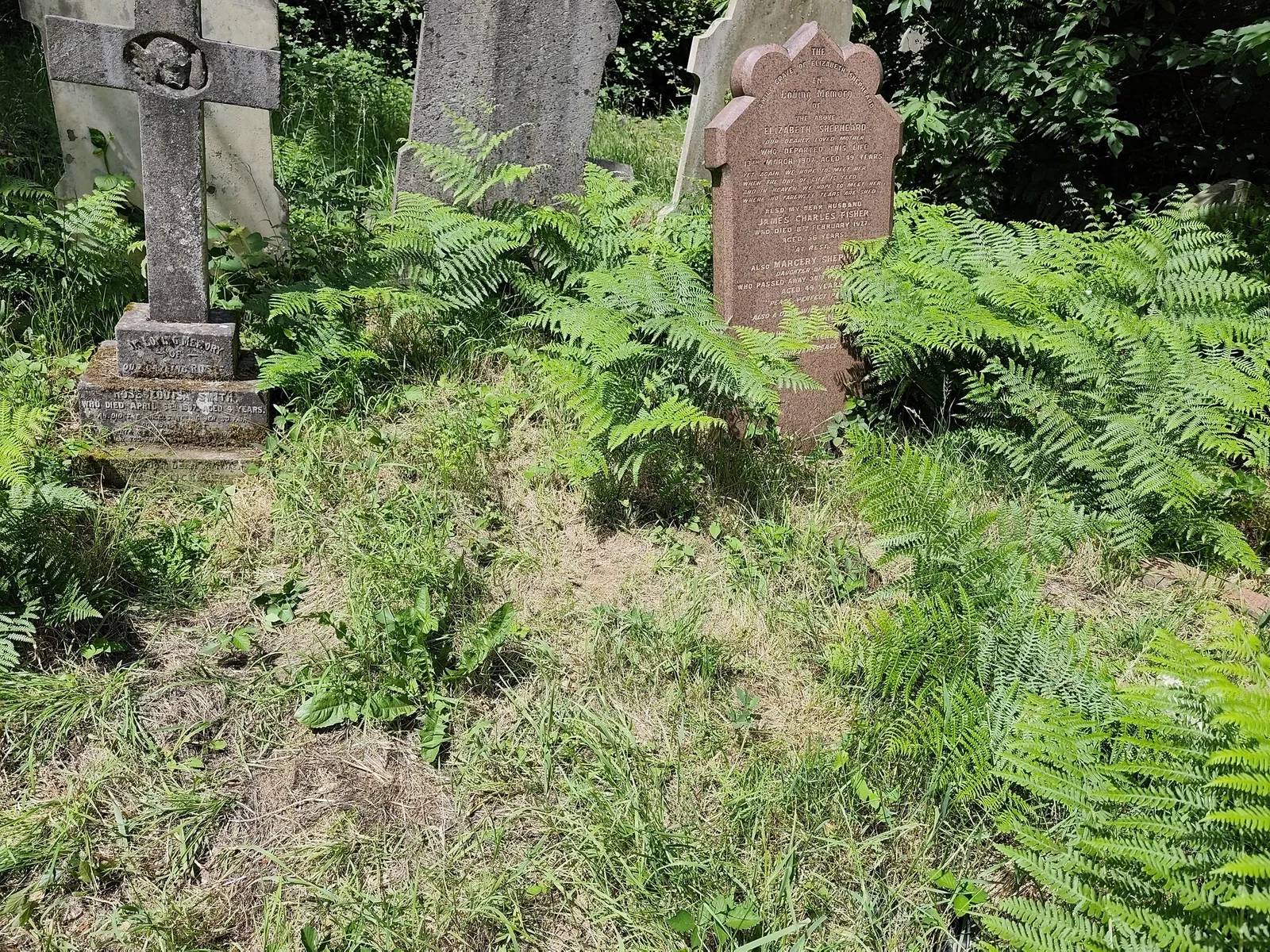
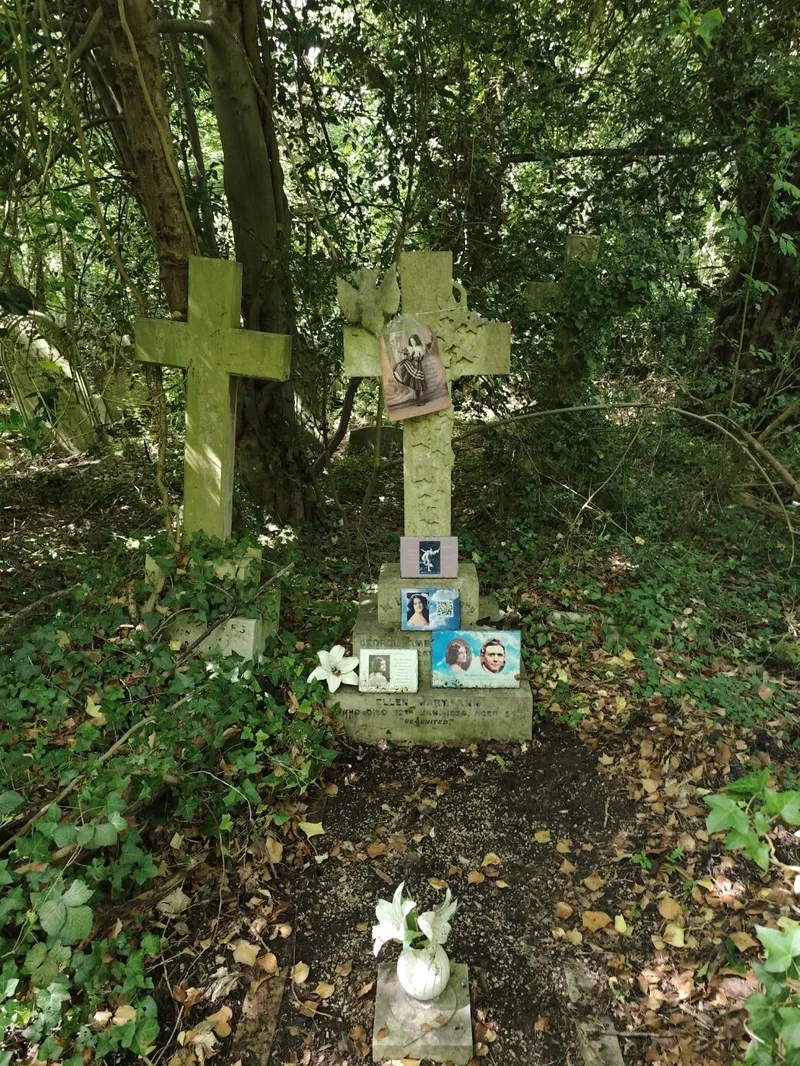
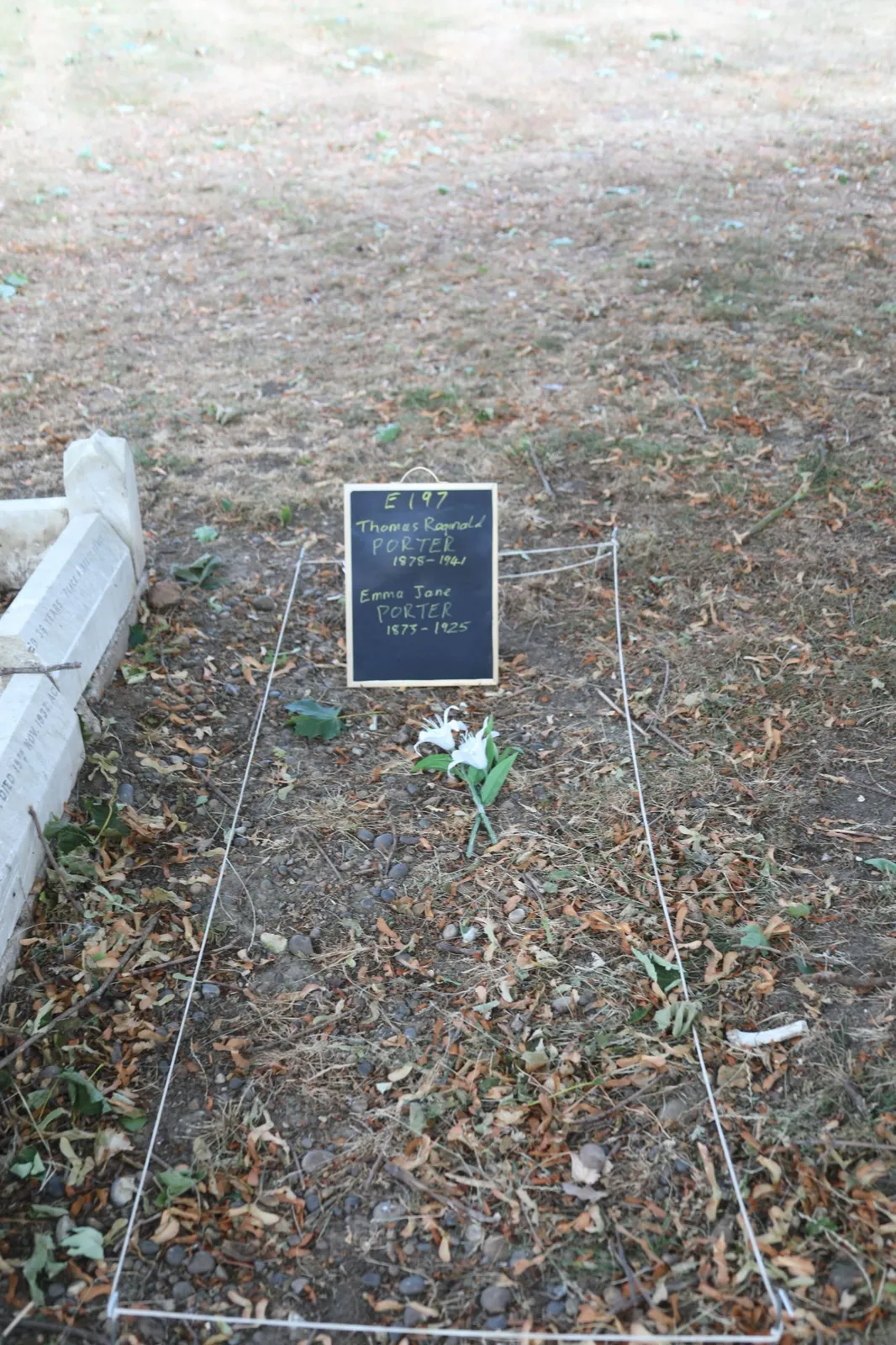
What makes this especially significant is that the author of this website has personally visited Old Brompton Cemetery and located Nellie Honeyball's grave at plot M, 147.6, 151.0. The grave was found to be heavily overgrown, which has prevented photography - but its location has been confirmed. Old Brompton Cemetery is notable as the resting place of several prominent Victorian figures, including Emmeline Pankhurst, whose headstone is marked nearby. That Nellie Honeyball lies in the same cemetery as the great suffragette leader is a detail that feels entirely appropriate.
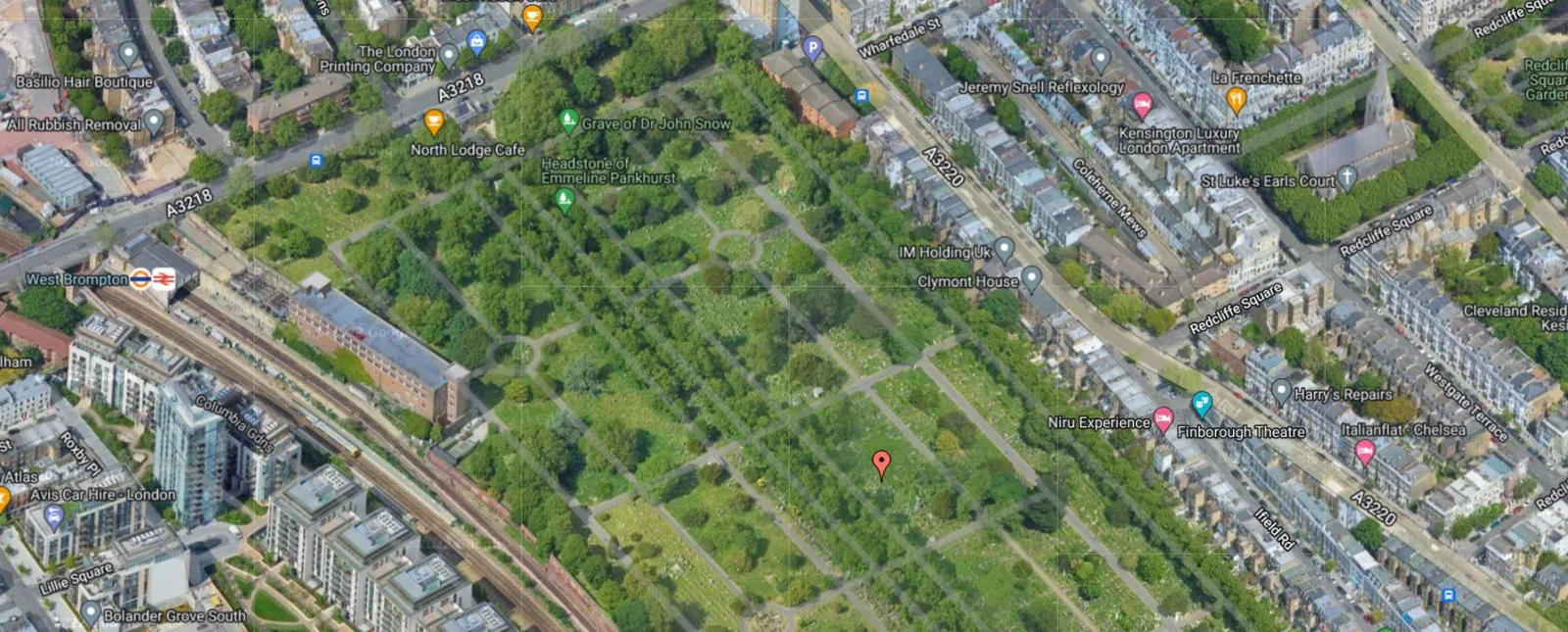
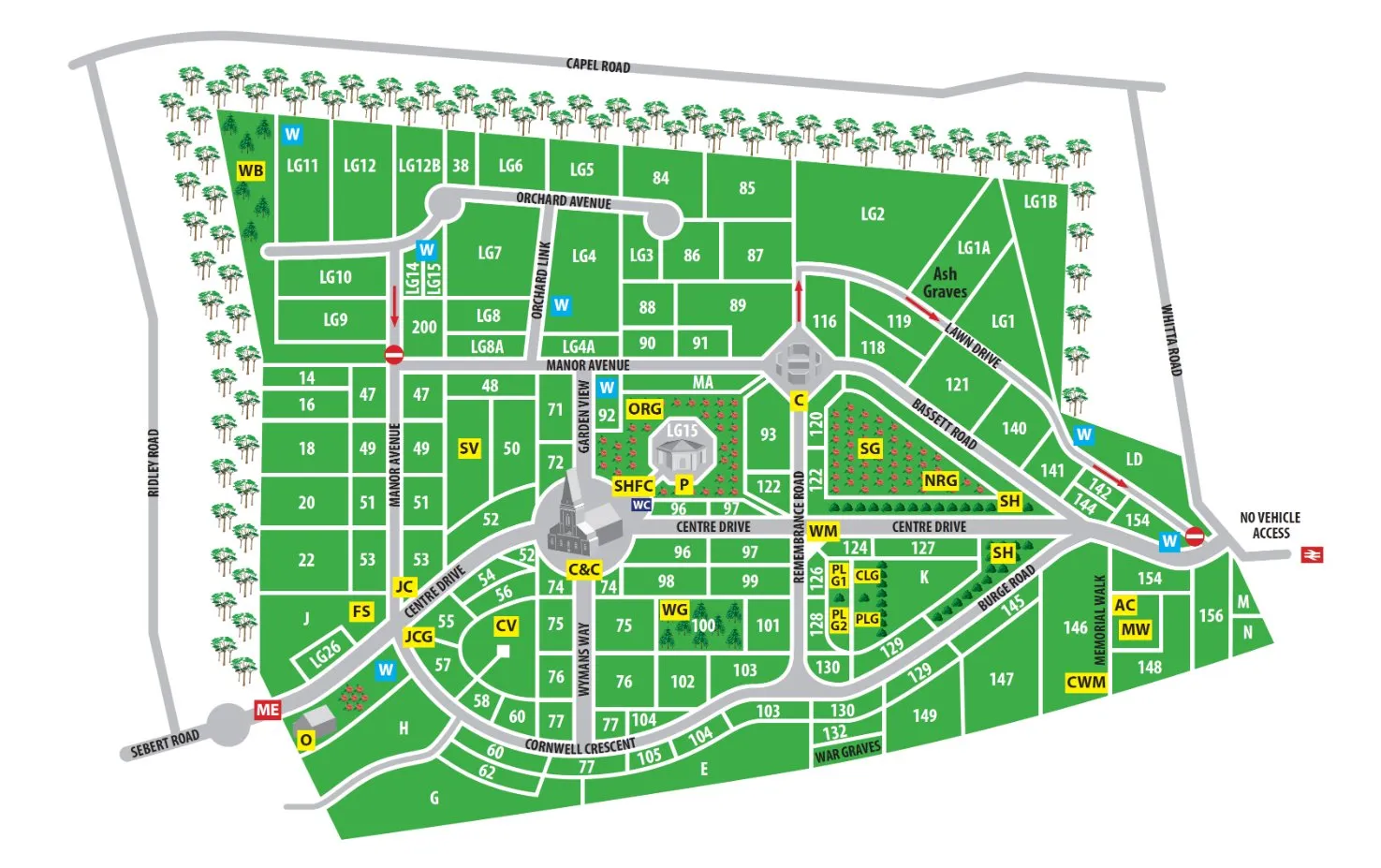
Old Brompton Cemetery, London · The red pin marks the location of Plot M, 147.6, 151.0 · A private grave holding, by the cemetery's own burial registers, Mary Honeyball (2nd interment, d.1921), Nellie Honeyball (3rd interment, 1873–1941) and Edith Mary Honeyball (1876–1959) · Located and confirmed in person by the author of this website · The headstone of Emmeline Pankhurst is visible among the cemetery landmarks
Further corroboration comes from a remarkable archival document - a probate and estate card relating to Edith Mary Honeyball, Nellie's sister. The card records that Edith Mary died on 9th March 1959 at Kingston Hospital, described as a spinster, late of Bishop's Hotel, Sheen Road, Richmond, Surrey. Her estate was valued at approximately £580. The card also records a later entry: C.I.L.G. 13.1.1961 - died at Kingston Hospital - Aged 24.3.1961. Most strikingly, it notes that Edith was the daughter of Frederick Honeyball (an Upholsterer) and Mary A. Martin, born 1.3.1876 at 1 Tachbrook Street, S.D. Belgrave - details that align precisely with the Honeyball family tree compiled for this investigation.
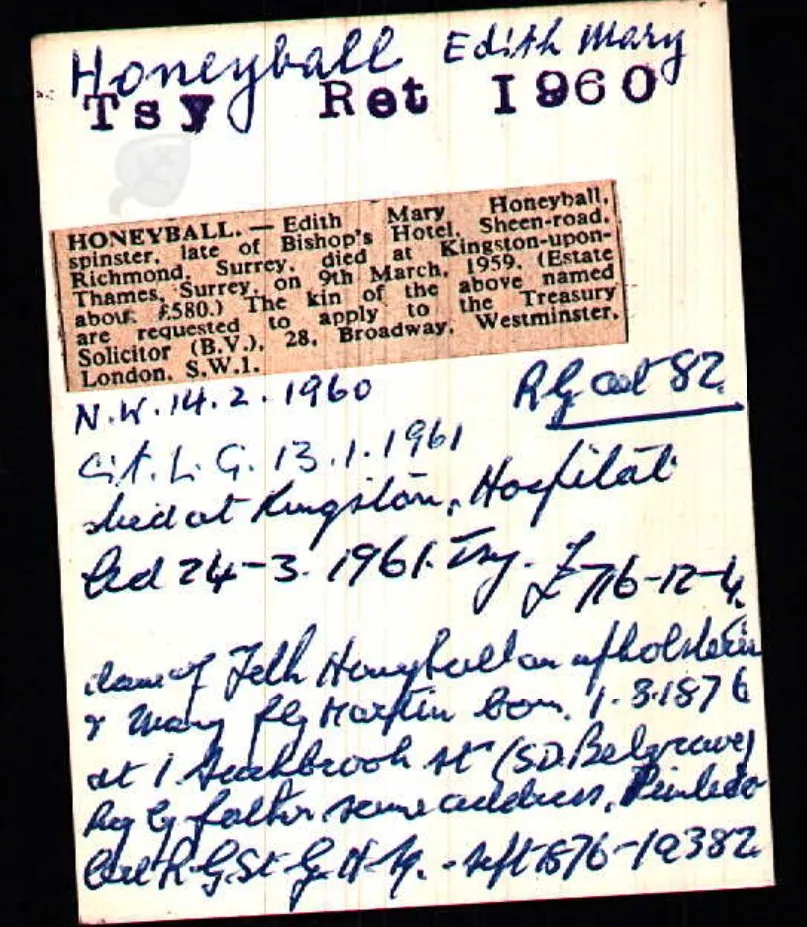
Estate & probate card · Edith Mary Honeyball · Spinster · Late of Bishop's Hotel, Sheen Road, Richmond, Surrey · Died 9th March 1959 at Kingston Hospital · Aged 82 · Estate c.£580 · Daughter of Frederick Honeyball, Upholsterer, and Mary A. Martin · Sister of Nellie Honeyball, buried Old Brompton Cemetery
A further, more circumstantial line of evidence concerns the family's financial standing. Frederick Honeyball, Nellie's father, died on 8th February 1893 - two years before the British Ladies Football Club's first match - and was buried a week later, on 15th February 1893, in a private grave at Brompton Cemetery, Earl's Court (5th interment, plot a.I. 170.3 × 86.0, parish of St George Hanover Square). Probate was granted in London on 28th March 1893 to his widow, Mary Honeyball, and to Francis Tutton Honeyball, an upholsterer; his effects were valued at £1,178 7s. 9d. - a substantial sum for the period, equivalent to roughly £196,000 in today's money by the retail price index (and considerably more again if measured against average earnings of the day) - a genuinely comfortable inheritance to fall to his widow and children. If Nellie Honeyball was indeed the woman behind the name Nettie Honeyball, this bequest would have left the family comfortably provided for at precisely the moment, two years later, when she was organising the BLFC. In a contemporary interview, Nettie Honeyball stated that she was "bearing the whole of the cost myself at present," having already laid out £30 of her own money - itself around £5,100 in today's terms - in the hope of recouping it from gate receipts. A family inheritance of well over a thousand pounds (nearly £200,000 today), arriving so shortly beforehand, offers a plausible explanation for how she was in a position to front a sum of that size - though it remains, like the rest of this theory, a reasonable inference rather than a proven fact.
Modern equivalents calculated using the UK retail price index (RPI) from 1893 and 1895 respectively to 2026; historical currency comparisons of this kind are necessarily approximate over a 130-year span, and are offered here as a general sense of scale rather than a precise figure.
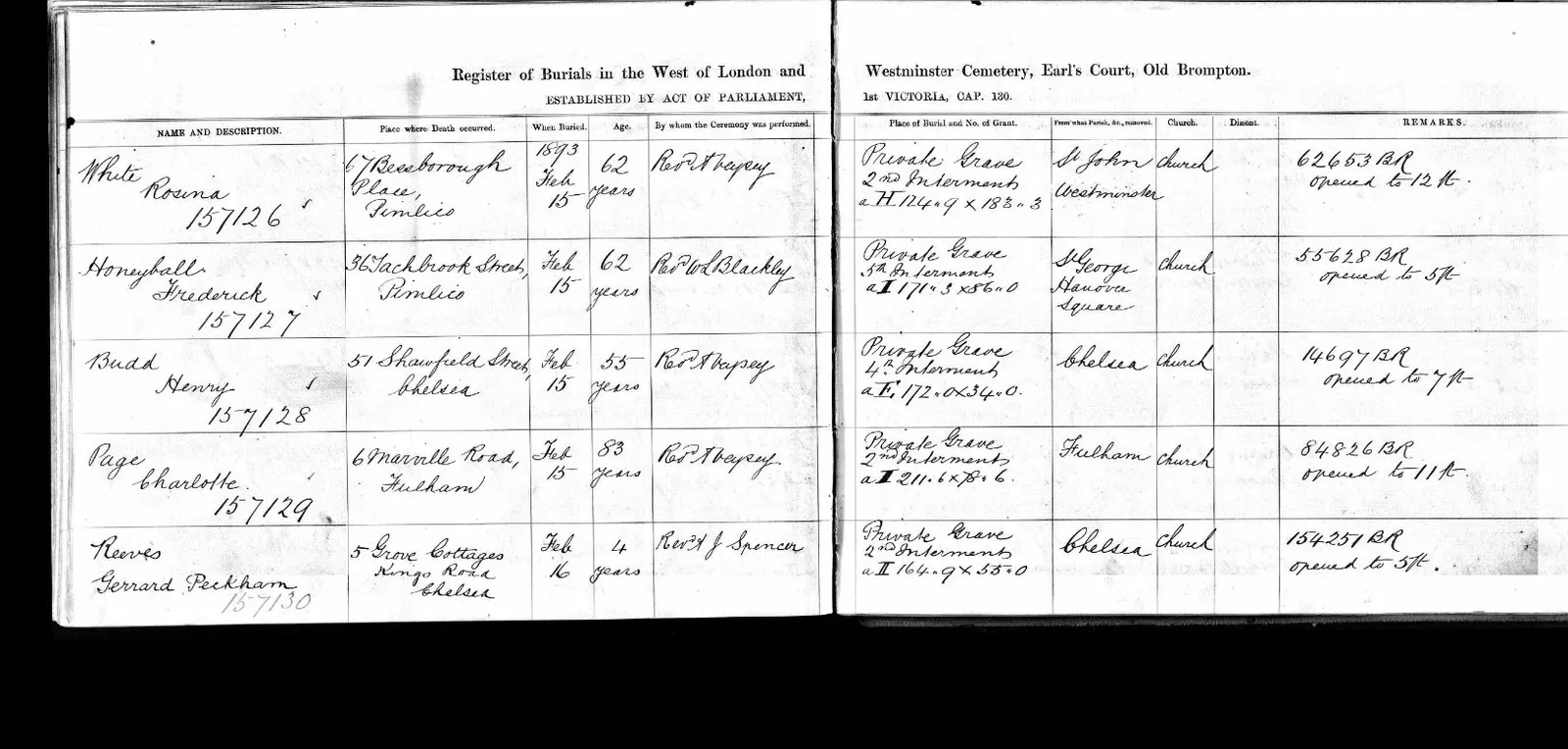
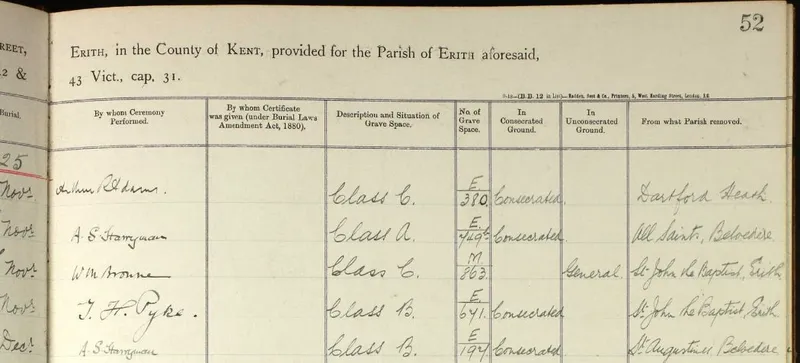
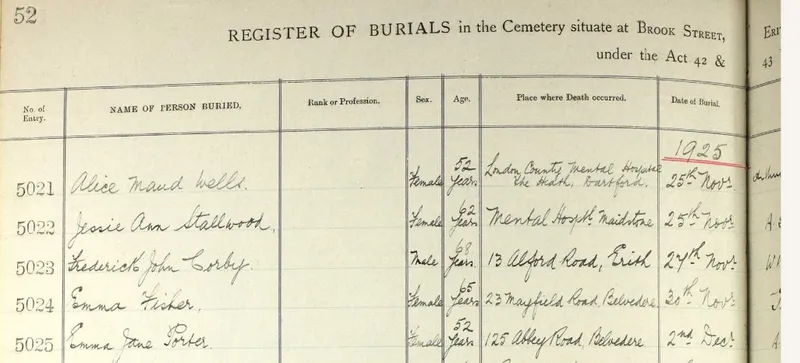
Register of Burials, West of London and Westminster Cemetery, Earl’s Court, Old Brompton · Frederick Honeyball, of 36 Tachbrook Street, Pimlico, aged 62 · Buried 15th February 1893 · Private grave, 5th interment, plot a.I. 170.3 × 86.0, parish of St George Hanover Square · Grant No. 55628 BR

England & Wales, National Probate Calendar · HONEYBALL Frederick, of 36 Tachbrook Street, Pimlico, Middlesex, upholsterer and furniture dealer, died 8 February 1893 · Probate London, 28 March, to Mary Honeyball, widow, and Francis Tutton Honeyball, upholsterer · Effects £1,178 7s. 9d.
What the Donmouth article and the Scottish Sport History article could not include - because this research was conducted subsequently and in person - is the burial evidence from Old Brompton Cemetery. That evidence adds to a case built from Mitchell's Lillington Street address notice and the court record placing Nellie specifically at that address in June 1896, and now the physical confirmation of Nellie's grave at Plot M, 147.6, 151.0 - a grave found in the cemetery where 24 of at least 121 confirmed London Honeyballs are buried, one of the largest single-site concentrations of the surname in the capital, and the cemetery that served as the family's parish ground for generations.
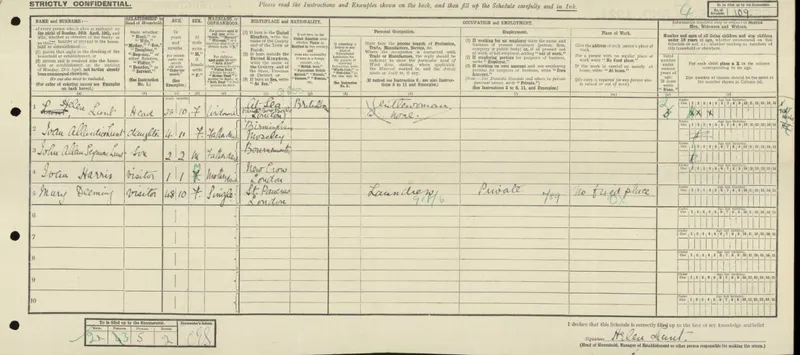
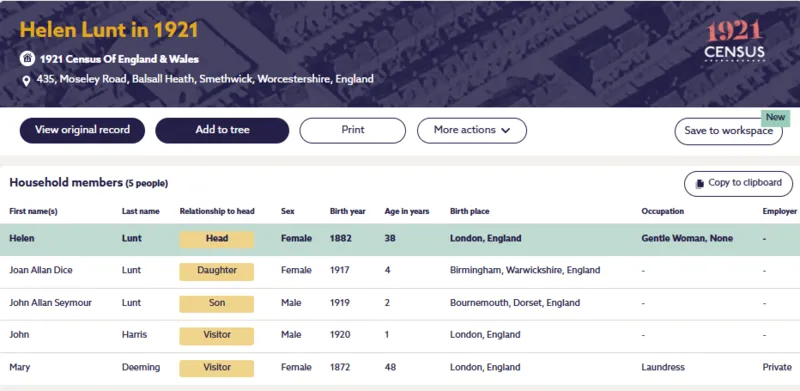
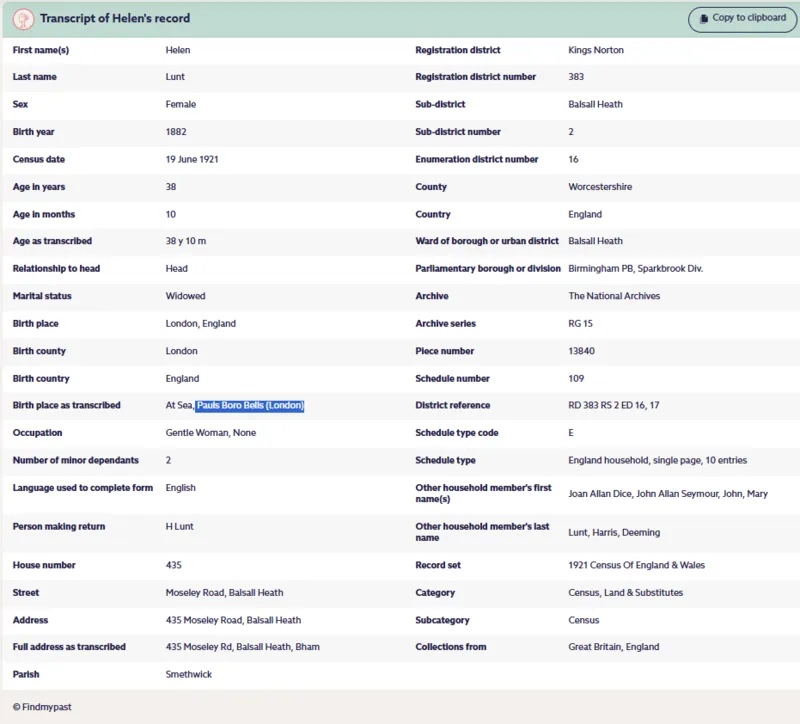
Nellie Honeyball, born 1873 in Pimlico, daughter of Frederick Honeyball, upholsterer, and very probably niece of Francis Tutton Honeyball, the cabinet maker of 56 Lillington Street - resident at that house in June 1896 - the same address to which Nettie directed her correspondence in March 1896 - is buried in Old Brompton Cemetery, Plot M, 147.6, 151.0. Her grave has been located and confirmed in person. She was twenty-one years old when the British Ladies Football Club played its first match. Her birth, her father’s two marriages and the household she grew up in are set out in the November 2026 section below.
⚠ Research Status
This argument is presented as a serious line of enquiry, not a settled conclusion. The identification of Nellie Honeyball (Old Brompton Cemetery, Plot M, 147.6, 151.0) as a strong candidate for the woman behind the name Nettie Honeyball rests on genealogical, archival, and in-person research conducted by the author of this website. The grave is known, confirmed, and awaiting further investigation. The research continues.
CORROBORATION - HONEYBALL BEYOND LONDON
Separate research conducted for this website in August 2026 - an exact-match search of Ancestry.co.uk's UK and worldwide collections - provides further corroboration for Honeyball as a genuine, long-established surname, quite apart from the Brompton Cemetery burial evidence above. The search returned 1,169 exact matches for "Honeyball" and traced continuous, dated, located records back to 1786: the death of Robert Honniball/Honeyball at Stogursey, Somerset - independently confirming the Devon/Somerset origin proposed above, a full century before Nettie's public appearance. Records then run continuously through the nineteenth and twentieth centuries, concentrated exactly where this investigation would expect: London and Middlesex, Surrey, Kent, and the Midlands, with an emigrant branch established in Victoria and New South Wales, Australia, from the 1930s onward. Just as tellingly, the name was preserved as an inherited middle name across several other families - Golding, Baker, Buckton, Harby, Hone, and Perry - an ordinary pattern for a name a family was proud to carry forward through marriage, and hard to reconcile with the idea that "Honeyball" was itself a theatrical invention.
NEW EVIDENCE, NOVEMBER 2026 - NELLIE HONEYBALL AS A STRONG CONTENDER
In November 2026 I returned to Theory Two with a single question: can the Nellie Honeyball of Tachbrook Street be placed, by birth, family and household, beside the secretary of the British Ladies Football Club? Working from her birth certificate, the parish registers of her parents' marriages, the General Register Office indexes and the 1881 and 1891 censuses, I have reconstructed her family in full. The result does not prove the identification, but it makes Nellie Honeyball, in my judgement, the strongest contender yet put forward for the woman behind the name Nettie J. Honeyball.
✦ Nellie Honeyball - What Is Confirmed, Probable and Unresolved
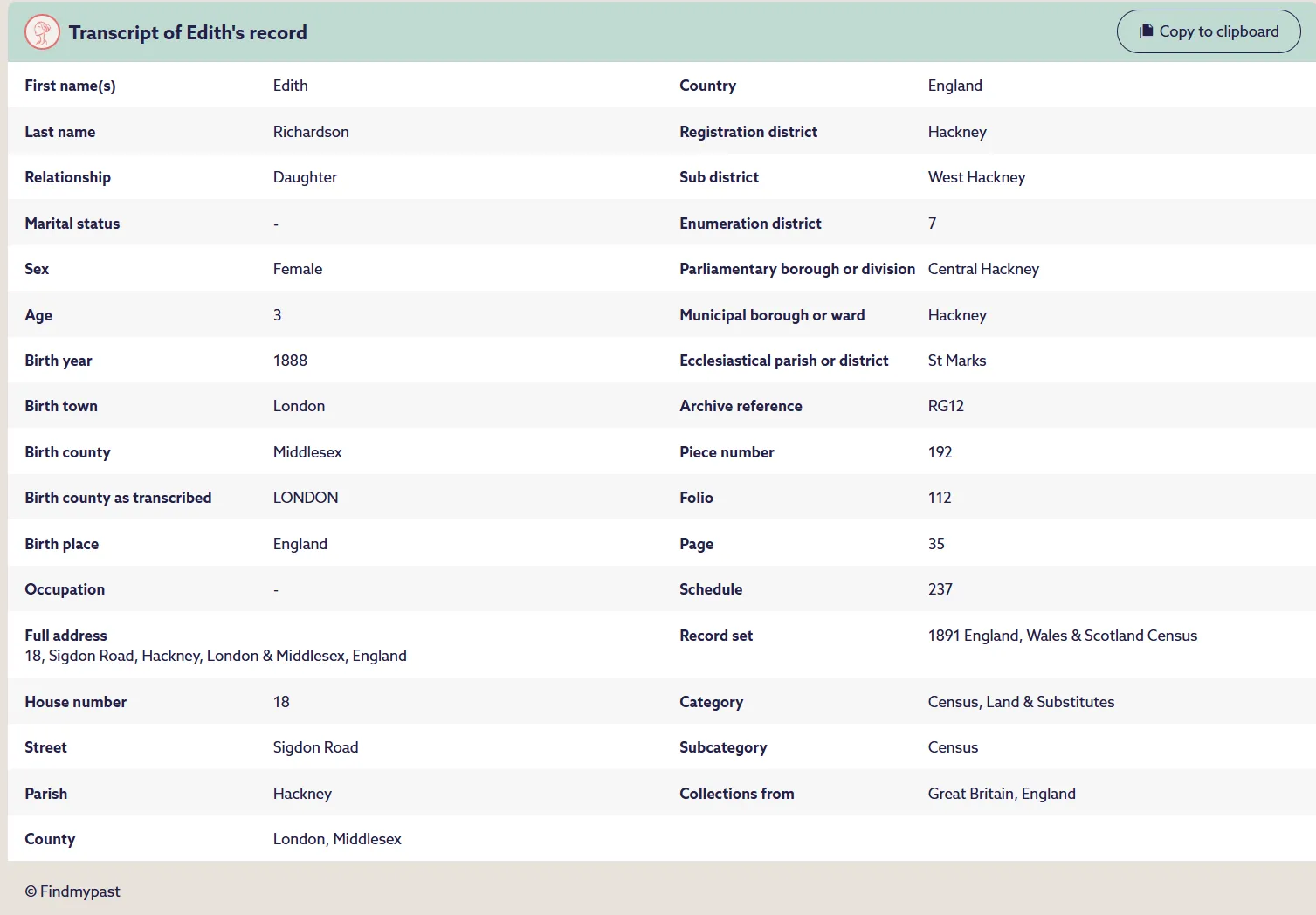
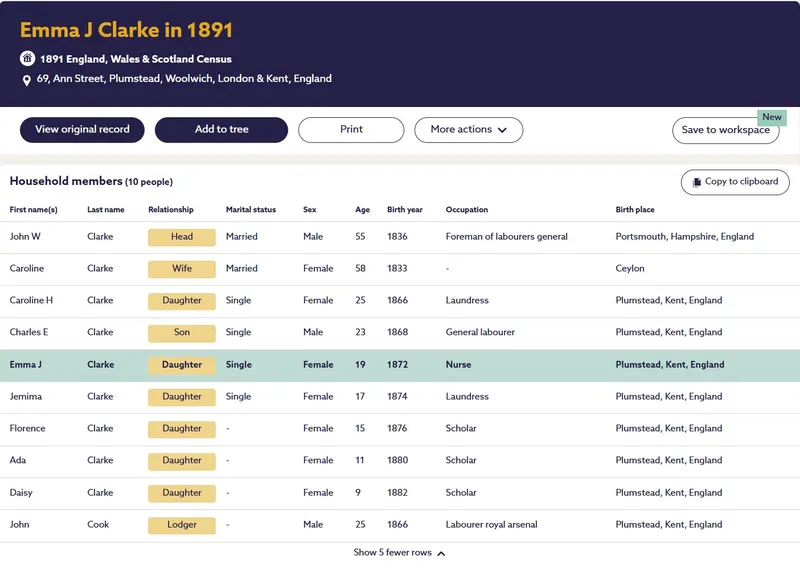
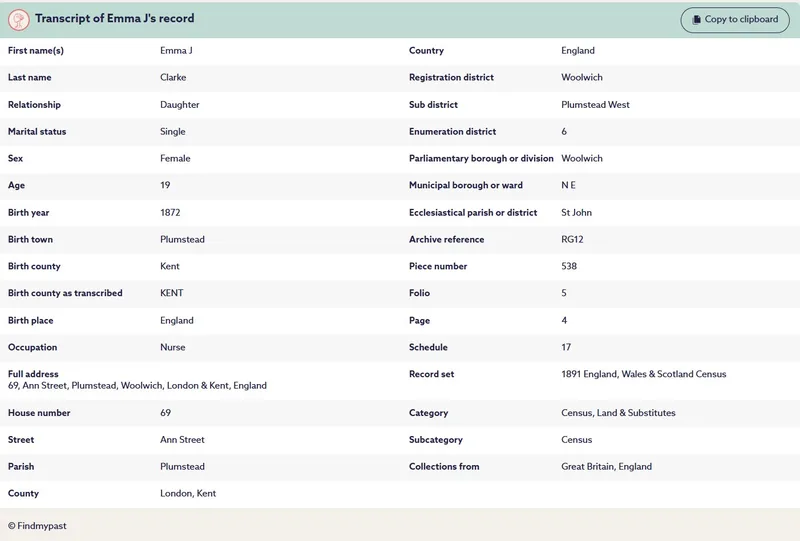
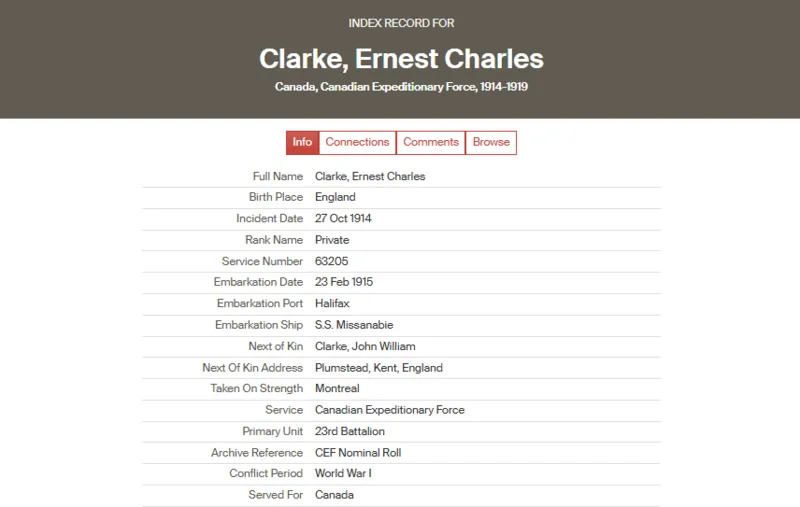
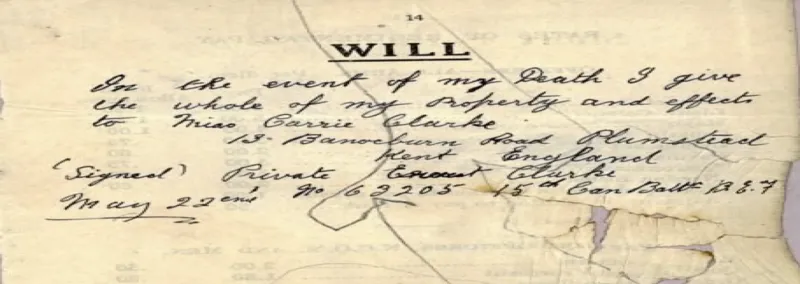
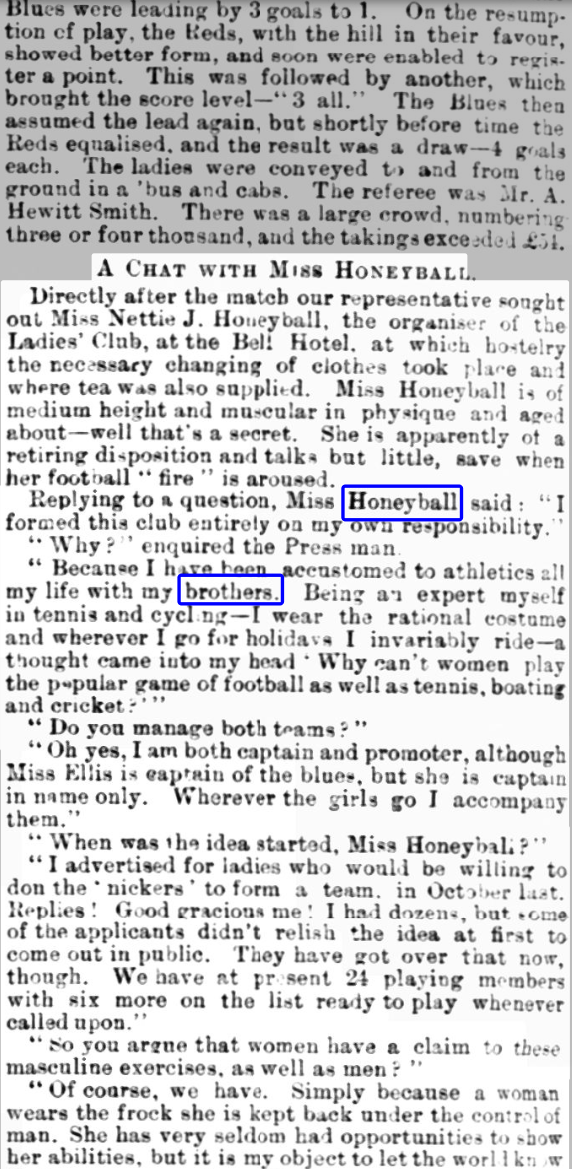
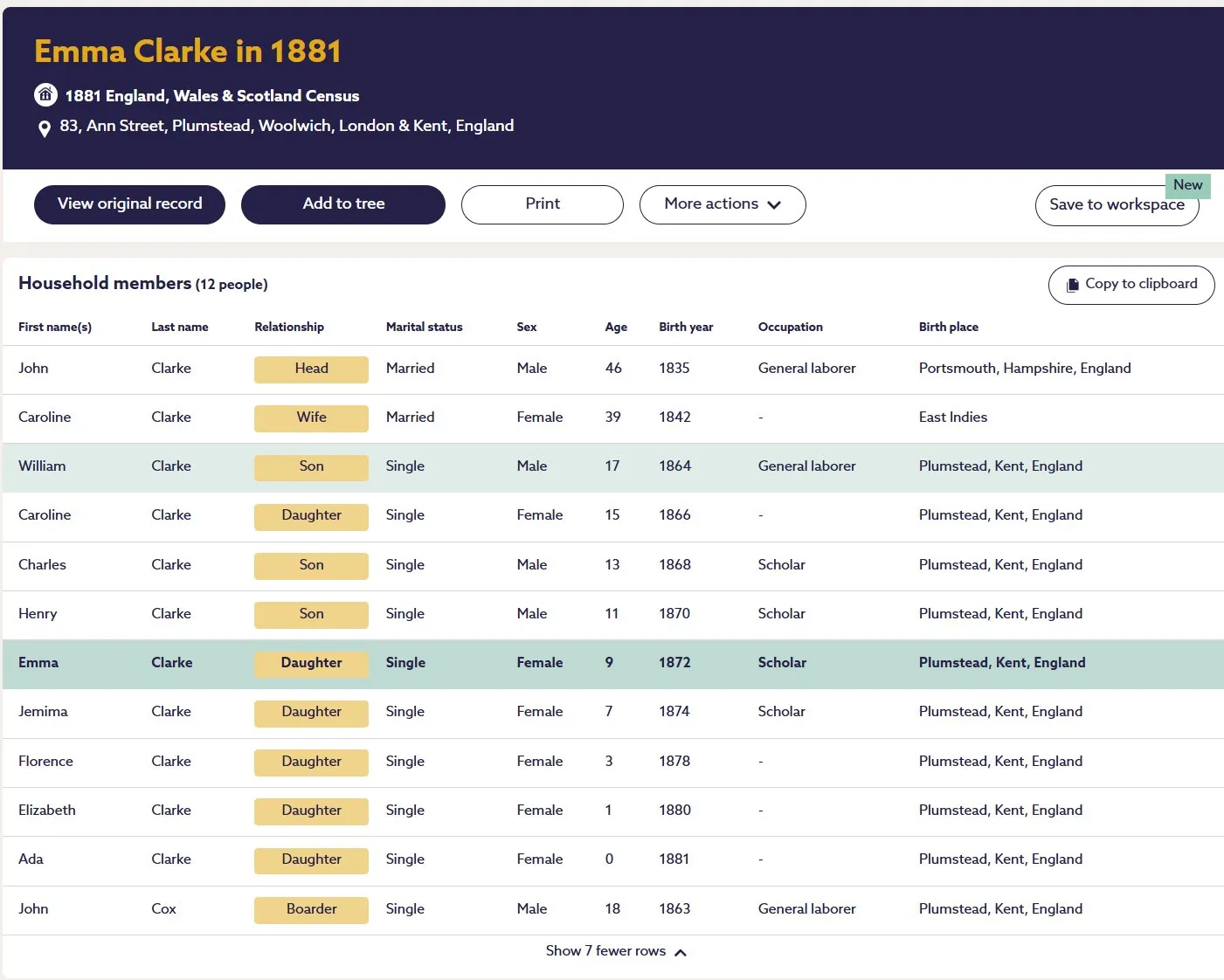
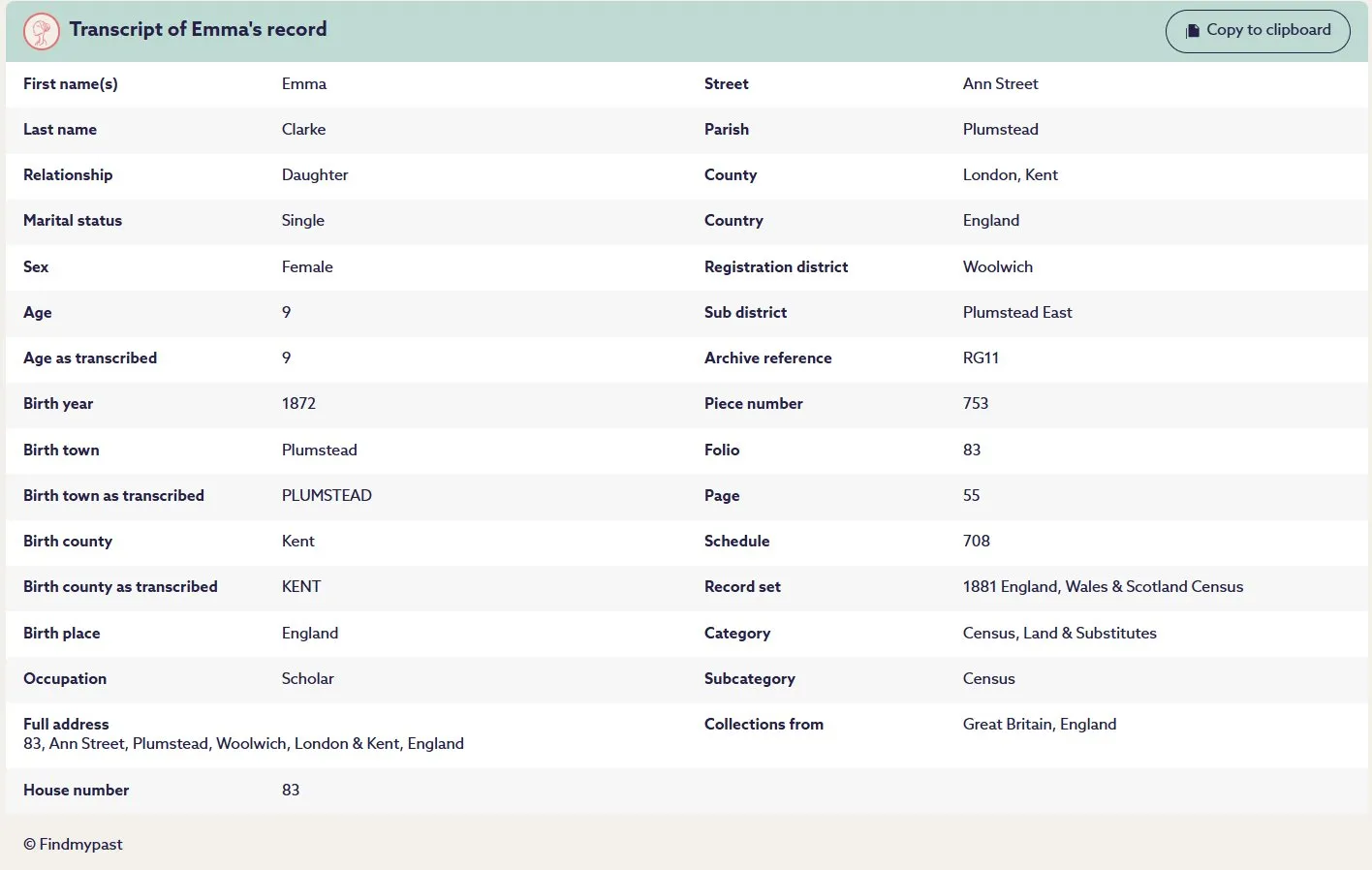
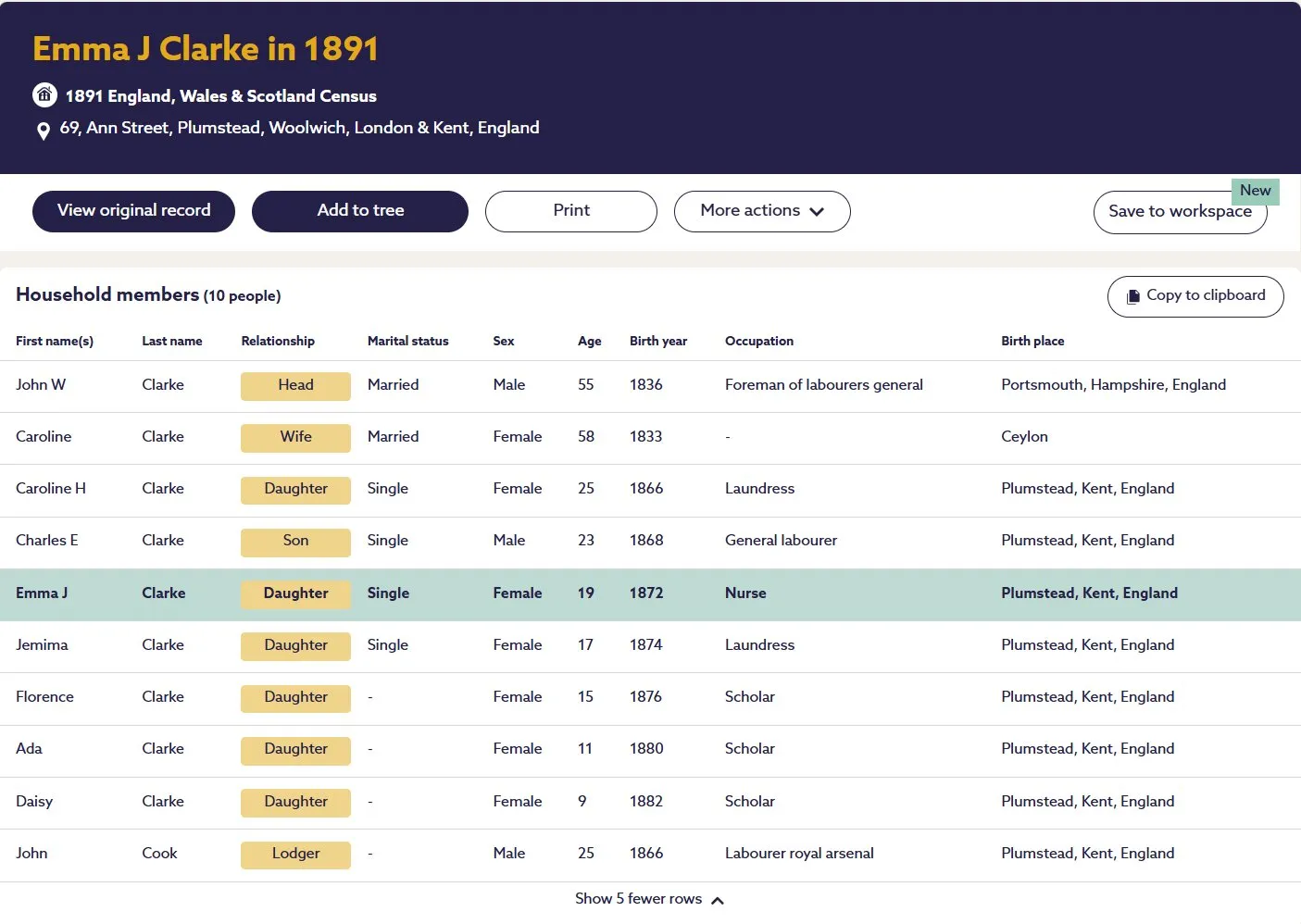
Confirmed: the Maidenhead Advertiser of 10th April 1895 names the club's secretary as “Miss Nellie Honeyball (the secretary),” checked on the page image. Nellie Honeyball was born on 28th August 1873 at 1 Tachbrook Street, Pimlico, the daughter of Frederick Honeyball, upholsterer, and Mary Honeyball, formerly Martin. In 1881 she lived at 36 Tachbrook Street in a single household with her parents, her older brothers Frederick and George, her older sisters Eliza and Florence, and her younger sisters Christine and Edith Mary. In 1891 she was still there with her parents, George, Eliza and Edith Mary. The Maidenhead Advertiser of 17th April 1895, also checked on the page image, quotes “Miss Nettie J. Honeyball, the organiser”: “I have been accustomed to athletics all my life with my brothers.”
Confirmed: that Nellie had half-siblings from her father's first marriage - in the 1911 census her mother, Mary, signing as head of the household, describes Eliza as her “Stepdaughter.”
Probable (strong): that Nellie Honeyball of Tachbrook Street was “Nettie J. Honeyball,” secretary of the British Ladies Football Club in 1895; and that Frederick, Eliza, Florence and George were all children of the first marriage, to Mary Ann Cherry - the birth index gives their mother's maiden name as Cherry, but not her first name.
Unresolved: the initial “J.” - her birth entry gives “Nellie” only, and no record yet explains it - and which brother, if any, the 1895 press meant when it wrote of “her brother.”
HER BIRTH
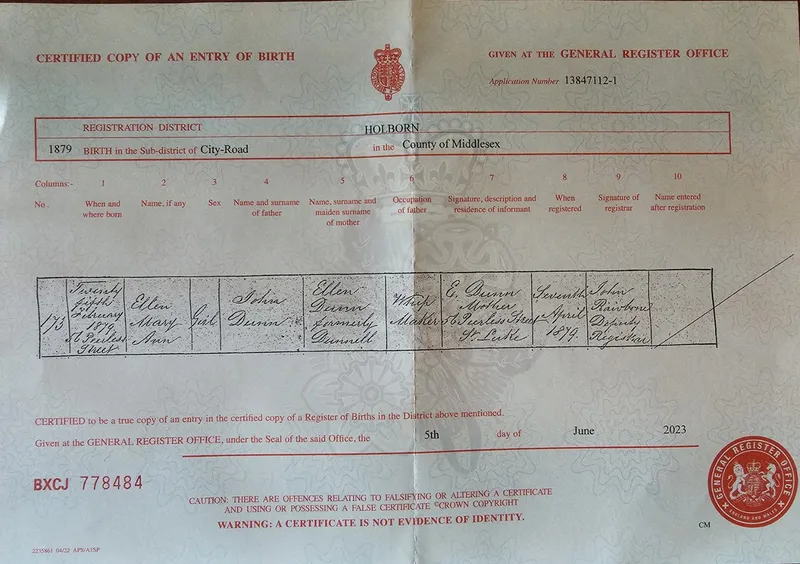
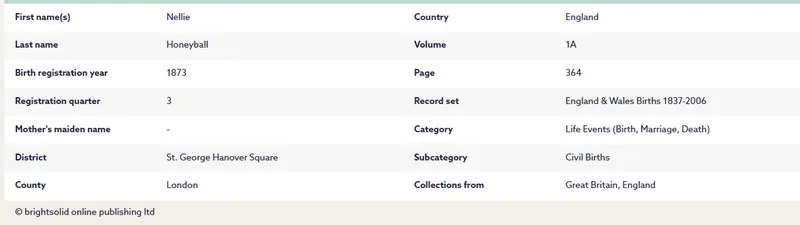
Nellie's birth certificate is entry 344 in the register for the St George Hanover Square district. She was born on 28th August 1873 at 1 Tachbrook Street, Pimlico. Her father is given as Frederick Honeyball, upholsterer, and her mother as Mary Honeyball, formerly Martin. The informant was her father, “F. Honeyball, Father, Tachbrook Street, Pimlico,” and the birth was registered on 16th September 1873. The certificate gives her name simply as Nellie - not Ellen, and with no second name.

Birth certificate · Nellie Honeyball · Entry 344 · Born 28th August 1873, 1 Tachbrook Street · Father Frederick Honeyball, upholsterer · Mother Mary Honeyball, formerly Martin · Registered 16th September 1873 · GRO index 1873 Q3, St George Hanover Square 1A 364
THE SECRETARY IN PRINT
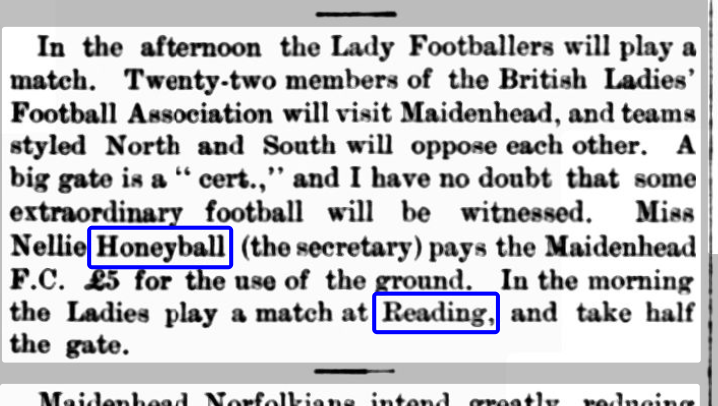
Of the newspaper notices set out in the table above, the Maidenhead Advertiser of 10th April 1895 matters most, because it names the secretary rather than the founder. Ahead of the club's visit, it reported that twenty-two members of the British Ladies' Football Association would play North against South, that “Miss Nellie Honeyball (the secretary) pays the Maidenhead F.C. £5 for the use of the ground,” and that in the morning the ladies would play a match at Reading and take half the gate. I have checked that wording on the page image itself, not only in the search transcript.
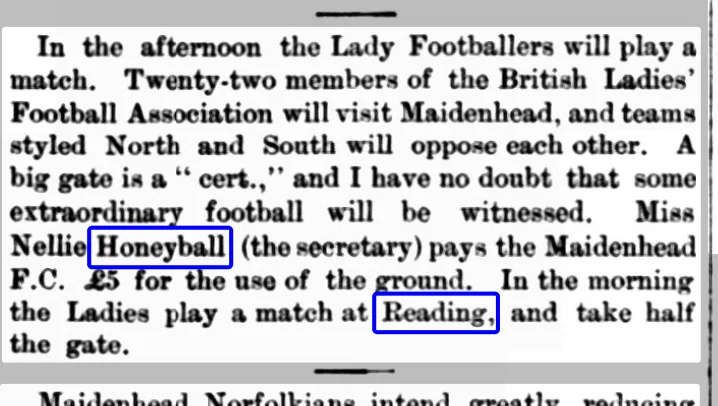
Maidenhead Advertiser · 10th April 1895, p.8 · “Miss Nellie Honeyball (the secretary) pays the Maidenhead F.C. £5 for the use of the ground” · Highlighting from the Findmypast search viewer · Wording checked on the page image
Two weeks later the London Star of 24th April 1895 used the full initials: “Miss N. J. Honeyball, the secretary, had the advantage of the assistance of her brother, Mr. Honeyball, or Hewitt Smith.” That wording comes from the newspaper's search transcript and has not yet been checked against the page image. Its curious “Mr. Honeyball, or Hewitt Smith” is discussed below.
A FATHER'S TWO MARRIAGES
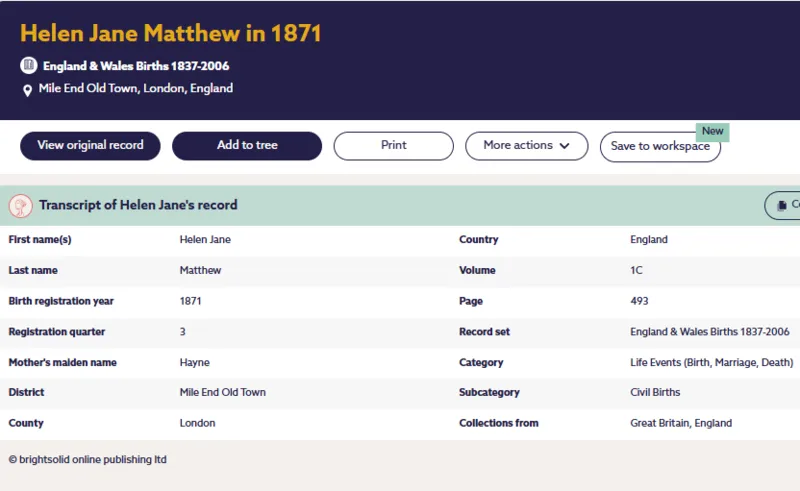
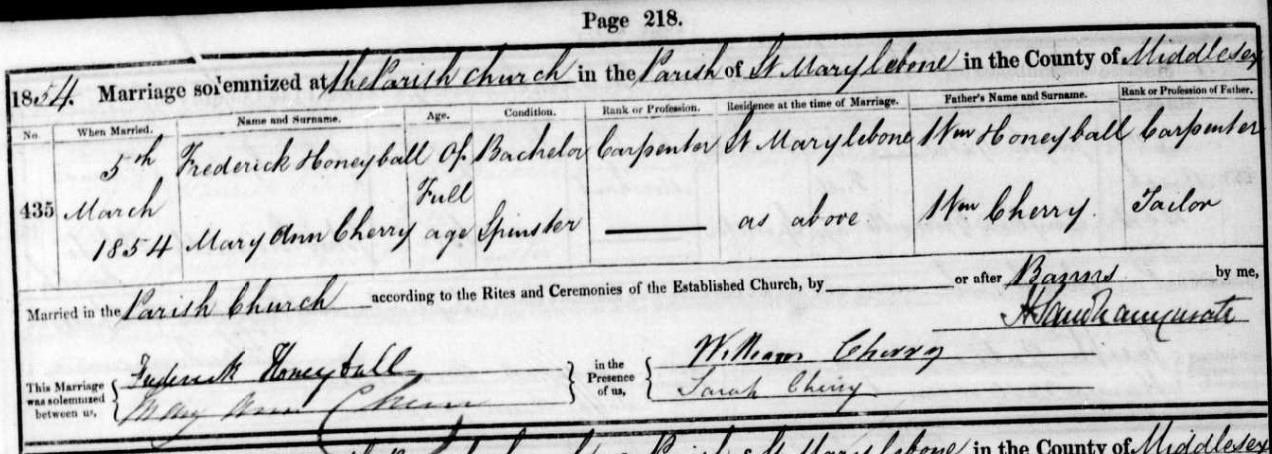
The key to Nellie's household is that her father married twice. On 5th March 1854, at St Marylebone parish church, Frederick Honeyball, bachelor, carpenter, son of William Honeyball, carpenter, married Mary Ann Cherry, spinster, daughter of William Cherry, tailor. The General Register Office birth index records five children of a Honeyball father and a Cherry mother: Frederick (1858, Westminster), Eliza (June quarter 1862, Westminster 1a 308), Florence (September quarter 1864, Westminster 1a 303), George (1866) and Audrey Sarah (1868), who appears to have died in infancy later that year. The index gives only the mother's maiden surname, so that all five were Mary Ann's children is probable rather than confirmed until a certificate names her. Mary Ann Honeyball died on 11th May 1870, aged thirty-nine, of puerperal fever - the infection that so often followed childbirth in the Victorian period. Only weeks before, she had given birth to a sixth child, Cicely Jane Honeyball, registered in the April to June quarter of 1870 (St George Hanover Square 1a 336) - the only Honeyball birth with the mother’s maiden name Cherry between 1869 and 1871.
Cicely did not long survive her mother. A death registered at St Pancras on 8th September 1870 records “Cecily Honeyball,” four months old, “Daughter of Frederick Honeyball, Carpenter,” who died at 12 Burton Street, St Pancras, of what reads as diarrhoea and impetigo. The informant, J. Freeman, was present at the death and was not a member of the family. The St Pancras address and an informant from outside the family suggest that the motherless baby had been placed with a nurse. Her age and her father’s name and trade make it very likely that she was Mary Ann’s Cicely Jane, though her birth certificate would settle it.

Death register · Entry 157 · “Cecily Honeyball,” female, 4 months · Died September 1870 at 12 Burton Street · “Daughter of Frederick Honeyball, Carpenter” · Informant J. Freeman, present at the death, 12 Burton Street, St Pancras · Registered 8th September 1870 · GRO index 1870 Q3, Pancras 1b 35
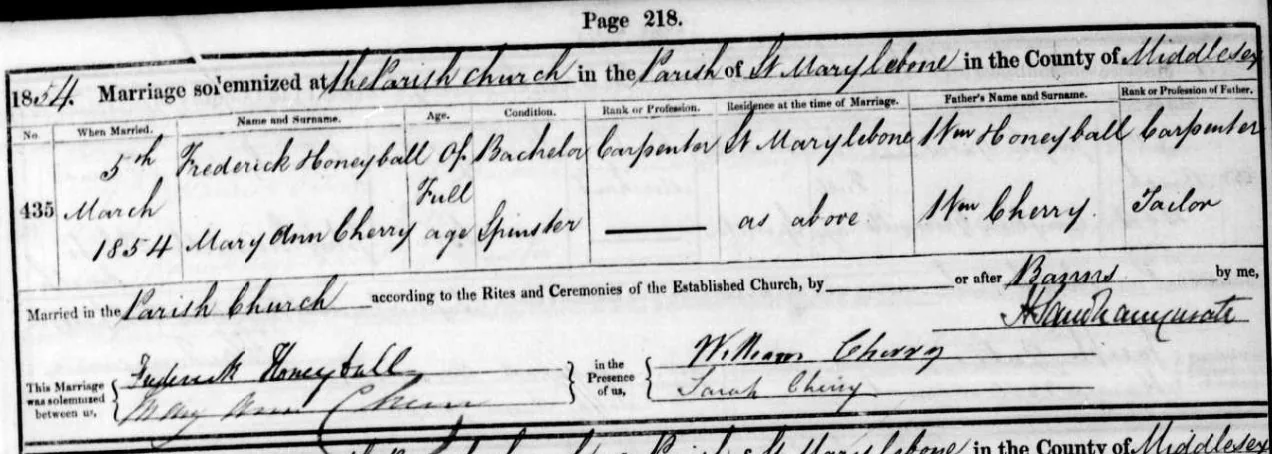
Marriage register · St Marylebone parish church · 5th March 1854, p.218, no. 435 · Frederick Honeyball, carpenter, and Mary Ann Cherry · Witnesses William and Sarah Cherry
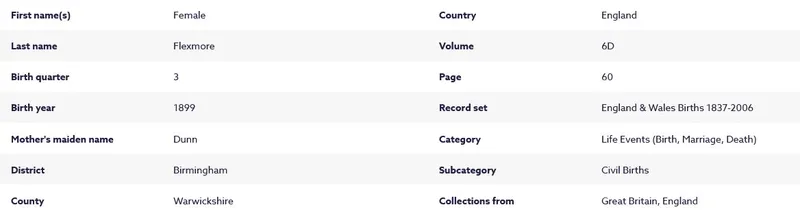
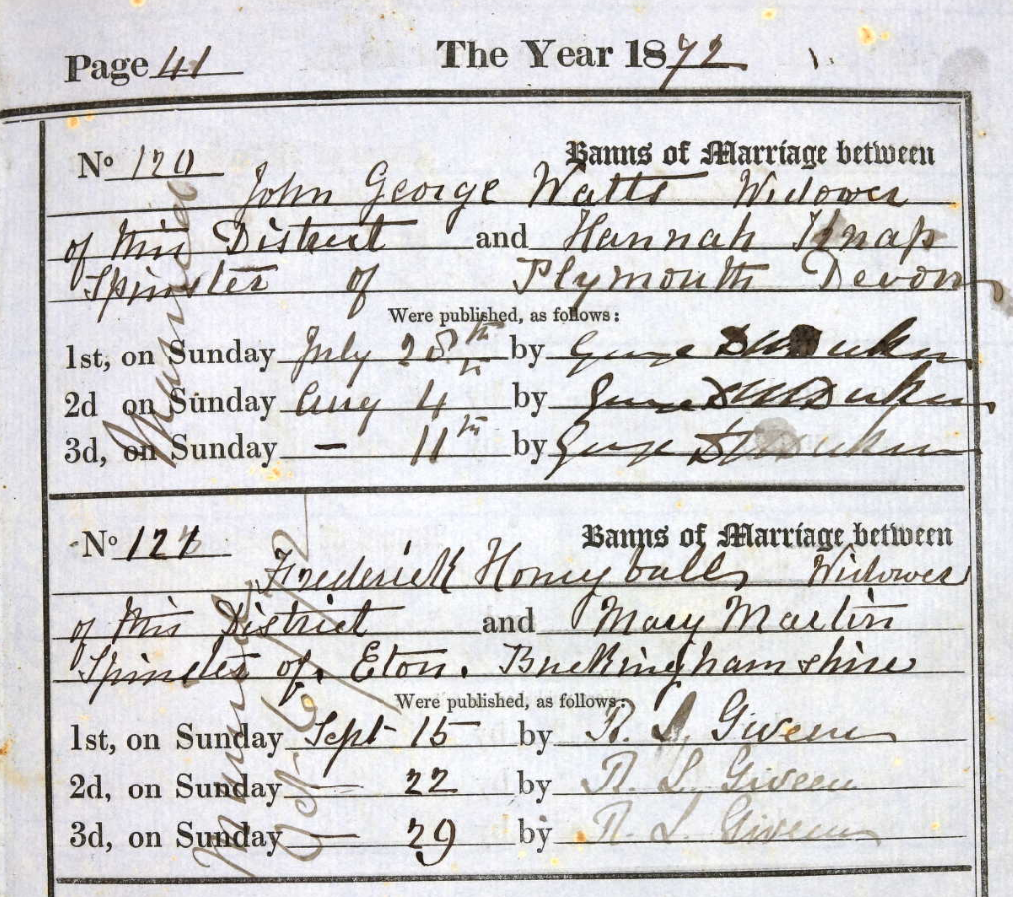
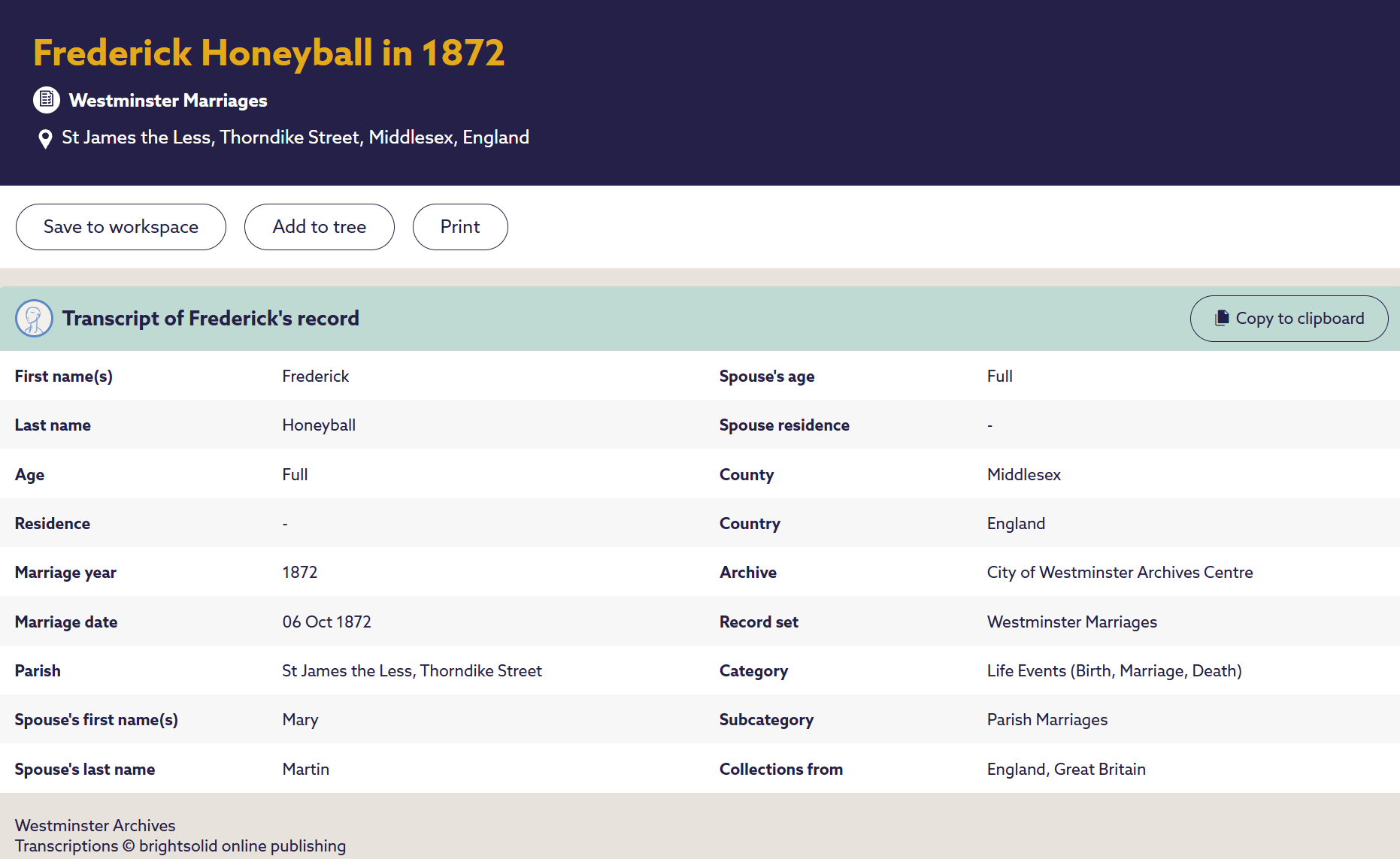
Two years later the banns were read for a second marriage. The banns book for 1872 records, on 15th, 22nd and 29th September, the intended marriage of “Frederick Honeyball, Widower, of this District and Mary Martin, Spinster of Eton, Buckinghamshire.” They married on 6th October 1872 at St James the Less, Thorndike Street, Westminster. Nellie, born the following August, was their first child; her sisters Christine (1875) and Edith Mary (1876) followed, all three registered with the mother's maiden name Martin.
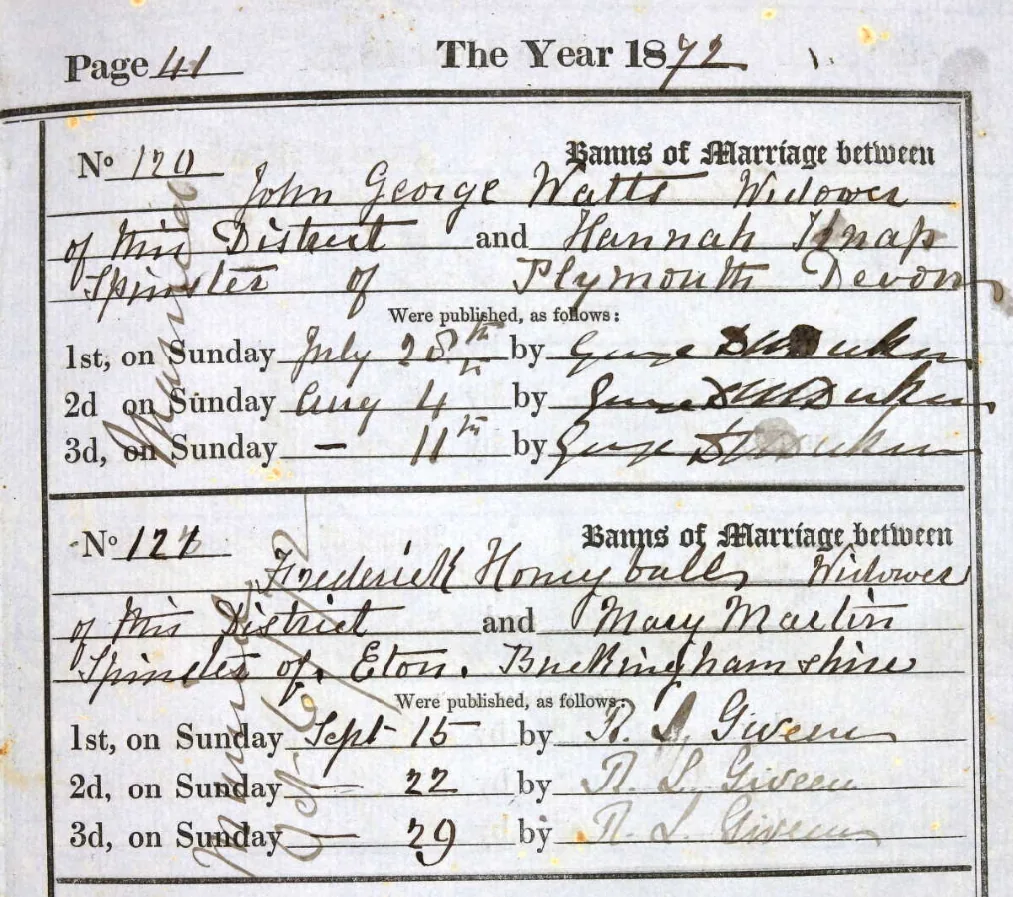
Banns book · 1872, p.41, no. 121 · “Frederick Honeyball, Widower, of this District and Mary Martin, Spinster of Eton, Buckinghamshire” · Published 15th, 22nd and 29th September 1872
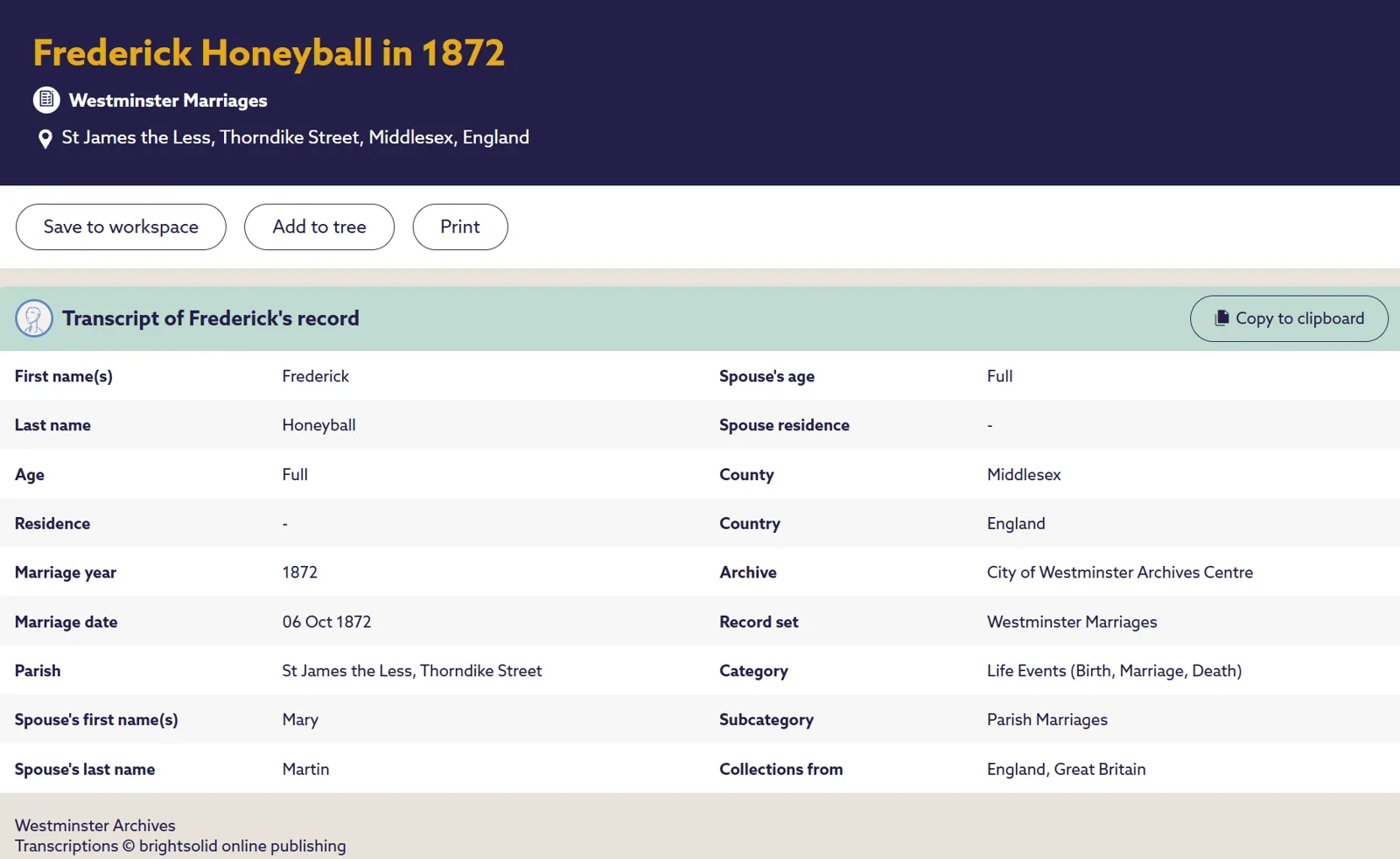
Westminster Marriages transcript (Findmypast; City of Westminster Archives Centre) · Frederick Honeyball and Mary Martin · 6th October 1872 · St James the Less, Thorndike Street · GRO index 1872 Q4, St George Hanover Square 1a 657
The occupations run consistently through every record - carpenter in 1854, upholsterer in 1873 and 1881, “carpenter and upholsterer” in 1891 - and the 1872 banns confirm that the Frederick who married Mary Martin had been married before. Taken with the censuses below, which find the Cherry sons and the Martin daughters living together under one Frederick, the 1854 and 1872 bridegrooms are almost certainly the same man.
ONE HOUSEHOLD AT 36 TACHBROOK STREET
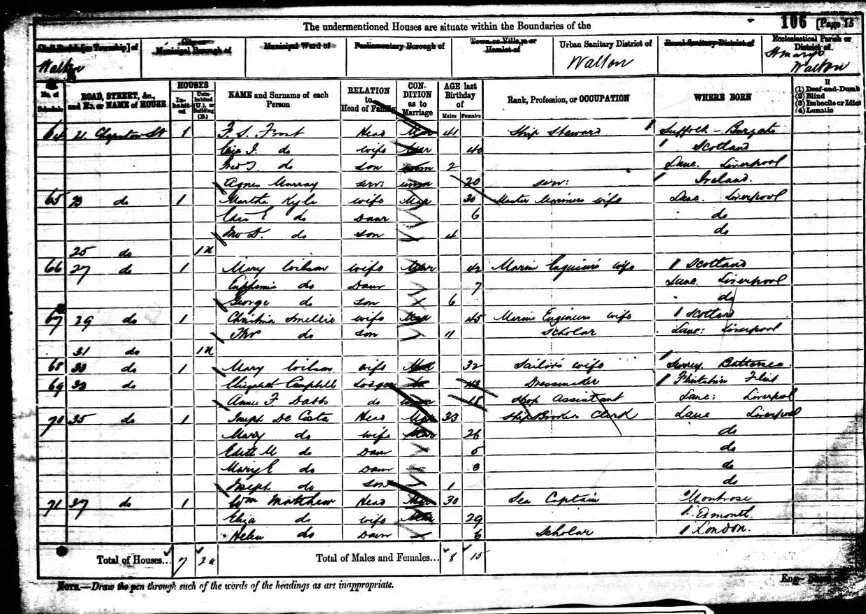
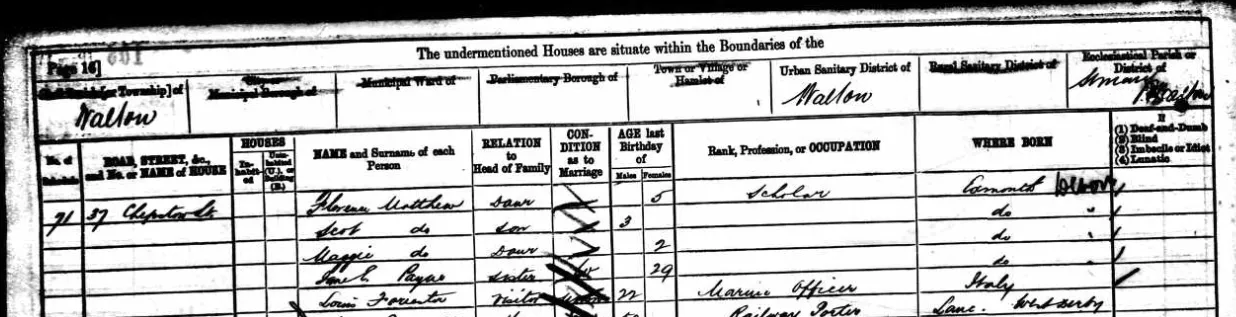
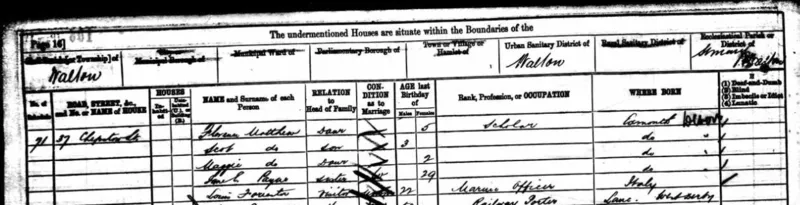
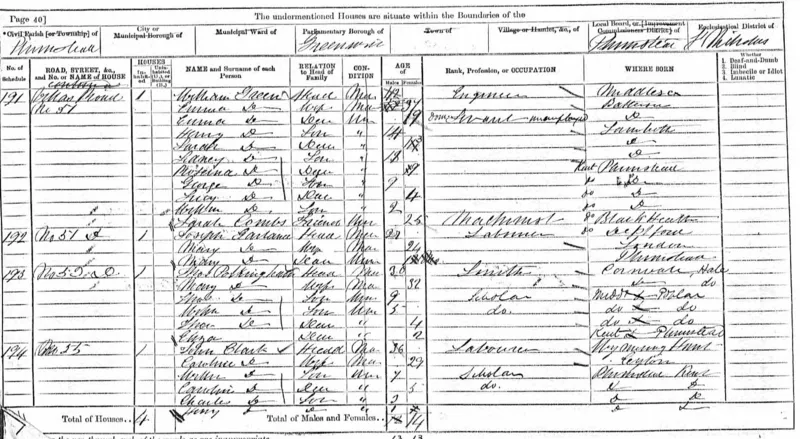
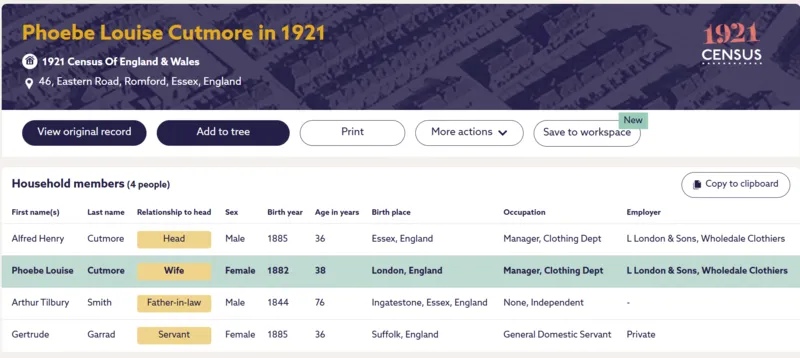
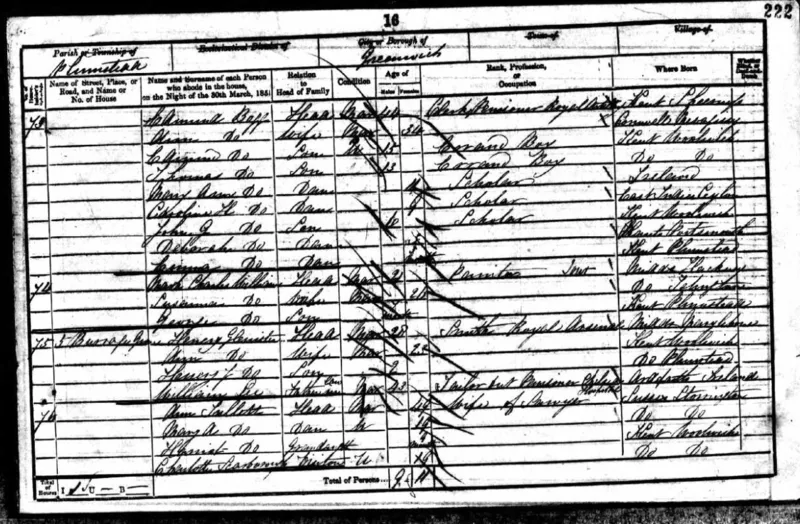
The 1871 census (RG10/107, folio 3, page 5, schedule 21) finds Frederick a year after Mary Ann’s death, a widower of forty-one, at 1 Tachbrook Street - the house where Nellie would be born two years later. He is a carpenter employing two men and four boys, and his birthplace is given as Wellington, Somerset, as it is again in 1881 and 1891. With him were all six of his surviving Cherry children, born in Westminster: Mary E., fifteen, an upholsteress; Frederick, thirteen; Lucy, eleven; Eliza, eight; Florence, six; and George, four. The household also included the children’s grandmother, Mary A. Cherry, “mother-in-law,” sixty-six, a nurse, born in Bedfordshire - which confirms that Frederick’s first wife was a Cherry, and makes it very likely that these children were hers. Mary E. and Lucy do not appear among the five Cherry births found in the index, though both were born after the 1854 marriage, so Frederick’s first family was larger than the index search suggested. By 1881 neither was still at home.
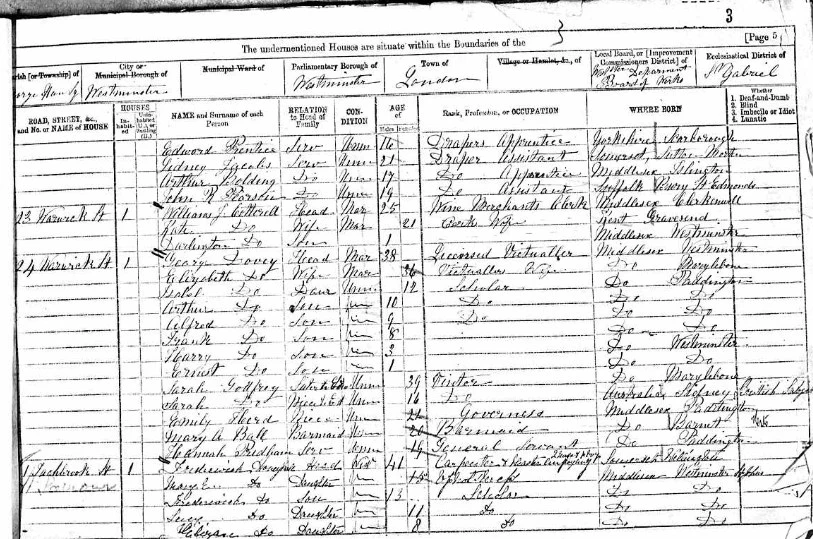
1871 Census · St George Hanover Square, ecclesiastical district of St Gabriel · 1 Tachbrook Street · RG10/107, folio 3, page 5, schedule 21 · Frederick Honeyball, Head, Widower, 41, carpenter employing 2 men & 4 boys, born Wellington, Somerset · Mary E., Daughter, 15, Upholsteress · Frederick, Son, 13, Scholar · Lucy, Daughter, 11, Scholar · Eliza, Daughter, 8, Scholar · Children born Westminster · Florence (6), George (4) and Mary A. Cherry, mother-in-law (66, nurse, born Bedfordshire) continue overleaf (Findmypast transcript)
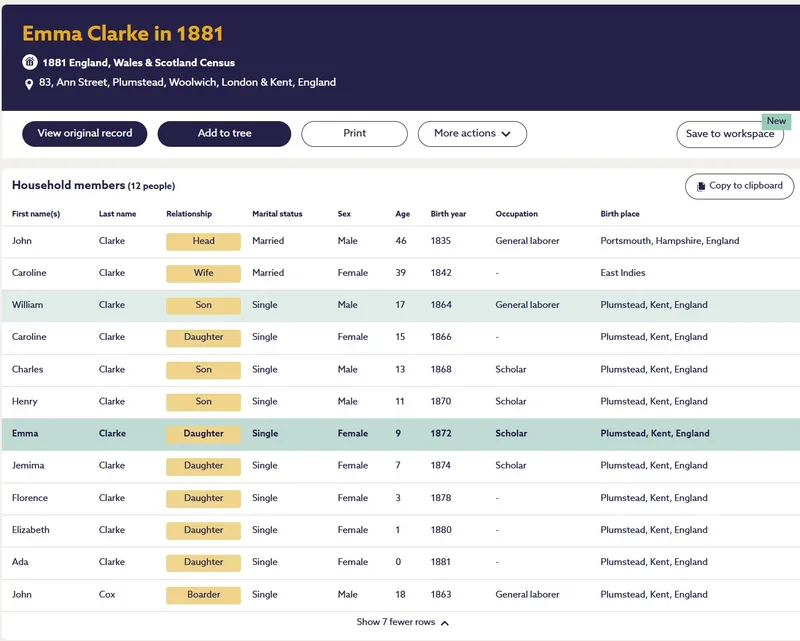
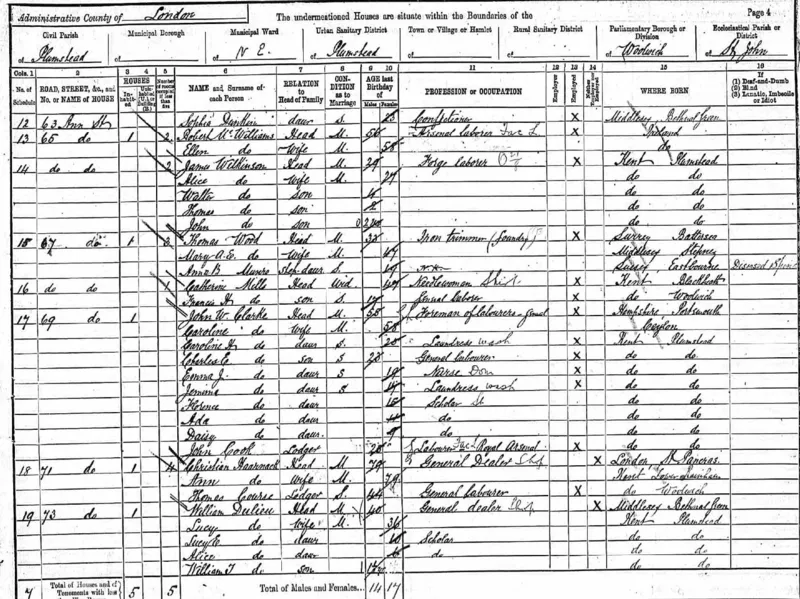
The 1881 Census (RG11/102, folio 93, page 4) finds the whole family together at 36 Tachbrook Street, St George Hanover Square:
| Name | Relation | Age | Occupation | Mother (GRO index) |
|---|
| Frederick Honeyball | Head | 51 | Upholsterer, employing 2 men | - |
| Mary Honeyball | Wife | 37 | | born Eton, Bucks; née Martin |
| Frederick Honeyball | Son | 22 | Carpenter | Cherry |
| Eliza Honeyball | Daughter | 18 | Milliner | Cherry |
| Florence Honeyball | Daughter | 16 | Cashier | Cherry |
| George Honeyball | Son | 14 | Scholar | Cherry |
| Nellie Honeyball | Daughter | 7 | | Martin |
| Christine Honeyball | Daughter | 5 | | Martin |
| Edith Mary Honeyball | Daughter | 4 | | Martin |
1881 Census, 36 Tachbrook Street (Findmypast transcript), with a seventeen-year-old servant, Mary Matilda Richmond. Eliza (1862) and Florence (1864) were registered with the mother's maiden name Cherry, alongside Frederick and George.
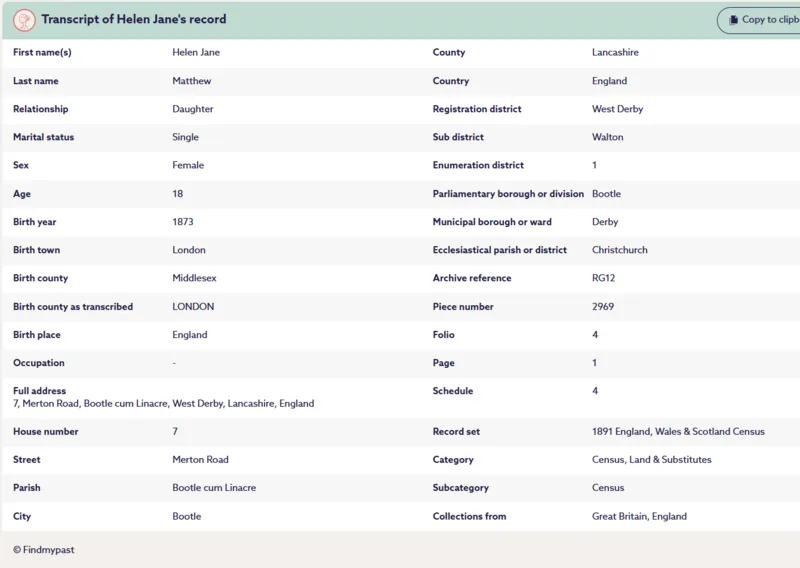
Ten years later, in 1891 (RG12/73, folio 102, page 32), Frederick, now sixty-one and a “carpenter and upholsterer,” was still at 36 Tachbrook Street with Mary, Eliza, George - twenty-four and an assistant in the shop - Nellie, seventeen, a clerk at stores, and Edith, fourteen. Florence was no longer there: the death index records a Florence Honeyball, aged twenty-four, in the July to September quarter of 1888 (St George Hanover Square 1a 276). The younger Frederick, a carpenter of thirty-three, was very probably the Frederick Honeyball living nearby at 153 Cambridge Street with his wife Emily Alice.
1911 - IN MARY’S OWN HAND
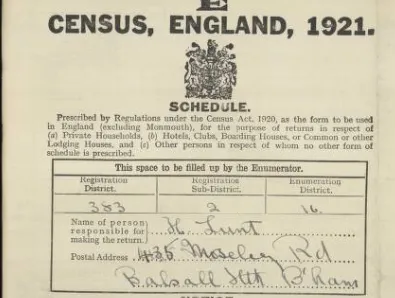
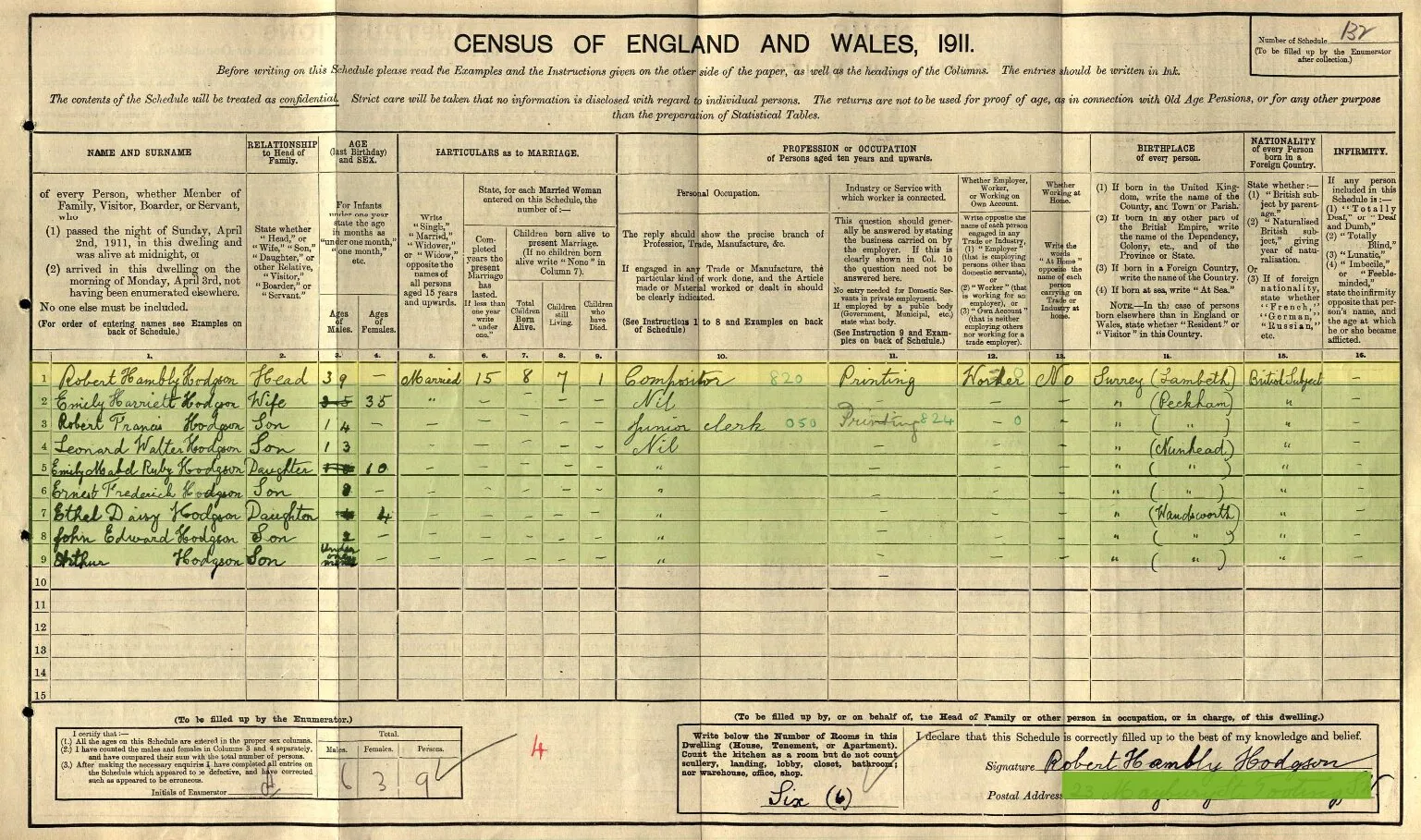
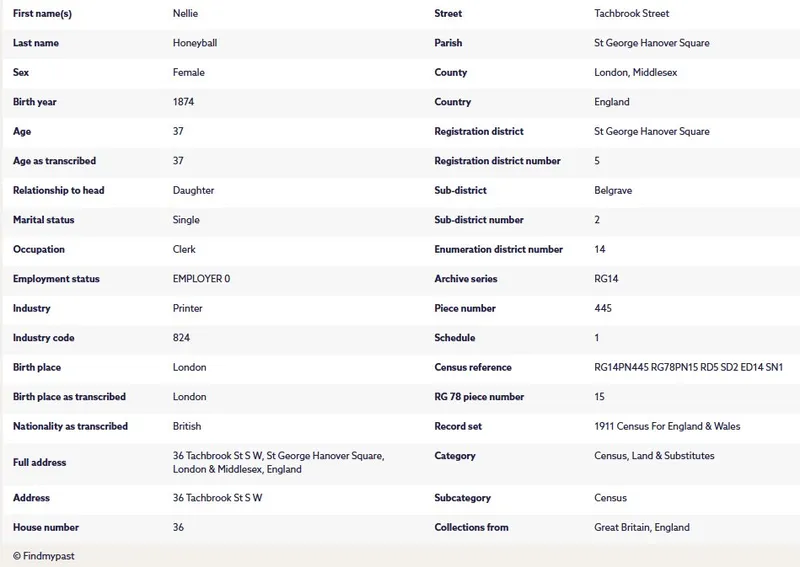
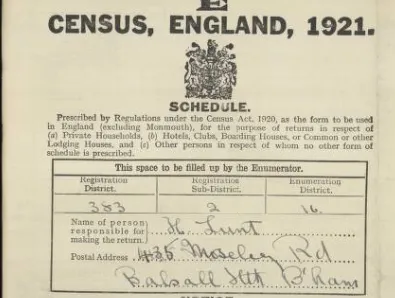
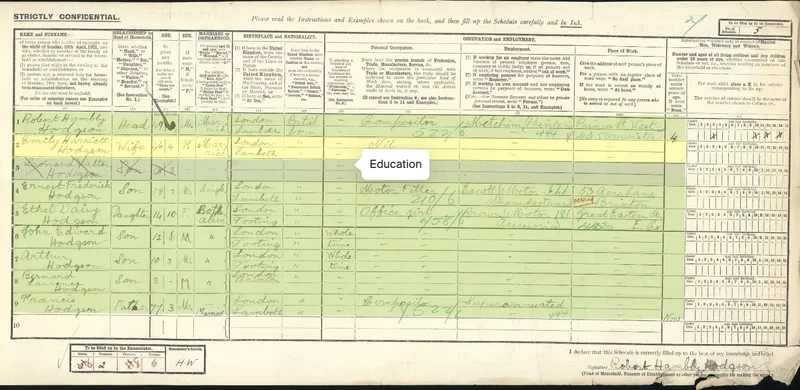
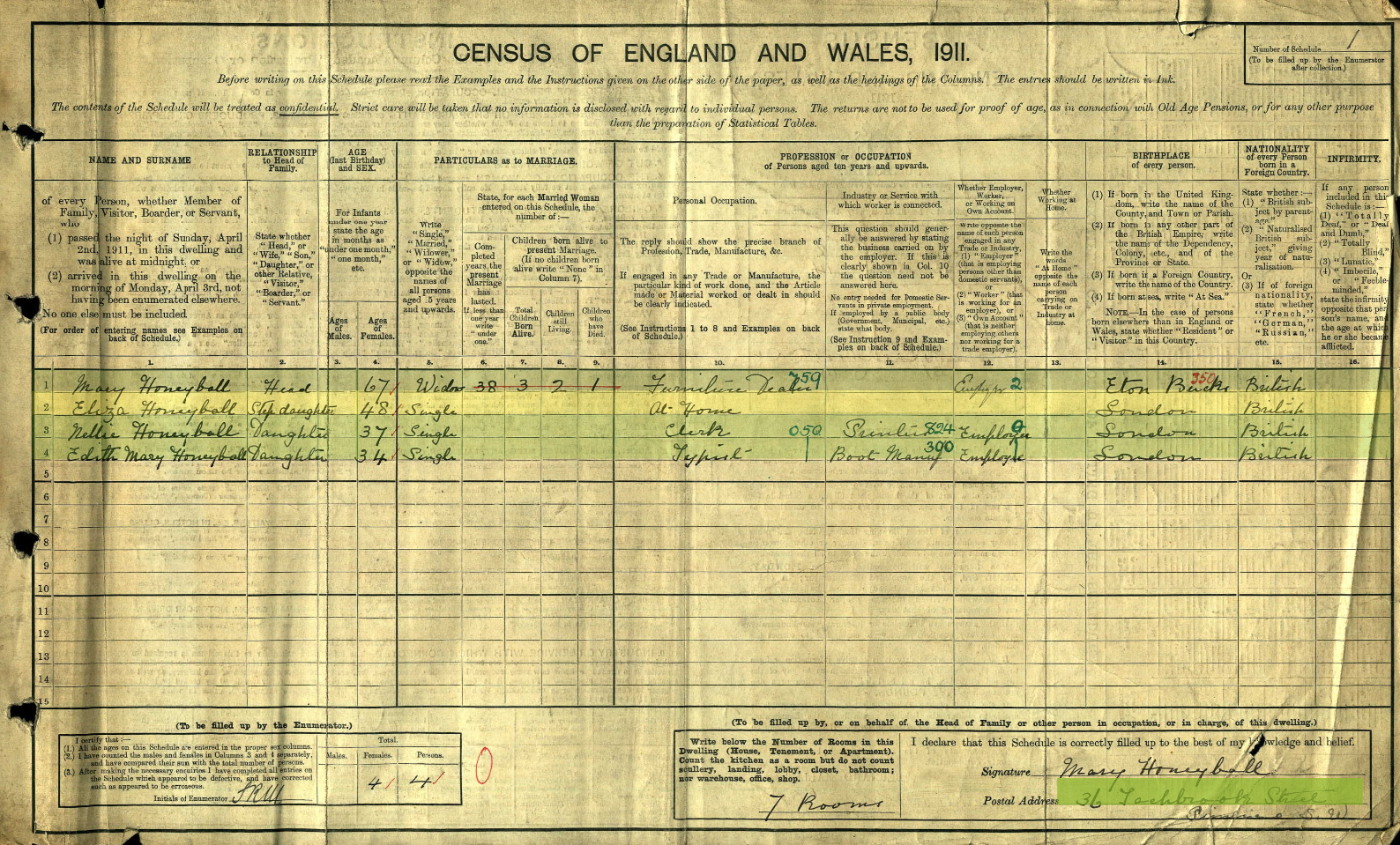
The clearest witness to the family’s structure is Mary Honeyball herself. In 1911 the census schedule was filled in by the head of each household, and at 36 Tachbrook Street Mary - a widow since Frederick’s death in February 1893, registered at the age of sixty-two (St George Hanover Square 1a 341) - completed and signed it in her own hand:
| Name | Relation | Age | Condition | Occupation | Birthplace |
|---|
| Mary Honeyball | Head | 67 | Widow; married 38 years | Furniture dealer, employer | Eton, Bucks |
| Eliza Honeyball | Stepdaughter | 48 | Single | At home | London |
| Nellie Honeyball | Daughter | 37 | Single | Clerk, printer | London |
| Edith Mary Honeyball | Daughter | 34 | Single | Typist, boot manufacturer | London |
1911 Census household schedule, 36 Tachbrook Street, Pimlico, completed and signed by Mary Honeyball · Seven rooms · Children born alive to the present marriage: 3; still living: 2; died: 1
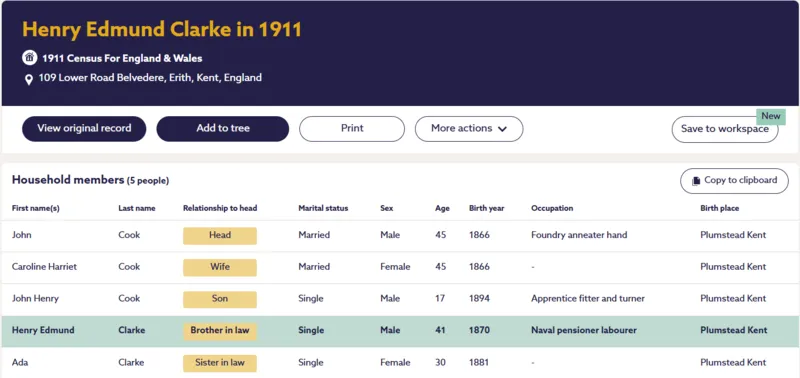
Mary’s own word for Eliza is “Stepdaughter.” Eliza was Frederick’s daughter by his earlier wife, not Mary’s - which confirms, from inside the family, the two marriages under one roof that the registers and earlier censuses had pointed to, and makes the Cherry children Nellie’s half-siblings in the family’s own description. Mary gives the length of her marriage as thirty-eight years, which agrees with the wedding of October 1872. She records three children born alive to that marriage, two still living: Nellie and Edith Mary. The third was Christine, whose death at the age of twelve is registered in the October to December quarter of 1887 (St George Hanover Square 1a 312). And Nellie, at thirty-seven, was still single, still at Tachbrook Street, and still working as a clerk - now with a printer.
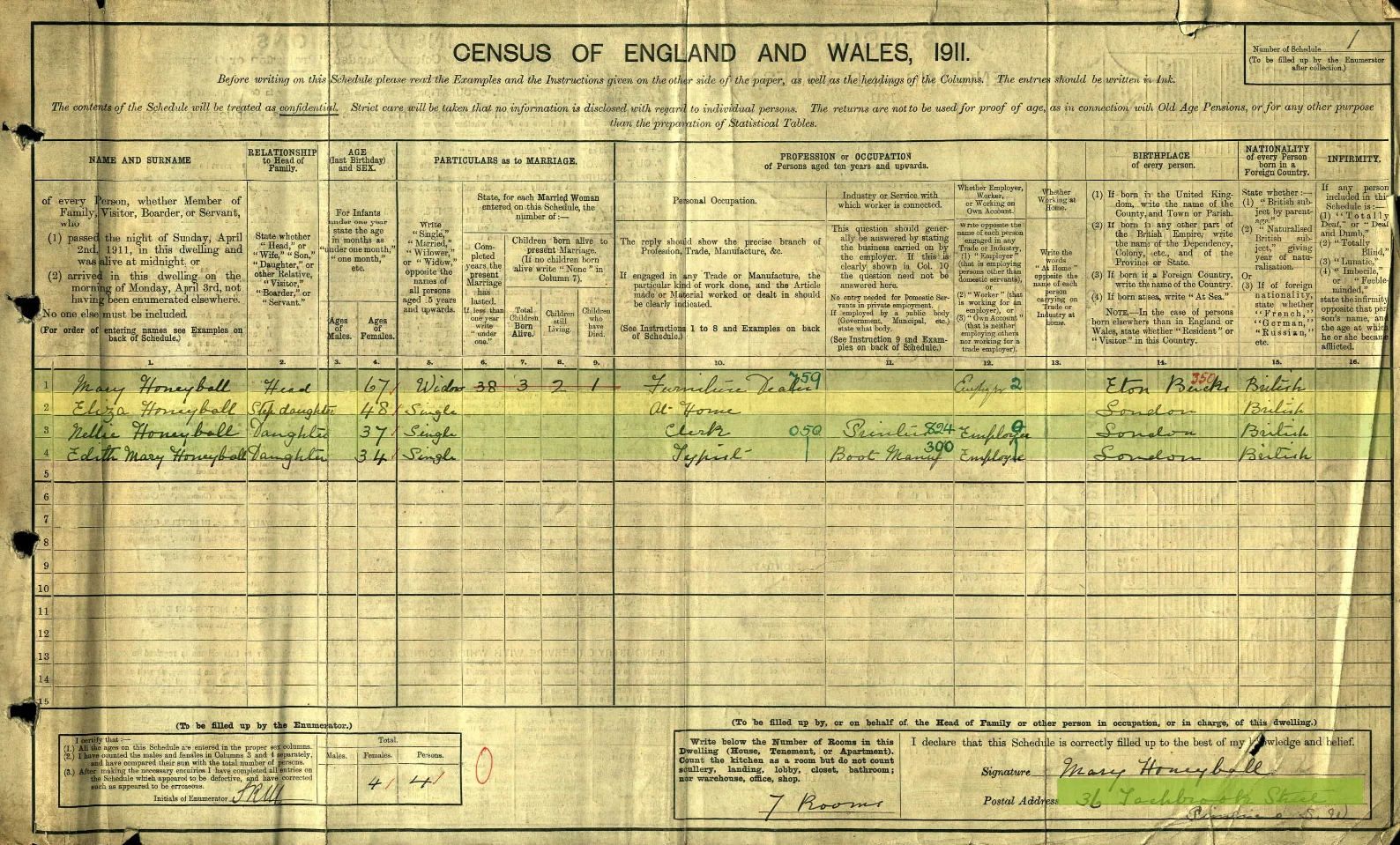
Census of England and Wales, 1911 · 36 Tachbrook Street, Pimlico, S.W. · Signed by Mary Honeyball as head of the household · Eliza recorded as “Stepdaughter”; Nellie and Edith Mary as “Daughter”
“WITH MY BROTHERS”
After the match at Maidenhead, the Maidenhead Advertiser’s reporter sought out “Miss Nettie J. Honeyball, the organiser of the Ladies’ Club,” at the Bell Hotel. Its issue of Wednesday 17th April 1895, now checked on the page image, prints the interview under the heading “A Chat with Miss Honeyball.” Asked why she had formed the club, she answered: “Because I have been accustomed to athletics all my life with my brothers.” The reporter added, with some gallantry, that she was “aged about - well that’s a secret.” It is the same paper that, a week earlier, had called the club’s secretary “Miss Nellie Honeyball” - a sign that the local press treated Nellie and Nettie as one and the same woman. Nellie Honeyball grew up in the same house as two brothers, Frederick and George, both older than her - half-brothers by her father's first marriage, but brothers under one roof through her childhood and teenage years. The remark fits her household exactly.
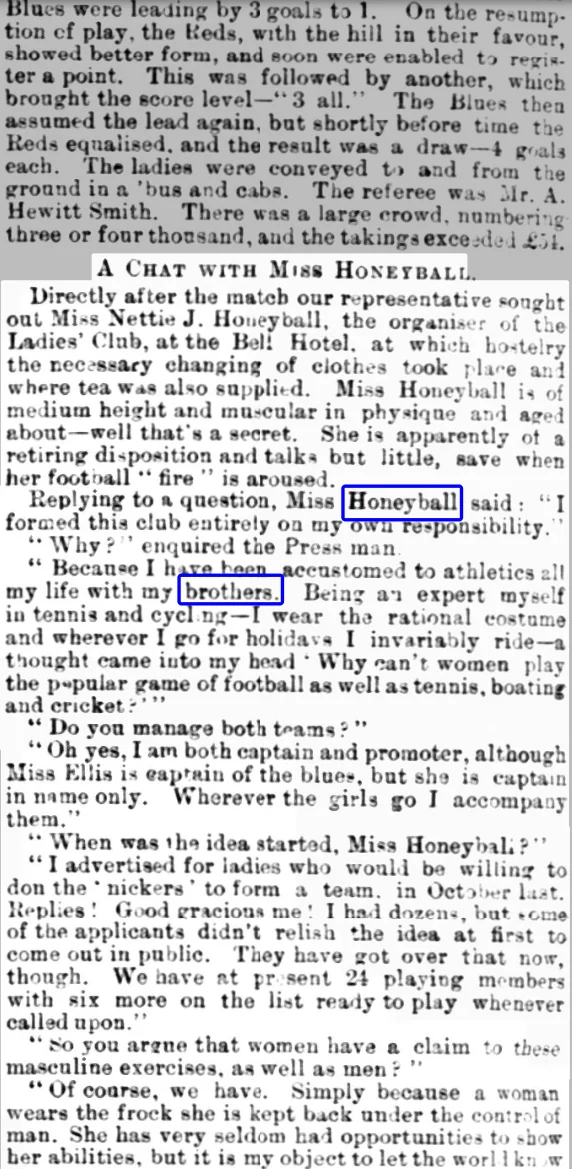
Maidenhead Advertiser · Wednesday 17th April 1895 · Match report (“The referee was Mr. A. Hewitt Smith”) and “A Chat with Miss Honeyball” · Highlighting from the Findmypast viewer · Checked on the page image
The Star's “her brother, Mr. Honeyball, or Hewitt Smith” is harder to read. It may mean that one of Nellie's half-brothers helped the club, or it may simply record the reporter's uncertainty about the man at Alfred Hewitt Smith's side. The same 17th April report of the match at Maidenhead ends: “The referee was Mr. A. Hewitt Smith” - and searches of the April 1895 newspapers for a “Mr. Honeyball” refereeing at Reading or Caversham have so far found nothing. Which brother, if any, the 1895 press had in mind therefore remains open.
ANNE JANE HONEYBALL
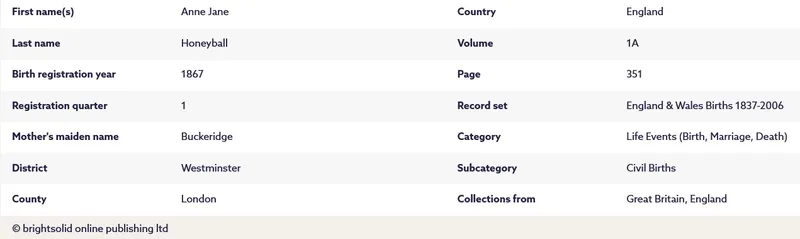
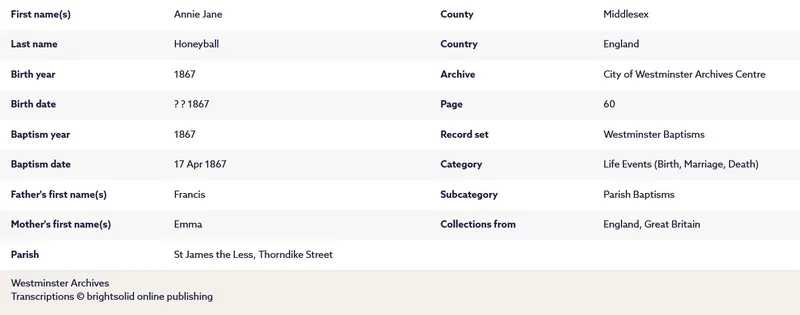
The other Honeyball proposed in earlier research, Anne Jane Honeyball, was born in 1867 at 56 Lillington Street, and the birth index gives her mother's maiden name as Buckeridge, as it does for her brothers Francis William (1858) and Alfred (1865). She was very probably Nellie's first cousin. Her father, Francis Tutton Honeyball, and Nellie's father, Frederick, were each the son of a William Honeyball, carpenter - Francis by his 1839 birth entry and 1858 marriage register, Frederick by his 1854 marriage register - and in 1893 Francis was one of the two people granted probate of Frederick's will. That the two men were brothers is probable rather than proven: Frederick's census birthplace is Wellington, not Sparkford, and no record yet names them as brothers. Nothing found so far ties Anne Jane to the club. The weight of evidence - the secretary named as Nellie in print, the brothers in the house, and the family record set out above - points to Nellie, and on present evidence I think it unlikely that Anne Jane was Nettie.
TWO FRANCIS TUTTON HONEYBALLS
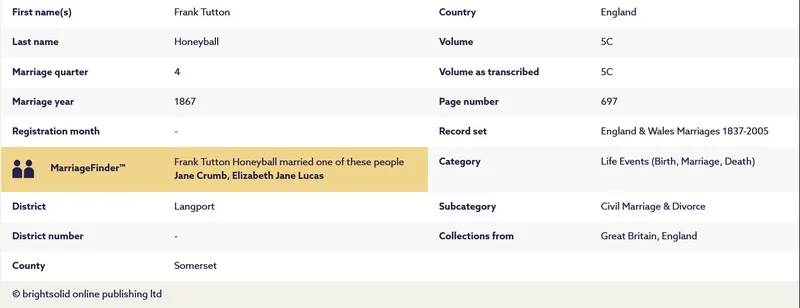
Anne Jane’s father had a namesake, and published family trees have mixed the two men up. Two baby boys named Francis Tutton Honeyball were born in Somerset less than five months apart, both sons of carpenters. Their General Register Office birth entries tell them apart:
| Born | Place | Father | Mother | Registered |
|---|
| 5th December 1838 | Langport | George Honeyball, carpenter and joiner | Jane Honeyball, formerly Coles | 10th December 1838, by the father |
| 24th April 1839 | Sparkford | William Honeyball, carpenter | Elizabeth Honeyball, formerly Murliss | 27th April 1839, by the father · GRO 1839 J Quarter, Wincanton, vol. 10, p. 531 |
Anne Jane’s father is the Sparkford child. The 1891 census at 56 Lillington Street gives the head of the household, a cabinet maker aged 51, as born at Sparkford, and his marriage to Emma Buckeridge at Paddington on 10th January 1858 names his father as William Honeyball. His wife Emma died at 56 Lillington Street on 4th November 1892, aged 64; her death certificate describes her as the wife of Francis Tutton Honeyball, cabinet maker.
The Langport child is a different man, with a household of his own. As “Frank Tutton Honeyball” he married Elizabeth Jane Lucas at Langport on 30th September 1867. When their daughter Mary Jane married Charles Payne in 1896, the register named her father as “Frank Tutton Honeyball, organist.” Mary Jane, sometimes placed in published trees as a daughter of Francis and Emma, belongs to the Langport family, not to Lillington Street.
The death most likely to be his is recorded on a certificate in this archive: Francis Tutton Honeyball died on 7th February 1915 at the City of Westminster Infirmary, “of 84 Jessel House, Westminster, formerly a House Decorator.” The informant was “A. Honeyball, daughter,” of the same address. The full name, the Westminster address, a trade close to cabinet making and upholstery, and a daughter whose initial fits Anne Jane all point to the Sparkford man. Against that, the certificate gives his age as 71, four years short of the 75 his birth entry implies. Ages on death certificates were often wrong, so the identification is probable rather than certain.
Why did two families choose the same unusual double name in the same year? Both fathers were carpenters, and family trees record that a William Honeyball (born 1764) married Rebecca Tutton, and that their sons included George (1803–1880) and William (1797–1869), whose wife was named Elizabeth. If those two sons are the fathers on these certificates, the two boys were first cousins, each named after their grandmother’s family. This is probable but not yet proven: it needs William’s marriage to Elizabeth Murliss, or a record placing that William at Sparkford.
Two further men named Francis Honeyball have still to be placed, and should not be confused with either Francis Tutton or with each other. One is a Francis Honeyball registered at Tiverton in the March quarter of 1839, mother’s maiden name Baker. The other is a joiner of 26 Hanover Street, Weston-super-Mare, who probably married Elizabeth Jane Baker at St George Hanover Square in 1863 and probably died at Wandsworth in 1907.
⚠ Still To Be Settled
The “J.” No record yet explains the second initial in “N. J. Honeyball.” Nellie's birth entry gives one name only.
Page image still to check: the Star of 24th April 1895 is so far read only from its search transcript.
Cicely Jane’s birth certificate (1870 Q2, St George Hanover Square 1a 336) should name Mary Ann as her mother and confirm her as the “Cecily Honeyball” who died at Burton Street in September 1870.
The Cherry children: the birth index gives the mother's maiden name as Cherry for Frederick, Eliza, Florence and George, but a birth certificate naming Mary Ann is still needed to confirm them as her children.
The plot's first interment: cemetery burial registers confirm Mary Honeyball (1921) and Nellie Honeyball (1941) as the 2nd and 3rd interments at Plot M, 147.6, 151.0, but the identity of the 1st interment - necessarily someone buried before November 1921, and not Frederick Honeyball, who has his own separate grave - has not yet been established.
The research continues, and this section will be updated as each of these questions is answered.
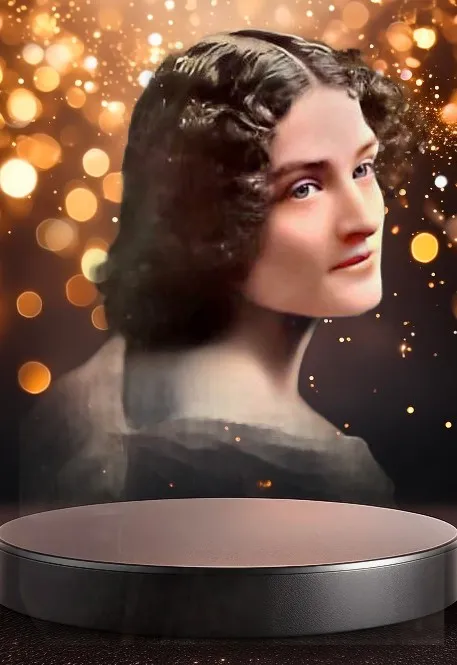
Nettie Honeyball founded something that outlasted her, outlasted the ban that tried to bury it, and outlasted the century that tried to forget her. Whoever she was, she was one of the most remarkable women of the Victorian age. Finding her - her real name, her real face, her real life - is the central mission of this website. The investigation continues.










.jpg.webp)